


Chemical peel vs microneedling
Last updated:
A chemical peel uses an acid to remove a controlled thickness of skin from the surface down, while microneedling uses fine needles to make many small punctures that set off a healing response. Peels are used most for sun damage and uneven pigment. For atrophic acne scars, one trial favored microneedling over a 35% glycolic acid peel, and a 2025 meta-analysis found the two combined beat either alone.
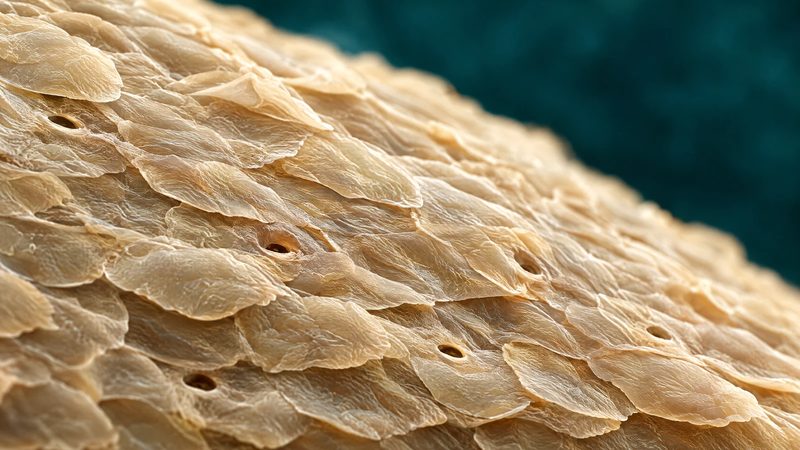
What is the difference between a chemical peel and microneedling?
A chemical peel applies a caustic agent that removes a predictable, uniform thickness of damaged skin, after which normal wound healing renews the surface1. Peels are grouped by depth: superficial peels act within the epidermis, medium-depth peels reach the papillary dermis, and deep peels injure skin to the mid-reticular dermis1. Depth depends on the acid, its concentration, the number of layers applied, skin type and the condition being treated1.
Microneedling works mechanically3. Devices carry many small needles, tips or pins that are repeatedly inserted into and removed from the skin, on a rolled cylinder, a flat stamp or the tip of a pen3. A 2017 review describes the proposed mechanism as normal wound healing with new collagen made just beneath the epidermis, the principle behind its use for scars7.
The two are also regulated differently in the United States2,3. FDA has authorized specific microneedling devices to improve the appearance of facial acne scars, facial wrinkles and abdominal scars in patients aged 22 or older3. Alpha hydroxy acids such as glycolic and lactic acid appear in cosmetics, and products marketed to treat acne, remove scars or lighten discoloration are drugs under the law2.
| Question | Chemical peel | Microneedling |
|---|---|---|
| How it works | An acid removes a controlled thickness of skin, then the skin heals1 | Fine needles make many small punctures that set off wound healing3,7 |
| What it is used for most | Photoaging and hyperpigmentation are the most common indications1 | FDA-authorized uses are facial acne scars, facial wrinkles and abdominal scars3 |
| Typical agents or devices | Superficial: 30% to 50% glycolic or 10% to 30% lactic acid; medium: 70% glycolic or 35% to 50% TCA1 | Roller, stamp or pen; some motorized pens let the practitioner set depth and speed3 |
| Recovery | Rises with depth; superficial glycolic peels resurface in 7 to 10 days1 | Pain and redness in 50% to 60% of patients in acne scar trials, resolving within 48 to 72 hours6 |
| Course used in acne scar trials | Every 2 weeks for 12 weeks in one randomized trial4 | Three to six sessions, 2 to 6 weeks apart6 |
In North America, searches for this comparison peak in January and are lowest in June, and a course planned for late fall to winter keeps the recovery weeks in the lower-sun months, when the week of sun protection advised after alpha hydroxy acids and the two weeks advised after microneedling are easier to keep2,3. In the Southern Hemisphere, the same lower-sun window falls from about May to August.
Is microneedling or a chemical peel better for acne scars?
Atrophic scars, the depressed kind, are more common than raised scars by a ratio of about 3 to 1, and they are classed as icepick, rolling or boxcar scars4. Trials comparing the two methods directly are limited4.
In a randomized trial of 60 patients with Fitzpatrick skin types IV to VI, 73.3% of those given microneedling every two weeks for 12 weeks improved by more than one grade on the Goodman and Baron scale, compared with 33.3% of those given 35% glycolic acid peels on the same schedule4. In a double-blind trial of 120 patients, scar grades fell significantly only in the group given both treatments; the changes with microneedling alone or the peel alone were not statistically significant5.
Scar shape also matters6. Across trials pooled in a 2025 meta-analysis, rolling and boxcar scars responded best, while icepick scars changed little6.
Can you combine microneedling and a chemical peel?
Yes, and in published acne scar trials the combination gave the strongest results6. A 2025 systematic review found nine trials, eight of them randomized, in which microneedling was immediately followed by or alternated with a peel, using agents from Jessner's solution and 15% to 20% TCA to 35% to 70% glycolic acid and phenol6.
In the pooled analysis of six trials, combination treatment improved scars more than microneedling alone (odds ratio 5.72) and more than peeling alone (odds ratio 8.94)6. In pooled responder data, at least 50% improvement was reached by 80% to 97% of patients on combination courses, against 19% to 43% on microneedling alone and 5% to 31% on peels alone6. Earlier, a study of 30 patients in India with darker skin found microneedling plus 35% glycolic acid peels improved texture, scarring and post-inflammatory hyperpigmentation more than microneedling alone7.
The evidence has limits6. Three of the eight randomized trials in the meta-analysis were judged at high risk of bias, mainly because outcomes were graded by assessors who were not blinded6. The order and timing of a combined course is a decision for the treating practitioner.
Which is better for pigmentation, fine lines and texture?
For surface pigment, peels are a common choice1. A 2018 review lists chronic photoaging and hyperpigmentation as the most common reasons for a peel, describes 30% to 50% glycolic acid as effective for superficial hyperpigmentation, mild to moderate photoaging and fine lines, and calls glycolic acid a first-line peel for melasma1.
Microneedling's authorized uses center on texture: acne scars and wrinkles on the face3. It has also been studied for melasma, where three sessions at 0, 4 and 8 weeks followed by topical tranexamic acid improved melasma severity scores by about 44% in a trial of 60 patients, more than tranexamic acid microinjections7.
Neither fixes everything1. Deep wrinkles, sagging along the jaw and drooping skin are unlikely to respond to any depth of peel and respond best to surgery1.
What are the recovery time and risks of each?
With peels, downtime, healing time and the chance of side effects rise with depth: deeper peels bring longer recovery and greater risk of scarring and pigment change1. After a superficial glycolic or lactic acid peel, the skin flakes over several days and resurfaces within 7 to 10 days, and mandelic acid peels often resurface in 3 to 5 days1. High-strength TCA carries a relatively high risk of pigment change, scarring and cold sore reactivation1.
With microneedling, FDA lists dryness, tightness, redness, itching, peeling, bruising, bleeding and crusting as common risks, and pigment change, cold sore reactivation, swollen lymph nodes and infection as less common ones3. In acne scar trials, pain and redness were seen in 50% to 60% of microneedling patients and resolved within 48 to 72 hours, while a single deep phenol peel caused redness lasting 3 to 4 months6.
Sun exposure matters for both2,3. FDA recommends that alpha hydroxy acid products carry a sunburn alert advising sunscreen, protective clothing and limited sun while using the product and for a week afterward2. FDA also lists being tanned, or planning sun exposure in the two weeks after the procedure, as a reason microneedling may not be suitable3.
Who should avoid microneedling or a chemical peel?
For peels, a 2018 review says the agent should be matched to the patient's Fitzpatrick skin type and ability to tolerate the recovery period, and deeper peels carry greater risk of scarring and pigment change1. For microneedling, FDA lists conditions that may make the procedure unsuitable, including:
- Bleeding or clotting disorders, or blood thinners such as warfarin, heparin or low dose aspirin3
- Active skin infection, an active rash on the face or a current cold sore outbreak3
- Isotretinoin now or in the past 6 months3
- A history of keloid scars, or eczema, psoriasis or vitiligo3
- Pregnancy or breastfeeding3
- Darker skin types, because of the risk of darkening or lightening after the procedure3
Key takeaways
- A peel removes skin chemically from the top down; microneedling makes many small punctures with needles.
- For atrophic acne scars, one trial favored microneedling over a 35% glycolic acid peel, but icepick scars respond poorly to either.
- Microneedling followed by or alternated with a peel outperformed either alone in a 2025 meta-analysis of acne scar trials.
- Peels are used most for sun damage and surface pigment, and recovery time and risk rise with peel depth.
- Plan sun protection around both: a week after alpha hydroxy acids and two weeks after microneedling.
References
- A Practical Approach to Chemical Peels: A Review of Fundamentals and Step-by-step Algorithmic Protocol for Treatment
- Alpha Hydroxy Acids
- Microneedling Devices
- A Comparison of Microneedling versus Glycolic Acid Chemical Peel for the Treatment of Acne Scarring
- Double-blind, randomized controlled trial comparing the use of microneedling alone vs chemical peeling alone vs a combination of microneedling and chemical peeling in the treatment of atrophic post-acne scars. An assessment of clinical effectiveness and patients' quality-of-life
- Chemical peeling in combination with microneedling versus chemical peeling or microneedling monotherapy in the treatment of acne scars: a systematic review and meta-analysis
- Review of applications of microneedling in dermatology
- Microneedling Devices: Getting to the Point on Benefits, Risks and Safety
Frequently asked questions
Should you do microneedling or a chemical peel first?
In the trials that combined them, the peel was applied immediately after needling or the two were alternated across sessions6. One trial found alternating microneedling with a 35% glycolic acid peel still beat both single treatments6. The sequence for your skin is the treating practitioner's decision.
How many sessions of each do acne scar trials use?
Can you use glycolic acid at home after microneedling?
Not until your provider clears it. FDA advises asking your provider how to care for skin after microneedling, because it may be more sensitive to the sun and to products containing retinol, glycolic acid, menthol, capsaicin or alcohol8.
Is a chemical peel a cosmetic or a drug?
It depends on the claims made for it. FDA notes that products containing alpha hydroxy acids marketed for treating acne, removing scars or lightening discoloration are drugs under the law2. Alpha hydroxy acids are also used in cosmetics marketed for smoothing fine lines and improving skin texture and tone2.