


Biosecurity Knowledge
Disinfection and pest control most often fail in practice because contact time, organic soil or residual is not met, even when the active works in the lab. This section explains the chemistry behind each active, how encapsulation changes delivery, where species sensitivity limits product choice, and which common practices fail.
Actives library
The actives library covers the component doing the work in each product: what it acts against, the contact time it needs, and how it behaves on real surfaces. It includes chlorine dioxide and a comparison of the main disinfectant classes, and the botanical actives used in miticide and insecticide programs: geraniol, peppermint oil, rosemary oil, thymol, tea saponin, oxymatrine, entomopathogenic nematodes, fixed oils and nootkatone. Lab results often differ from results on dirty, porous surfaces, and each page notes where.
Technology
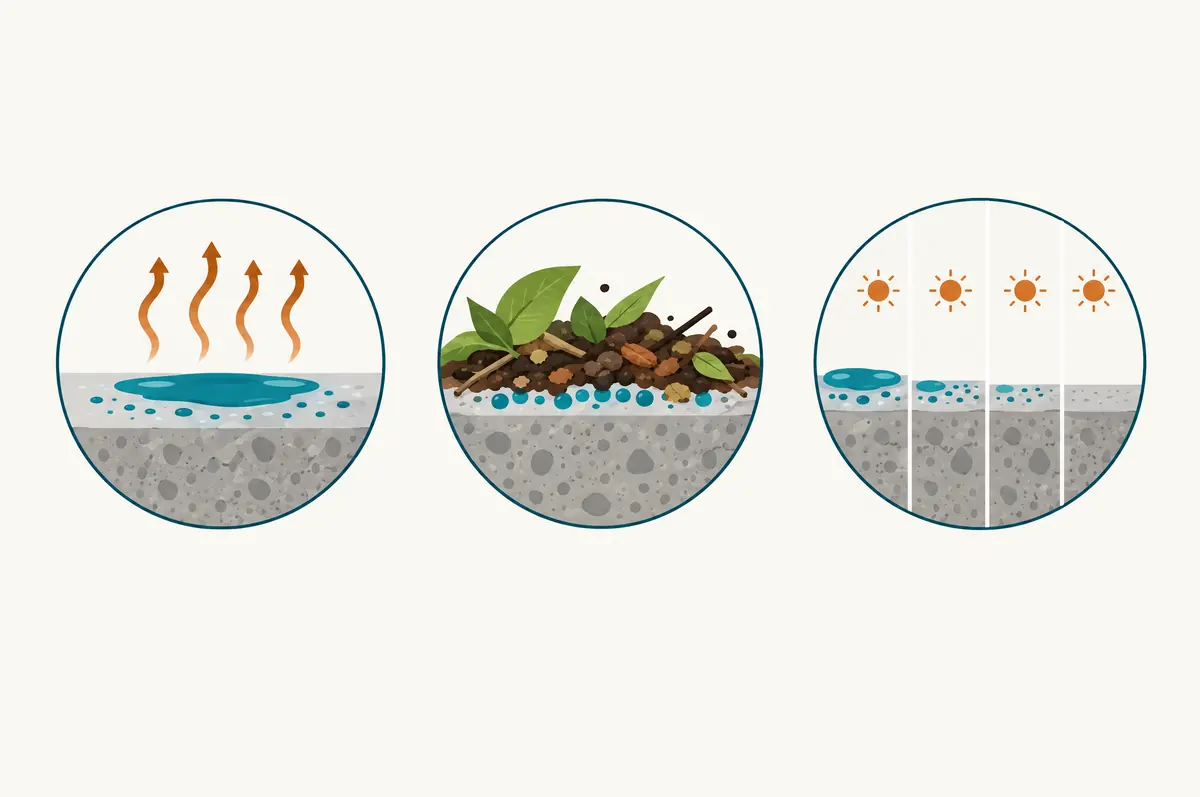
The technology pages explain what multi-layer nano-encapsulation changes for biosecurity: why unencapsulated essential oils lose activity within days, how shells control volatility, how actives get through mite and tick cuticle, how chlorine dioxide is stabilized as a powder, and why ticks need far higher doses than spider mites. These pages set out the mechanism and where our own data is still being generated. Where published data comes from other formulations, pages say so.
Safety, stewardship and field practice
Geraniol and peppermint oil are toxic to cats, and no product in this range is designed for direct application to animals. The safety pages cover cats, a species matrix, pollinators and aquatic life, FIFRA 25(b) minimum-risk rules and how we write label claims. Guidance differs between commercial and backyard keepers, and registration varies by jurisdiction. The what-doesn't-work pages cover diatomaceous earth in humid coops, bleach on dirty surfaces and home tick remedies.
Key facts
- Organic soil reduces or blocks the activity of disinfectants, which is why cleaning precedes disinfection (WOAH Terrestrial Code, ch. 4.14).
- Cats have limited glucuronidation capacity, which reduces their ability to clear phenols and many essential-oil components (Court 2013, Vet Clin North Am Small Anim Pract 43:1039).
- Minimum-risk pesticides must use only listed actives and inerts and may not make public-health claims (40 CFR 152.25(f)).
- Registration and permitted uses of disinfectants vary by jurisdiction; in the US, antimicrobial pesticides are registered under FIFRA (US EPA, Antimicrobial Pesticide Registration).
How our delivery technology applies
Across biosecurity, the recurring delivery problems are residual, volatility and handling. Botanical actives evaporate or oxidize within days, and chlorine dioxide normally has to be generated on site. Multi-layer biopolymer encapsulation addresses both: it slows release and protects volatile actives, and it stabilizes chlorine dioxide as a powder that dissolves to at least 98% purity.
Have a technical question not covered here? Contact our biosecurity team.
Related reading
Last updated: