


How do you know your skin barrier is damaged, and how do you repair it?
Last updated:
A damaged skin barrier shows up as skin that feels tight, dry and rough, flakes, turns red or itches, or stings and burns when products that never bothered it go on. Repair starts with removing the cause, then cleansing gently with lukewarm water and moisturizing daily with a product that combines humectants with emollients and occlusives such as petrolatum or barrier lipids.
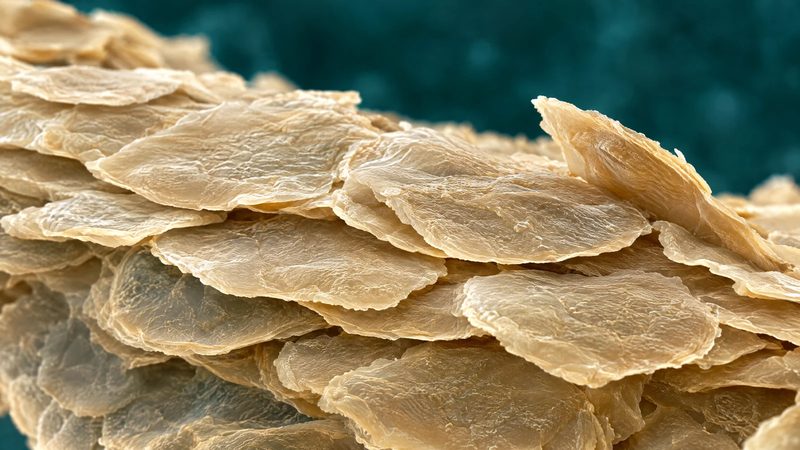
What is the skin barrier?
The skin barrier is the outermost layer of the epidermis, the stratum corneum, often described with a bricks and mortar model: flattened skin cells are the bricks, and bilayers of lipids such as ceramides, cholesterol and fatty acids are the mortar1. Ceramides make up about half of the lipids in the stratum corneum1.
Barrier function relies on three components working together2:
- Barrier lipids (ceramides, cholesterol and free fatty acids), whose main job is to limit transepidermal water loss, the water that escapes through the skin2.
- Natural moisturizing factors, a mix of substances such as amino acids, lactate and urea that attract and hold water in the outer layer2.
- An acidic surface: skin surface pH ranges from about 4.5 to 5.5, while the living epidermis below sits near 7.42. An acidic stratum corneum supports the enzymes that produce ceramides2.
In North America, barrier complaints cluster in winter, when cold, dry outdoor air and dry heated indoor air pull water from the skin4. In the Southern Hemisphere the same pattern falls from about June to August.
What are the signs of a damaged skin barrier?
When the lipid barrier is disrupted, transepidermal water loss increases and skin can become dry and irritated2. Visible dryness appears when the stratum corneum holds less than about 10% water and surface cells pile up and lose their continuity1.
A second group of signs is sensory. An international expert group defines sensitive skin as unpleasant sensations, such as stinging, burning, pain, itch and tingling, in response to stimuli that normally should not provoke them, without lesions explained by a skin disease3.
| Sign | What you notice | What is happening |
|---|---|---|
| Dryness and tightness | Skin feels tight or rough after cleansing | More water escapes as transepidermal water loss rises2 |
| Flaking and scaling | Fine flakes or a dull, uneven surface | Surface cells accumulate when water content drops below about 10%1 |
| Redness and itch | Pink or red patches, itching, sometimes fine cracks | Typical symptoms of dry skin (xerosis)4 |
| Stinging and burning | Products that were comfortable now sting | Unpleasant sensations in response to stimuli that normally cause none3 |
What damages the skin barrier?
Causes can be external, such as harsh soaps, or internal, such as genetics2. Skin care products, cosmetics, climate and skin irritants all shift skin surface pH, and an elevated pH is linked to barrier dysfunction2.
US government health information lists cold, dry winter air, dry indoor air from heating or cooling, bathing too often or too long, some soaps and detergents, certain medicines and aging among the causes of dry skin4. Even formula ingredients play a part: a review of moisturizers notes that some emulsifiers may weaken the skin barrier1.
Over-exfoliation is a common route. FDA's record of adverse event reports for alpha hydroxy acid (AHA) products includes burning, rash, swelling, peeling, itching and irritation, and FDA notes that the more serious reactions occur most often with the products that exfoliate the most, such as skin peelers7.
How do you repair a damaged skin barrier?
Start by removing the likely cause: pause strong exfoliants and any new product that stings, then rebuild with simple steps. Moisturizers help restore barrier function through three complementary actions1:
- Humectants such as glycerin, panthenol, urea and hyaluronic acid draw water into the stratum corneum1. On their own they can increase water loss, which is why they are usually combined with occlusives1.
- Emollients, mostly lipids, fill the gaps between skin cells to improve smoothness, softness and flexibility1.
- Occlusives form a water-repellent film that slows transepidermal water loss1. Petrolatum is the most effective classic occlusive, reducing water loss by more than 98% at a concentration of at least 5%, while lanolin, mineral oil and dimethicone reduce it by 20% to 30%1.
- Barrier lipids: topical mixtures of ceramide, cholesterol and free fatty acids in physiologic proportions can speed barrier recovery after disruption, and unlike petrolatum they can pass into both intact and disrupted stratum corneum1.
What daily habits help the barrier recover?
To prevent dry skin, US government health information advises limiting water exposure to what is needed, using lukewarm water, patting skin dry instead of rubbing, and choosing gentle cleansers free from dyes and perfumes4. Moisturizers applied to skin that is still damp after bathing help rehydrate it1.
Consistency is the rest of the work: a review of moisturizers concludes that their benefit depends largely on choosing the right product and using it continuously1. If you use an AHA product while the barrier settles, FDA's recommended label statement advises sunscreen, protective clothing and limited sun exposure while using it and for a week afterward7.
Is it a damaged skin barrier or acne?
The two can look alike at a glance, but they start in different places. Acne happens when hair follicles become clogged with sebum and dead skin cells, producing whiteheads, blackheads, papules, pustules and, in more severe cases, nodules5. Barrier damage shows up as dryness, scaling, redness, itch and stinging across the surface rather than as plugged follicles1,3,4.
The two also feed each other. Scrubbing the skin too hard can make acne worse5, and topical acne medicines can cause irritation, burning or redness in some people6. NIAMS advises people with acne to cleanse gently with a mild cleanser, avoid strong soaps, astringents and rough scrub pads, and rinse with lukewarm water6, the same habits that protect the barrier.
| Feature | Damaged barrier | Acne |
|---|---|---|
| Where it starts | Outer layer of skin, as water loss rises2 | Hair follicles clogged with sebum and dead skin cells5 |
| What you see | Dryness, scaling, redness, fine cracks4 | Whiteheads, blackheads, papules, pustules, nodules5 |
| What you feel | Tightness, itch, stinging or burning3,4 | Tender inflamed bumps5 |
| Common aggravators | Harsh soaps, long hot baths, dry air2,4 | Scrubbing too hard, picking or squeezing5 |
Key takeaways
- Tightness, flaking, redness, itch and new stinging from familiar products are the classic signs of a stressed barrier.
- Harsh soaps, long or frequent bathing, dry winter air and heavy exfoliation are common causes.
- Repair pairs gentle, lukewarm cleansing with a moisturizer that combines humectants with emollients and occlusives.
- Petrolatum is the most effective classic occlusive, and ceramide, cholesterol and fatty acid mixtures can speed barrier recovery.
- Acne starts in clogged follicles; barrier damage shows across the surface, and harsh scrubbing worsens both.
References
- The Role of Moisturizers in Addressing Various Kinds of Dermatitis: A Review
- Importance of Stratum Corneum Acidification to Restore Skin Barrier Function in Eczematous Diseases
- Definition of Sensitive Skin: An Expert Position Paper from the Special Interest Group on Sensitive Skin of the International Forum for the Study of Itch
- Dry skin (MedlinePlus Medical Encyclopedia)
- Acne: Overview, Symptoms, and Causes
- Acne: Diagnosis, Treatment, and Steps to Take
- Alpha Hydroxy Acids
Frequently asked questions
How long does it take to repair a damaged skin barrier?
Recovery time depends on the cause and on how consistently the irritant is avoided and the skin is moisturized. A review of moisturizers stresses that results depend largely on choosing the right product and using it continuously1. If dryness, redness or itch keeps going despite gentle care, see a health care provider4.
Is a damaged skin barrier the same as sensitive skin?
They overlap but are not identical. Sensitive skin is defined by unpleasant sensations such as stinging, burning and itch in response to stimuli that normally should not provoke them3, while barrier damage is defined by increased water loss and dryness2. When the lipid barrier is disrupted, skin can become both dry and irritated2.
Should you stop exfoliating if your skin barrier is damaged?
Pausing is sensible. FDA's adverse event reports for AHA products include burning, peeling and irritation, with the more serious reactions most often linked to the most exfoliating products7. Reintroduce exfoliants slowly once the skin is comfortable, and follow the product label.
When should you see a doctor about a damaged skin barrier?
See a health care provider if dryness is severe, very itchy or inflamed, or does not settle with home care. A provider may suggest moisturizers containing urea and lactic acid or a topical steroid for very inflamed, itchy areas, and may order tests if an undiagnosed health problem, such as an underactive thyroid, could be causing the dryness4.