


Mosquito dunks vs bits
Last updated:
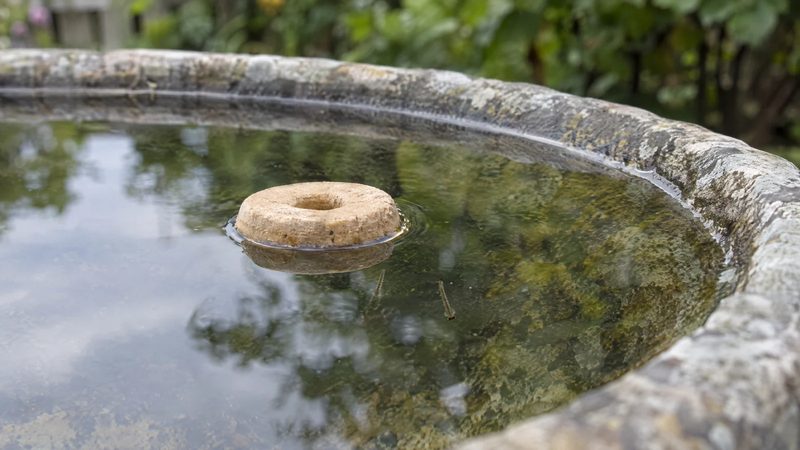
Mosquito dunks and mosquito bits both contain Bti, Bacillus thuringiensis subspecies israelensis, in two different forms. Dunks are floating, slow-release rings labeled to release Bti for 30 days or more, while bits are granules labeled for a quick kill within 24 hours and control for up to 14 days6,7. Both work only on mosquito larvae that eat them4.
What is the difference between mosquito dunks and mosquito bits?
Both products are larvicides: they act on the immature stage of the mosquito (Culicidae) in the standing water where it develops, before adults can emerge and disperse2. Larvicides for mosquito control come as liquids and as tablet, pellet, granular and briquet formulations2. Dunks are the briquet form and bits are the granular form, and the difference between them is how fast the Bti reaches the larvae and how long it keeps coming6,7.
A dunk is a floating ring, and its label says it releases effective levels of Bti for 30 days or more under typical conditions, with active material released at the surface and gradually settling to the bottom6. Bits are spread over the water surface, release the larvicide into the water, and it settles where larvae eat it7. The bits label claims a quick kill within 24 hours and control for up to 14 days in water of low to moderate organic content, and it suggests following bits with dunks or briquets for longer residual control7.
| Feature | Dunks (briquets) | Bits (granules) |
|---|---|---|
| Form | Floating ring with a center hole6 | Granules sprinkled on the water surface7 |
| How the Bti is released | Slowly, at the surface and settling to the bottom6 | Released into the water, then settles where larvae feed7 |
| Speed | Begins killing larvae within hours; a difference shows in about 48 hours5 | Quick kill within 24 hours7 |
| How long it lasts | 30 days or more under typical conditions6 | Up to 14 days in water of low to moderate organic content7 |
| Reapplication | About every 30 days during mosquito season5 | Every 7 to 14 days, more often in water with more organic matter7 |
| Extra labeled uses | Pre-flood placement in dry spots that later fill with water6 | Fungus gnat larvae in potting media and soil7 |
In North America, larvicide season follows mosquito activity: New York State health guidance places dunks from April to September5, and in summer a mosquito can go from egg to adult in a week or less4. In the Southern Hemisphere the seasons are reversed, so the same treatment window runs through the warm months, roughly October to April.
How does Bti kill mosquito larvae?
Bti is a naturally occurring soil bacterium whose spores produce toxins that target only the larvae of mosquitoes, black flies and fungus gnats1. Larvae have to eat it: the proteins act as a stomach poison that damages the cells of the mosquito midgut4. Insects exposed to these bacterial larvicides have trouble digesting food and die of starvation2.
That feeding requirement sets the limits. Bti does not work on pupae, because pupae do not feed4, and it does nothing to adult mosquitoes. All mosquitoes pass through egg, larva, pupa and adult, and the first three stages live in water3. The cycle typically takes about two weeks but can range from 4 days to a month3, and in summer it can be completed in a week or less4. Treated water therefore needs to keep active Bti present as new larvae hatch.
EPA has registered five strains of Bti in 48 pesticide products for residential, commercial and agricultural use1. EPA also reports no documented resistance to Bti as a larvicide, including in mosquito populations treated with it for decades1.
When should you use a dunk and when should you use bits?
Use a dunk where water sits for weeks: rain barrels, ornamental ponds, unused swimming pools, animal watering troughs, tree holes and roof gutters are all on its label6. Dunks can be anchored with a string through the center hole or staked in place so they are not flushed out, and they can be broken into portions for small containers6. They can also be placed ahead of time in dry spots known to flood, where they float up and start releasing Bti when water arrives; alternate wetting and drying does not reduce their effectiveness6.
Use bits when you want larvae killed fast, or for many small or scattered sites7. The bits label lists sites such as water gardens, flower pots and saucers, bird baths, rain barrels, roof gutters, ditches and old tires7. The bits label itself suggests a combined approach: bits first for the quick kill, then dunks or briquets for longer control7.
- Rain barrel or pond that holds water all season: a dunk, anchored, and replaced on schedule6.
- Heavy larval activity you want stopped now: bits, followed by a dunk for residual control7.
- Water with a lot of organic matter: bits at the label's more frequent interval7.
- Houseplant soil with fungus gnats: bits, which carry a fungus gnat use on their label7.
How do you use mosquito dunks in a rain barrel, pond or birdbath?
Start by removing water you do not need. Empty and turn over buckets, unused flower pots and wheelbarrows, clean clogged gutters, and put lids on outdoor trash cans; larvicides belong only on small areas of water on your own property that cannot be drained5. Change the water in pet dishes, troughs and bird baths every week4. In New York State health guidance, the places left for dunks are pool covers, ornamental ponds, fountains and rain barrels5.
For rain barrels, the first defense is a sealed barrel or window screen over every opening, with clean filters4. Dunks are the fallback where screens or sealed barrels are impractical4. In a 2024 study of extension-recommended rain barrel treatments, every treatment cut mosquito larvae by more than 99% compared with untreated open buckets, but the authors reported practical problems, including dunks breaking apart8. Check a dunk in a barrel regularly and replace it when it has crumbled or reached the end of its labeled period6,8.
The label sizes the dose by the water's surface area, regardless of depth, and allows larger amounts in heavily polluted water6. Follow the product label for the amount and interval. Neither form is for treated, finished drinking water6.
Are dunks and bits a risk to fish, pets or bees?
Bti's toxins affect only the larvae of mosquitoes, black flies and fungus gnats, and studies indicate minimal toxicity to honey bees1. The dunks label states that the product can be used in fish habitats6. The bits label allows application to water with aquatic life, fish and plants, and to areas used by people, pets, horses, livestock, birds and wildlife7. UC IPM describes Bt products for ponds as killing mosquito larvae without affecting people, other animals or plants4.
The precautions that do apply come from the label. The dunk carries a CAUTION signal word because it causes moderate eye irritation, so avoid eye contact and wash after handling6. Drinking water is product-specific: some Bti products may be used in certain drinking water such as cisterns and others may not, so read the label for any water people will drink1,6.
How long do dunks last, and when should you start?
A dunk lasts about 30 days, so reapplication is likely across a season5. Some larvae that hatch after a dunk goes in may partly develop before they die, and the label allows a minimum of 48 hours for their control6. Bits need retreatment every 7 to 14 days: every 7 days where larvae are abundant or the water carries organic matter, and every 14 days where there are few larvae and little organic matter7.
Start when mosquitoes become active and water stands for more than a few days5. New York State health guidance recommends dunks from April to September, when mosquitoes are active and hatch more often in warm weather5. Mosquito eggs can survive dry conditions for a few months and hatch when flooded3, which is why pre-flood placement of dunks is on the label6.
Key takeaways
- Dunks and bits both deliver Bti; dunks are slow-release rings and bits are fast-acting granules.
- Bti kills only larvae that eat it, so it does not touch pupae or adult mosquitoes.
- Dunks are labeled for 30 days or more of release; bits for a 24-hour kill and up to 14 days of control.
- Drain or dump water first, and treat only water that cannot be removed.
- Follow the product label for the amount, the interval and any drinking water restrictions.
References
- Bti for Mosquito Control
- Controlling Mosquitoes at the Larval Stage
- Mosquito Life Cycle
- Pest Notes: Mosquitoes (UC ANR Publication 7451)
- Mosquito Dunks guidance (Publication 13035)
- Summit B.T.I. Briquets (alternate brand name Mosquito Dunks), EPA Reg. No. 6218-47, accepted label amendment
- Mosquito Bits (alternate brand name Summit B.t.i. Granules), EPA Reg. No. 6218-86, labeling amendment accepted December 13, 2021
- Effectiveness of Treatments to Reduce Mosquito Larvae in Rain Barrels
Frequently asked questions
Do mosquito dunks kill adult mosquitoes?
Is Bti the same as the Bt used on garden caterpillars?
Can mosquito bits be used for fungus gnats?
Yes. Bti targets fungus gnat larvae as well as mosquito larvae1, and the bits label includes fungus gnat larvae control in the growing media of house, garden and landscape plants7. The label also describes a soak method that applies Bti-treated water to the soil surface, so follow the product label for the method and repeat schedule7.