

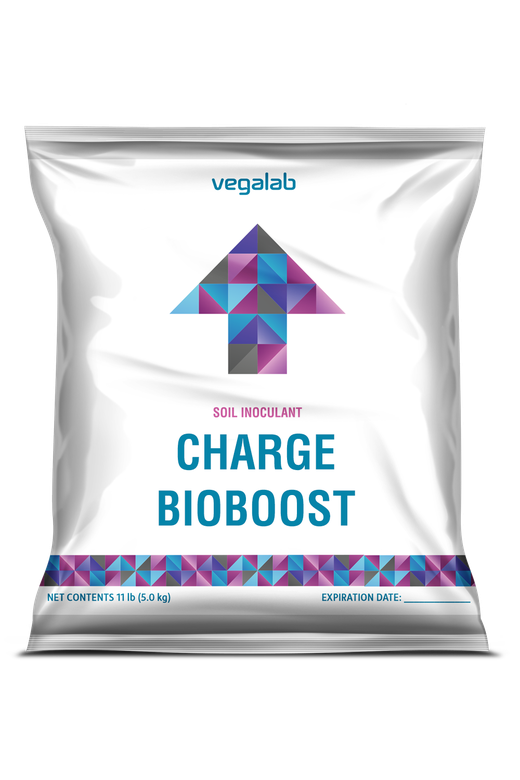
Charge BioBoost: 11-strain living soil inoculant
Charge BioBoost is a highly concentrated living soil inoculant - an 11-strain consortium of beneficial rhizosphere bacteria and mycorrhizal and beneficial fungi that makes up 70% of the formulation, in a 30% organic biostimulant base. It rebuilds the soil microbiome and improves natural fertility: the bacteria colonize the root zone and mobilize and cycle nutrients, supporting nitrogen availability to the crop, while the mycorrhizal fungi extend the root system and solubilize phosphorus that is otherwise locked in the soil. Together they make two of the hardest nutrients to supply - nitrogen and phosphorus - more available to the plant, so growers can build fertility with less applied N and P across field crops, vegetables, vines and fruit trees.
Soil inoculant · Improves nutrient use efficiency, Rebuilds microbiome.
- Zero REINo re-entry wait
- Zero PHIHarvest the same day
Soil inoculant from Vegalab Crop Science, powered by an 11-strain consortium of beneficial rhizosphere bacteria and mycorrhizal and beneficial fungi. Charge BioBoost targets Soil fertility; nitrogen and phosphorus availability; root-zone health.
Shipping $20 + $5 per gallon, calculated at checkout. Online orders up to 50 gallons; contact us for larger loads. Not available for delivery to Canada.
Secure checkout on Shopify. Each store keeps its own bag.
Applied to the root zone, the consortium establishes on and around the developing roots. Beneficial bacteria colonize the rhizosphere and cycle nutrients into plant-available forms and support nitrogen availability; mycorrhizal fungi form a living extension of the root system, reaching further into the soil for water and nutrients and releasing bound phosphorus; complementary beneficial fungi help break down soil organic matter. As populations establish and self-perpetuate, they rebuild root-zone biology, improve the efficiency of applied inputs, and strengthen the soil's own fertility cycle season over season.
A high-density consortium · 11 beneficial strains making up 70% of the formulation, in a 30% organic biostimulant base.
- Beneficial rhizosphere bacteria · Bacillus subtilis, B. megaterium, B. licheniformis, B. pumilus · Naturally occurring soil bacteria that colonize the root zone, mobilize and cycle nutrients, and support nitrogen availability to the crop. As they establish, they compete for space and resources at the root surface, strengthening the root zone's own biology.
- Mycorrhizal fungi · Rhizophagus irregularis, Glomus etunicatum, G. intraradices, G. mosseae, G. aggregatum - Root-colonizing arbuscular mycorrhizal fungi form a living extension of the root system, reaching further into the soil for water and nutrients and solubilizing phosphorus that is otherwise bound and unavailable - the driver of the phosphorus story.
- Beneficial fungi · Trichoderma harzianum, T. reesei · Complementary beneficial fungi that decompose soil organic matter, colonize the root zone and support a resilient, competitive rhizosphere.
- Organic biostimulant base (30%) - The living cultures are carried in a food-grade organic base of humic and fulvic acids, amino acids and kelp - biostimulant inputs that feed early colonization.
| Active | 11-strain microbial consortium (70% by wt): Bacillus subtilis, B. megaterium, B. licheniformis, B. pumilus; Rhizophagus irregularis, Glomus etunicatum, G. intraradices, G. mosseae, G. aggregatum; Trichoderma harzianum, T. reesei · in a 30% organic humic/fulvic, amino-acid and kelp base |
|---|---|
| Targets | Soil fertility; nitrogen and phosphorus availability; root-zone health |
| Dilution rate | 1.3 g/L (5 g/gal) · 1.1 kg/ha (1.0 lb/acre) soil drench |
| Application | Soil irrigation / drench at or before planting, and per program |
| Line · Category | Bio · Soil inoculant fertilizer |
- Supports nitrogen availability in the root zone on legumes and grasses
- Phosphorus-solubilizing on all crops
- Soil organic-matter decomposition
- Rhizosphere microbiome rebuilding
- Timing · Apply at or before planting so the consortium establishes with the developing root system; reapply per the program to maintain populations through the season.
- Method · Soil drench or through irrigation at 1.3 g/L (5 g/gal) · 1.1 kg/ha (1.0 lb/acre).
- Water - Use clean, non-chlorinated water where possible; avoid tank-mixing with sterilants or strong oxidizers that would harm live cultures - separate those applications.
- Storage · Keep cool and dry and out of direct sun; do not freeze and do not store above 100°F, so the cultures stay viable.
Derived from: beneficial rhizosphere bacteria · mycorrhizal & beneficial fungi
Contains: 11-strain microbial consortium in a 30% organic biostimulant base
What does Charge BioBoost do for the soil?
Much of the nitrogen and phosphorus a crop needs is either tied up in soil organic matter and residues (nitrogen) or locked in unavailable soil forms (phosphorus). Charge BioBoost introduces microbes that help unlock both: beneficial rhizosphere bacteria mobilize and cycle nutrients and support nitrogen availability, and mycorrhizal and phosphorus-solubilizing fungi release phosphorus the plant otherwise cannot reach - building fertility from within the soil rather than from the bag.
How do the microbes work?
The beneficial bacteria colonize the root zone and mobilize and cycle nutrients into plant-available forms, supporting nitrogen availability, while the mycorrhizal fungi extend the root system and break the bonds that hold soil phosphorus in unavailable forms. The result is improved availability of two of the most important and most limiting nutrients, supporting a more self-sustaining fertility cycle and potentially reducing reliance on synthetic inputs.
How and when should it be applied?
- At or before plantingEstablishment
- Vegetative
- Pre-flower
- Flowering
- Fruit set
- Fruit development
- Ripening
- Harvest
Apply during Establishment.
- Method
- Soil or root zone
- Rate
- 1.3 g/L · 1.1 kg/ha soil drench5 g/gal · 1.0 lb/acre soil drench · Work out your rate
- Pre-harvest interval
- Zero - harvest the same day
- Re-entry interval
- Zero - no re-entry wait
A living inoculant - it establishes alongside the developing root system, so follow storage and handling guidance closely.
Always read and follow the applicable product label.
Apply to soil or the root zone per the label, ideally at or before planting so the microbes establish alongside the developing root system. As a living inoculant, follow storage and handling guidance closely, and pair it with practices that support soil biology - adequate moisture, organic matter and minimal disturbance.
Which crops is it for?
Charge BioBoost is used on all field crops, vegetables, vines and fruit trees. It suits growers building longer-term soil health and those looking to improve nutrient availability across a whole rotation rather than feeding a single crop stage.
How does it support a lower-input program?
By improving nitrogen availability and unlocking bound phosphorus biologically, Charge BioBoost can reduce the gap that applied N and P has to fill. Combined with good soil management, it supports a more resilient, biologically active soil that holds and cycles nutrients more efficiently over time.
Need a recommendation for your crop or pest?
Contact usCrop-specific solutions using this product
- Root-knot nematode on cucumbers
- Root growth & uptake
- Transplant establishment
- Soil health & tired soil
- Damping-off on tomatoes
- Nutrient imbalance
- Reniform nematode on cotton
- Phytophthora on peppers
- Root-knot nematode on tomatoes
- Reniform nematode on vegetables
- Root-knot nematode on peppers
- Root-knot nematode on strawberries
Frequently asked questions
What microbes are in Charge BioBoost?
An 11-strain consortium making up 70% of the formulation: four beneficial bacteria (Bacillus subtilis, B. megaterium, B. licheniformis, B. pumilus), five mycorrhizal fungi (Rhizophagus irregularis, Glomus etunicatum, G. intraradices, G. mosseae, G. aggregatum) and two beneficial fungi (Trichoderma harzianum, T. reesei), in a 30% organic base of humic and fulvic acids, amino acids and kelp.
How do the microbes improve fertility?
The bacteria mobilize and cycle nutrients and support nitrogen availability; the mycorrhizal fungi extend the root system and solubilize bound phosphorus - together making nitrogen and phosphorus more available, so you can rely less on applied fertilizer.
Can I tank-mix it?
It's a living inoculant · apply in clean, non-chlorinated water and avoid mixing with sterilants or strong oxidizers; keep those applications separate.
How should I store it?
Keep it cool and dry and out of direct sun; do not freeze and do not store above 100°F, so the cultures stay viable.
What is the application rate?
1.3 g/L (5 g/gal) · 1.1 kg/ha (1.0 lb/acre) soil drench.
Is it suitable for organic / IPM programs?
A naturally derived input designed to fit low-residue and IPM programs; follow the approved local label.
What does Charge BioBoost do?
Improves soil fertility by making atmospheric nitrogen and bound soil phosphorus available to the crop.
What's in it?
An 11-strain microbial consortium (70% by weight) of beneficial bacteria, mycorrhizal fungi and Trichoderma, in a 30% organic biostimulant base of humic and fulvic acids, amino acids and kelp.
Where can I use it?
All field crops, vegetables, vines and fruit trees.
When should I apply it?
At or before planting, so the microbes establish with the root system.
Problems addressed
Supports the root zone where these problems establish. Reference links only - see the label for approved uses.
Pest & disease library
See all plant pests & diseases →
Reference links to identification and management guides. Claims and product availability vary by jurisdiction - always read and follow the product label.
Last updated: