


GHRH Analogs: Sermorelin, Tesamorelin, CJC-1295
Last updated:
GHRH analogs stimulate the pituitary to release growth hormone. Tesamorelin is the only one currently FDA-approved, for a narrow indication; sermorelin was approved and later discontinued; CJC-1295 never completed development. All GHRH analogs are prohibited in sport. Vegalab does not make, sell or source them.
Mechanism
Growth hormone-releasing hormone (GHRH) is a 44-amino-acid hypothalamic peptide. The first 29 residues carry full activity. Native GHRH is cleaved by DPP-4 within minutes. Analogs add substitutions or modifications to resist that cleavage and extend exposure, while keeping pulsatile GH release under feedback control by somatostatin and IGF-1. Tesamorelin increases IGF-1 levels and was studied in visceral adiposity. Because the pituitary response remains subject to feedback, GHRH analogs do not reproduce the effects of high-dose exogenous GH. Their clinical use is narrow.
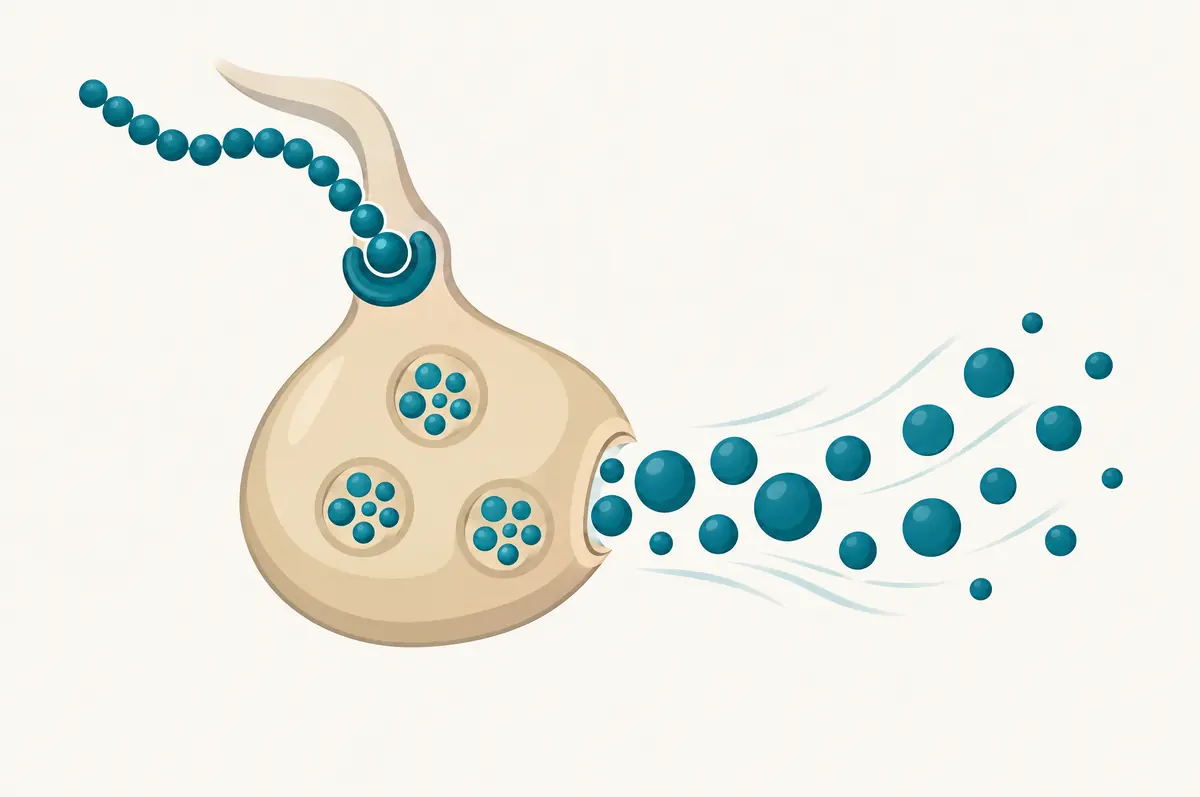
The three molecules and their status
Sermorelin (GHRH 1-29 amide) was FDA-approved as Geref for diagnosing and treating GH deficiency in children and was discontinued by the manufacturer in 2008. Tesamorelin (Egrifta) is a GHRH(1-44) analog with a trans-3-hexenoyl group; FDA approved it in 2010 to reduce excess abdominal fat in adults with HIV-associated lipodystrophy. CJC-1295 with DAC binds albumin through a maleimide linker, extending half-life to about six to eight days; development stopped after phase 2, and it has no approval. WADA S2 prohibits GHRH and its analogs by name.
Delivery profile
All are given by subcutaneous injection. Tesamorelin is injected daily. CJC-1295 with DAC achieves weekly dosing through albumin binding but produces sustained rather than pulsatile GH elevation. Sermorelin's short half-life requires daily dosing. Oral routes are not viable for these peptides without major protection from proteases. Formulation stability is also a practical issue: lyophilized GHRH analogs are reconstituted before use and have limited in-use shelf life. Approved products specify handling and storage on their labels, and those conditions are part of the registration.
Why this page exists
The GH axis attracts gray-market peptide use. This page sets out which analogs are approved, for what, and which are not. Clinicians asked about sermorelin or CJC-1295 need to know that neither has current FDA approval, that compounded or online products vary in quality, and that athletes face sanctions for any use. Approved GH deficiency therapies are the appropriate reference for patients with a diagnosis. Vegalab does not formulate these for unregulated sale.
Key facts
- Tesamorelin is FDA-approved to reduce excess abdominal fat in HIV-infected adults with lipodystrophy (FDA label, Egrifta 2010)
- CJC-1295 increased GH and IGF-1 with an estimated half-life of 5.8 to 8.1 days after a single injection in healthy adults (Teichman et al. 2006, J Clin Endocrinol Metab 91:799)
- Growth hormone-releasing hormone (GHRH) and its analogues, e.g. CJC-1295, sermorelin and tesamorelin, are prohibited under S2 (WADA Prohibited List 2026)
How our delivery technology applies
The GH axis is sensitive to release profile: sustained exposure blunts the natural pulsatile pattern, while short-acting peptides need daily injection. Multi-layer encapsulation shapes that profile, and for GHRH analogs the work runs with a license holder of an approved product such as tesamorelin, working through a registered reformulation pathway.
License holders of approved peptides: discuss release-profile reformulation with Vegalab.