


Does dish soap kill aphids without hurting plants?
Last updated:
Dish soap can kill aphids it wets directly, but results are inconsistent and the risk of plant injury is higher than with insecticidal soap.4,7 Most dish soaps are synthetic detergents made to strip grease, and they can damage the waxy cuticle that protects leaves.5,6 A registered insecticidal soap, made from potassium salts of fatty acids, is the lower-risk choice; follow the product label.3,5
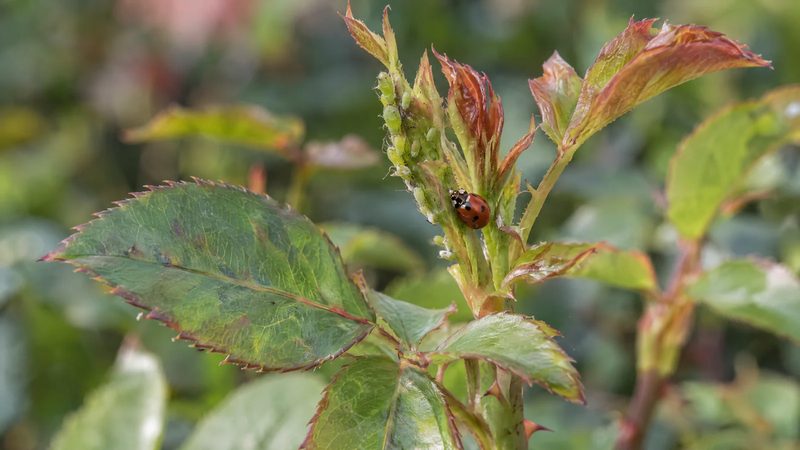
Does dish soap actually kill aphids?
Aphids (family Aphididae) are soft-bodied, pear-shaped, sap-sucking insects with a pair of tube-like cornicles at the rear of the abdomen.1 Soft-bodied pests like these are the group soaps and detergents work against: they act strictly on contact, disrupting cell membranes so the insect dies of rapid dehydration.3 Some soaps simply wash off the waxy outer coating of the insect cuticle, destroying its watertight quality.7
University of California Cooperative Extension notes that certain hand soaps and liquid dishwashing detergents can be effective insecticides, but also that many soaps and detergents are poor insecticides.7 Iowa State University Extension describes the effect of dish soap on pests as limited and inconsistent.4 In a laboratory test with silverleaf whitefly nymphs, a household liquid dish detergent was more toxic than a commercial insecticidal soap.8 So the answer to "does it kill aphids" is often yes for the aphids it soaks; the problem is what it does to the plant.4,7
In North America aphid numbers build in spring, when cool temperatures hold back their natural enemies, and natural control is strongest in summer and fall1; winged aphids that spread to new plants appear mostly in spring and fall, and some species disappear by midsummer heat, when soap sprays should not be used above 90°F2. In the Southern Hemisphere the same spring build-up falls from about September to November.
Does dish soap spray hurt plants?
It can. Dish detergents are designed to remove grease from dishes, and they may injure plants by dissolving the waxy cuticle on the leaf surface.6 University of Florida extension specialists explain that the cuticle is a plant's main barrier against microbes and water loss; when it is stripped, the plant loses more water through transpiration and its foliage dries out.5 They photographed chlorosis and necrotic pitting on a rattlebox plant the day after a dish detergent mixture was sprayed to control aphids.5
Field data point the same way. In a peer-reviewed tomato study, plant dry weight and fruit yield fell as the detergent rate, the number of applications, or both increased, and detergent also delayed fruit maturity; a lighter, once-a-week regimen reduced the injury.8 Leaf damage can build up with repeated exposure, so the number of soap applications matters.3,7 Dry dish soaps and all clothes-washing detergents are too harsh to use on plants.7
Typical injury looks like yellow or brown spotting, burned leaf tips or leaf scorch.6 Colorado State University Extension states that dish soaps contain powerful detergents that can injure plants, damage soil and contaminate waterways, and does not recommend homemade soap solutions for insect control.3
What is the difference between dish soap and insecticidal soap?
The two share the word soap, but they are different products. Dish soap is more accurately a detergent, made from petrochemicals.4 Insecticidal soaps are true soaps: potassium salts of fatty acids, made with potassium hydroxide and blended from selected fatty acid chain lengths.5,6 Products sold for insect control are selected to control insects and to minimize plant injury, and they are of consistent manufacture.7
- Home recipes for soap sprays vary widely in strength and often add other potentially phytotoxic ingredients such as vinegar or alcohol.5
- Household soaps do not qualify for the federal exemption for minimum-risk pesticides, because they contain mixtures of components rather than single chemicals.3
- Detergents do not discriminate between harmful and helpful organisms, and can disrupt beneficial insect-killing fungi as well.5
| Feature | Dish soap or detergent | Insecticidal soap |
|---|---|---|
| Chemistry | Synthetic detergents and other cleaning chemicals | Potassium salts of fatty acids |
| Designed for | Removing grease and oily residue | Controlling soft-bodied insects and mites with minimal plant injury |
| Pesticide registration | Not registered as a pesticide | Registered product with a label |
| Mixing rate | Home recipes vary widely | Set on the product label |
| Sensitive plants | No guidance | The label lists plants not to spray |
| Plant injury risk | Higher | Lower when label directions are followed |
How do you use a soap spray on aphids without damaging plants?
Use a registered insecticidal soap and follow the product label for the mixing rate and repeat interval.5 Coverage decides the result: the spray has to wet the aphids, including those on leaf undersides, and it has no effect once it dries.2,3 Aphids inside curled leaves will not be reached, so prune those leaves out.2,3
- Do not spray water-stressed plants or when temperatures are above 90°F.2,5
- Spray when drying will be slow, such as early morning or early evening, and avoid hot, sunny afternoons.6
- Test on a small part of the plant first and wait at least 24 hours for spotting or scorch before treating the whole plant.6
- Hard water can make soap less effective and more damaging, because minerals bind the fatty acids into soap scum.6,7
- Young transplants, unrooted cuttings, plants with soft new growth, and open flowers are more likely to be injured.6
- Plants commonly listed as sensitive include sweet pea, bleeding heart, fuchsia, crown of thorns, Japanese maple and some succulents, ferns and plants with hairy leaves.5,6
What works on aphids instead of dish soap?
Most established plants tolerate aphid feeding and outgrow the damage, and large aphid populations often fall quickly when natural enemies build up or hot weather arrives.2 UC IPM recommends nonchemical methods first.2
- Knock aphids off sturdy plants with a strong stream of water; most cannot climb back, and spraying early in the day lets leaves dry quickly.2
- Prune out heavily infested leaves and shoots.2
- Protect natural enemies: lady beetles, lacewings, syrphid fly larvae, soldier beetles and tiny parasitic wasps that turn aphids into crusty, golden-brown mummies.2,1
- Control ants, which protect aphids from their natural enemies.2
- Avoid excess nitrogen fertilizer, which favors aphid reproduction; use slow-release forms in small portions.2
- If a spray is still needed, UC IPM rates insecticidal soaps and oils as the best choices for most situations, because they leave no residue to harm natural enemies that arrive later.2
Key takeaways
- Dish soap can kill aphids it coats, but its effect is inconsistent and many detergents are poor insecticides.
- Dish detergents can strip the waxy leaf cuticle; a tomato field study linked repeated detergent sprays to lower growth and yield.
- Insecticidal soap is a registered product made from potassium salts of fatty acids, selected to limit plant injury; follow the product label.
- Any soap works only on contact: cover leaf undersides, avoid heat above 90°F and stressed plants, and test a few leaves first.
- Water sprays, pruning, natural enemies and less nitrogen handle most aphid problems before a spray is needed.
References
- Aphids (University of Wisconsin Garden Facts XHT1043)
- Pest Notes: Aphids (UC ANR Publication 7404)
- Insect Control: Insecticidal Soap (Fact Sheet 5.547)
- Can I use dish soap instead of insecticidal soap to treat for insect pests?
- Managing Plant Pests with Soaps (ENY344)
- Insecticidal Soaps
- Soap Sprays as Insecticides
- Household Detergent on Tomato: Phytotoxicity and Toxicity to Silverleaf Whitefly