

Last updated:
Whiteflies are small (1 to 1.5 mm) white-winged sap-feeding insects that gather on leaf undersides and coat plants in honeydew. To get rid of them, check the undersides of young leaves, use yellow sticky traps for monitoring, spray leaf undersides with volume, repeat every 5 to 7 days through a generation, remove heavily infested lower leaves, rotate modes of action and, under glass, use screening and a host-free break.
Crops affected
How do you identify whiteflies?
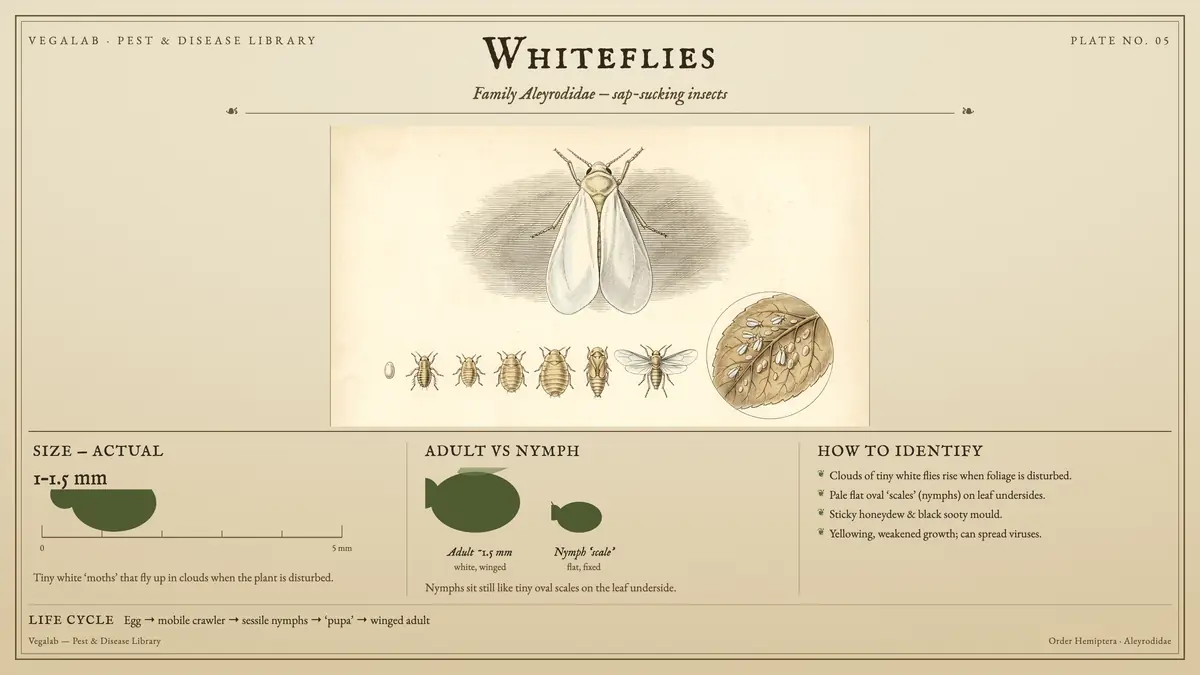
- Yellowing, weakened growth; can spread viruses.
What are whiteflies?
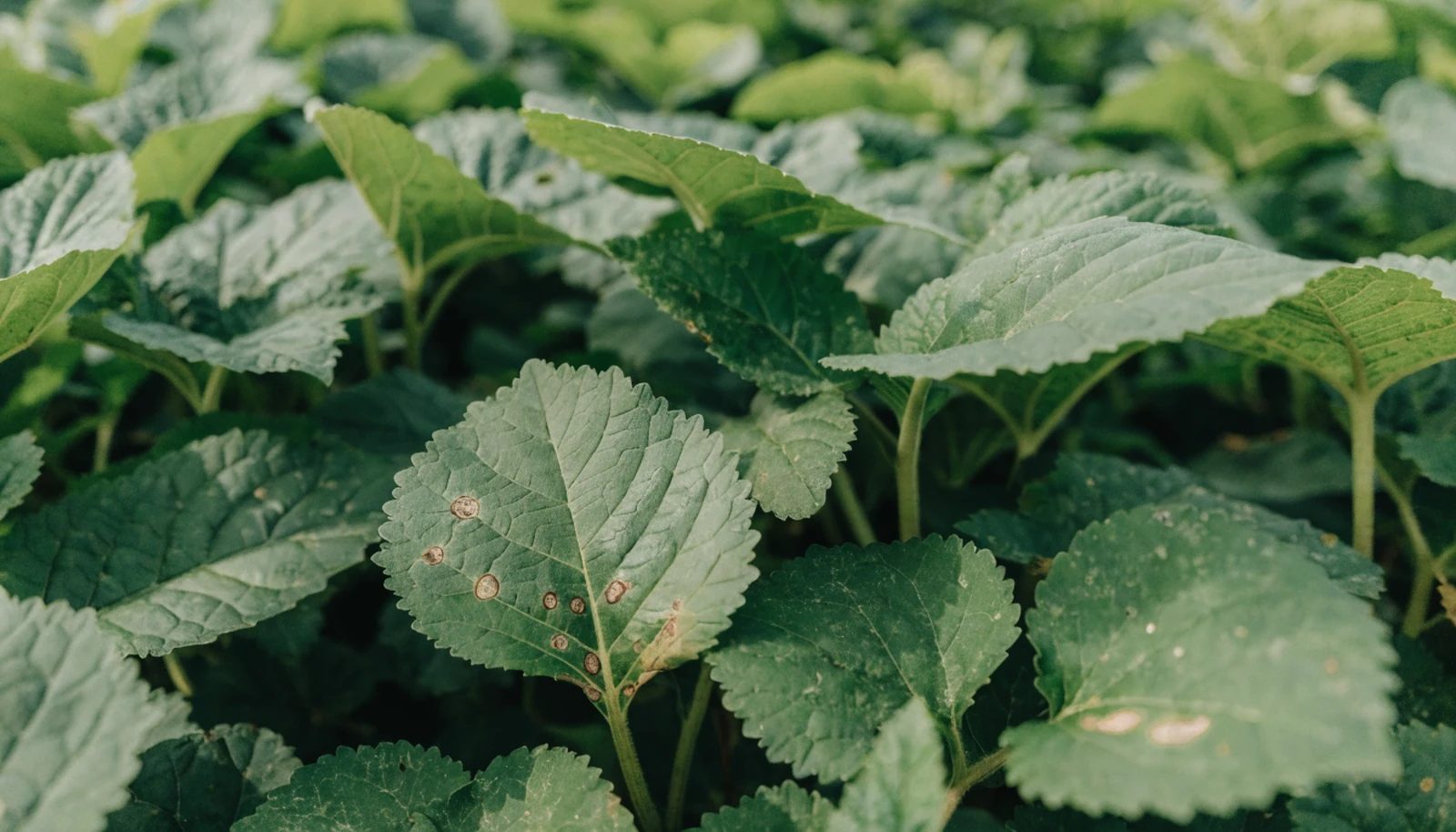
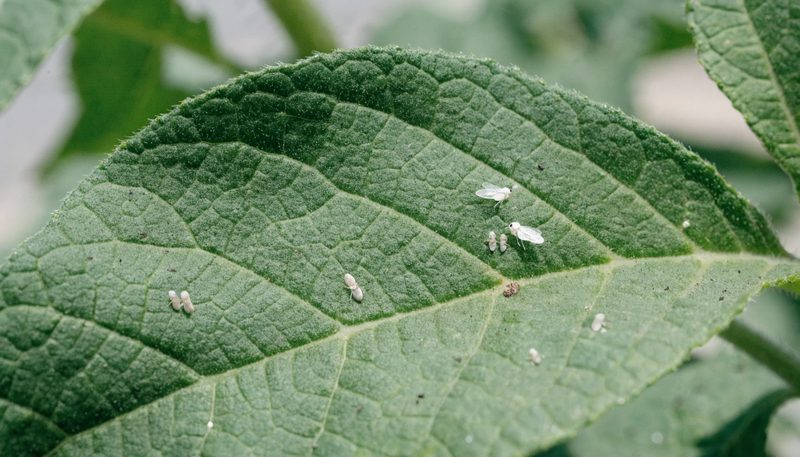
Whiteflies are small (1–1.5 mm) white-winged insects related to aphids and scale. They gather on the undersides of leaves, where both adults and their immature stages suck sap. They breed continuously in warm conditions, so populations build quickly in greenhouses and mild climates.
What are the signs of whiteflies?
- Clouds of tiny white adults disturbed from the canopy
- Scale-like nymphs on leaf undersides
- Honeydew and black sooty mold
- Virus symptoms and irregular ripening
How do whiteflies spread?
Eggs are laid on the underside of young leaves, often in a circle or arc where the female pivoted while feeding. The first nymphal stage - the crawler - walks a short distance, settles, and then loses its legs. The next three stages are immobile, flat, scale-like and firmly attached to the leaf underside, ending in a non-feeding pupal stage from which the winged adult emerges.
That immobile middle is the practical problem. Those stages sit tight against the leaf underside, protected by a waxy covering, and no amount of over-the-top spraying reaches them. It is also why systemic and translaminar activity matters more against whitefly than against a mobile pest.
Development takes roughly three to four weeks in warm conditions, and adults live for weeks laying continuously, so all stages are present simultaneously and generations overlap completely. Under protection there is no seasonal break at all.
What damage do whiteflies cause?
Heavy whitefly feeding saps plant vigor and reduces yield, while honeydew fuels sooty mold that blocks light. Most seriously, whiteflies transmit a range of plant viruses, which can devastate susceptible crops. Their fast breeding in warm conditions means infestations escalate quickly without intervention.
How do you control whiteflies?
- Use yellow sticky traps to monitor and reduce adult numbers.
- Remove and destroy heavily infested lower leaves.
- Protect natural enemies and avoid broad-spectrum chemicals.
- Spray a natural contact insecticide on leaf undersides, repeating to catch new adults.
How do you get rid of whiteflies?
- Check leaf undersides on young growth. Adults fly up in a cloud when disturbed; the eggs and scales that matter stay put, and that is what you are counting.
- Use yellow sticky traps for monitoring and timing. They catch adults and indicate when flights rise. They do not control a population - treat them as instrumentation.
- Aim under the leaf, with volume. The damaging stages are all on the underside. Coverage decides the outcome; a canopy-top pass mostly wets the wrong surface.
- Repeat on a 5–7 day interval through a generation. A single application removes the exposed stages and leaves the protected ones to emerge.
- Exclude and break the cycle under protection. Insect screening, a host-free period between crops, and removing volunteers and weed hosts do more than any spray in a greenhouse.
- Remove heavily infested lower leaves rather than trying to save them, and take them out of the house.
- Rotate modes of action deliberately. Bemisia tabaci has developed resistance to most insecticide classes used against it, and protected cropping selects for it fast.
Honeydew and the sooty mold that grows on it often cost more than the feeding does, downgrading fruit and leaf quality. See Sooty Mold.
Why are whiteflies a virus risk?
The feeding damage is rarely the real loss. Bemisia tabaci transmits the begomoviruses · tomato yellow leaf curl virus and the cassava mosaic viruses among them · and the greenhouse whitefly transmits several criniviruses. These are persistent viruses: once an insect acquires one it can transmit for the rest of its life, and a very small population is enough.
That changes the economics completely. In a virus-susceptible crop the action threshold is set by transmission risk, not by visible damage, and the priority shifts to keeping adults out of the crop in the first place - screening, clean transplants, and a host-free break - rather than to reducing numbers once they are in.
See Leaf Curl Viruses and Mosaic Virus.
Where do soap, oils and neem fit against whiteflies?
Soaps and horticultural oils are a reasonable fit for whitefly precisely because the vulnerable stages are stationary: if you can wet the leaf underside, the scales are there to be wetted. They have no residual activity, so they do nothing about the adults that fly in tomorrow, and they need thorough coverage on a short repeat interval.
Neem adds growth-regulating activity that carries over to nymphs which survive the initial wetting, and it also suppresses egg-laying. Both are limited by the same thing: reaching the underside of dense, layered foliage. Where they genuinely excel is in a pre-harvest window, and on a light early population caught before the canopy closed.
Recommended Vegalab solution: Spider Mite Control
Vegalab Spider Mite Control is the primary option for whitefly, with MultiMite Control as a companion where pressure is broader. It works physically rather than through a single biochemical target - blocking the pests' breathing holes, suffocating them on contact and deactivating laid eggs - so thorough coverage matters more than dose. Treat leaf undersides thoroughly and keep pressure on through the crop under glass, targeting the controllable nymph stage.
Observed results: Spider Mite Control has demonstrated 90-97% spider mite control across four trials, at zero pre-harvest and re-entry interval with no observed phytotoxicity. It also targets aphids, scale, thrips and other soft-bodied insects.
| Trial | Crop / site | Result |
|---|---|---|
| Independent field trial, D&M Chemical, 2014 | Strawberry, Oxnard, California | 97% control across egg, nymph and adult stages |
| Independent field trial, D&M Chemical, 2014 | Strawberry, Camarillo, California | 89% control including eggs |
| Independent field trial, D&M Chemical, 2018 | Hops, Yakima, Washington | Above 90% control at full rate, 50 gal/ac |
| Laboratory assay, University of Florida IFAS (Tier 1) | Laboratory, at 1:500 | Above 93% mortality |
Mix rate 1:500 to 1:1,000 by infestation level, against an untreated infestation baseline. No percentage figure is claimed for aphids, scale or thrips.
| Role | Product | Use |
|---|---|---|
| Primary control | Spider Mite Control | Contact miticide / insecticide |
| Companion / broader pressure | MultiMite Control | Broader mixed mite & insect pressure |
By crop
See crop-specific solutions
How do you prevent whiteflies next season?
Scout regularly with sticky traps, quarantine new plants before introducing them (especially in greenhouses), and keep beneficials active. Resilient plants handle pressure better, so keep nutrition balanced through the crop.
Key takeaways
- The immobile, scale-like nymph stages sit on leaf undersides under a waxy covering, where over-the-top sprays miss them.
- Development takes about three to four weeks, and under protection generations overlap with no seasonal break.
- Yellow sticky traps monitor adult flights; they do not control a population.
- Bemisia tabaci has developed resistance to most insecticide classes used against it.
- In virus-susceptible crops, keeping adults out with screening, clean transplants and a host-free break comes first.
Claims and product availability vary by jurisdiction. Always read and follow the product label.