

Last updated:
The earwig gardeners meet most often is the European earwig (Forficula auricularia), a reddish-brown night feeder with tail pincers that chews seedlings, flowers, soft fruit and corn silks but also eats aphids.1,4 To control them, remove damp hiding places, trap them nightly in rolled newspaper, cardboard or oil-baited cans, and use a spinosad bait only if needed, following the product label.1,2
What does an earwig look like?
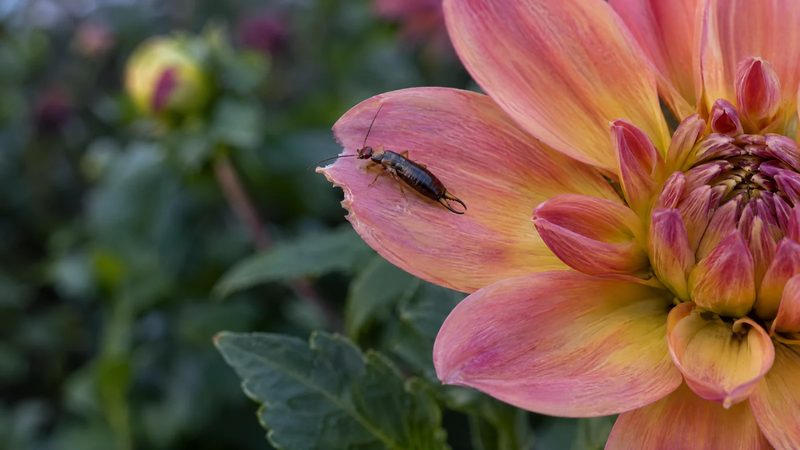
The European earwig (Forficula auricularia) is the most common earwig in gardens; it was accidentally introduced into North America from Europe in the early 1900s and was established in the eastern United States by around 1907.1,2,4 Adults are about 5/8 to 3/4 inch long and reddish brown, with a pair of forceps-like appendages (cerci) at the tail end.1,2 The forceps are strongly curved in males and straighter in females.1,3 Most species have wings folded under short, hard wing covers, but they seldom fly and spread mainly by crawling.1,3 Young earwigs (nymphs) look like small, wingless adults.1,2
There are 28 earwig species in the United States.4 Two others are worth knowing: the striped earwig (Labidura riparia), which is attracted to lights and smells bad when crushed but does not damage plants, and the ring-legged earwig, which has a band on its forelegs.1,2
| Species | How to recognize it | Garden role |
|---|---|---|
| European earwig (Forficula auricularia) | Reddish brown, 5/8 to 3/4 inch, curved forceps in males | Chews seedlings, flowers, soft fruit and corn silks; also eats aphids |
| Striped earwig (Labidura riparia) | Drawn to lights, strong odor when crushed | Does not damage plants; feeds on pests |
| Ring-legged earwig | Band on the forelegs | Mostly outdoors; can infest damp stored grain |
In North America earwig numbers build through summer: Colorado problems run from mid-July through mid-September, western populations peak in mid to late summer, and eggs begin hatching from mid-May in northern Utah.2,3 In the Southern Hemisphere the same summer build-up falls roughly from January to March.
Why are there so many earwigs in my garden?
Earwigs feed at night and spend the day in dark, cool, moist places: under boards, loose soil clods, mulch and debris, inside dense vines and weeds, and in fruit already damaged by snails, birds or other pests.1 They do not survive well in hot, dry conditions, so irrigated gardens with mulch and ground cover suit them.1,4 Earwigs aggregate in tight spaces, drawn by pheromones from their droppings and chemicals on their bodies.3
The life cycle explains the summer build-up. Females dig cells in the soil in fall and winter and lay masses of 30 or more eggs, then guard the eggs and clean them of mold and fungal spores.1,4 The young stay in the nest until their first molt, and later instars forage on their own.1 Generally there is one generation a year, with females producing two broods, although in the western United States there can be two or more generations and populations peak in mid to late summer.1,3
In Colorado, earwig problems typically run from mid-July through mid-September.2 Earwigs move indoors when conditions outside become too dry, too hot or too cold.1
What damage do earwigs cause in the garden?
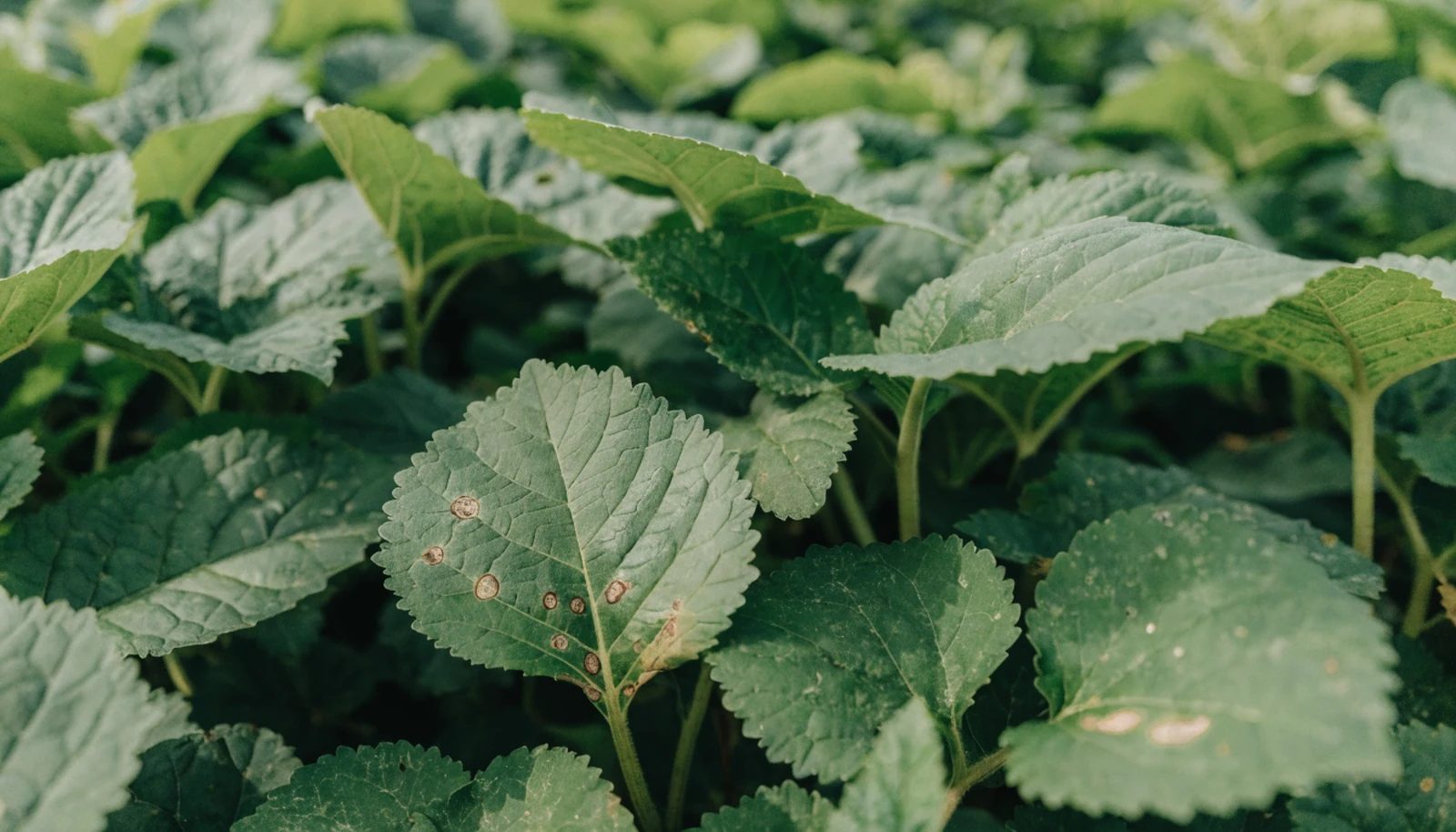
European earwigs can do serious damage to seedling vegetables and annual flowers, maturing soft fruit and sweet corn.1 Seedlings may be missing all or part of their leaves and stem, and leaves on older plants show irregular holes or chewed edges.1 On corn they feed on silks and prevent pollination, which leads to poor kernel development.1 They also damage flowers such as zinnias, marigolds and dahlias.1
Fruit damage depends on firmness. Earwigs attack soft fruit such as apricots, strawberries, raspberries and blackberries, but they do not harm hard fruit such as apples.1 On stone fruit, look for shallow gouges or holes that run deep into the fruit.1
Earwigs are often blamed for damage they did not cause, because leaves curled by aphids and holes made by other pests are favorite hiding places.2 Go out at night with a flashlight to see the culprits feeding before treating.1
| Culprit | Damage pattern | Clues to look for |
|---|---|---|
| Earwigs | Irregular holes, chewed leaf edges, eaten silks and petals, gouges in soft fruit | Insects with pincers seen feeding at night |
| Caterpillars | Similar holes and chewed edges | Webbing, frass (droppings) or pupae |
| Slugs and snails | Holes in strawberries and leaves | Silvery slime trails |
Are earwigs good or bad for the garden?
Earwigs are both. European earwigs feed on dead and living organisms, including insects, mites and growing plant shoots, and they are voracious feeders on soft-bodied insects such as aphids and on insect eggs.1 They have been shown to be important aphid predators and can exert significant biological control under some circumstances.1,2
Orchard research shows how the balance shifts by crop. Field work in apple orchards found no correlation between earwig density and fruit damage, video caught earwigs eating a woolly apple aphid colony at night, and experiments show they help suppress woolly apple aphid and green apple aphid.5 In softer fruit such as peaches, earwigs are pests.5 A study of Mediterranean apple orchards describes the European earwig as a key predator of pests in temperate regions, worth encouraging in pip fruit such as apples and pears and controlling in stone fruit.6
In yards planted mainly to lawn, trees, native plants and woody ornamentals, earwig damage is unlikely to matter, and many gardens do not need to manage them at all.1 Management pays off where you grow vegetables, soft-fruited plants such as strawberries and apricots, sweet corn or annual flowers.1
How do you get rid of earwigs in the garden?
Trapping is the core of earwig control, and daily trapping can bring populations down to tolerable levels.1 A low-sided can, such as a tuna or cat food can, with 1/2 inch of vegetable oil and a drop of bacon grease or fish oil makes an effective trap, especially when sunk so its rim sits at soil level.1 Rolled newspaper, corrugated cardboard, bamboo tubes or short pieces of hose set on the soil just before dark collect earwigs that can be shaken into soapy water in the morning.1 Colorado State trials found that adding wheat bran or wheat germ inside cardboard or newspaper shelters improved catches; collect and bag those traps every 2 to 3 days.2,3
Remove the shelter that keeps numbers high. Clear ivy, weeds, rubbish piles and leaves near vegetable beds, and watch mulches, which often harbor earwigs.1 Reducing surface moisture also helps.1,4 On fruit trees, keep weeds, brush and suckers away from the trunk, wrap a band of sticky material around the trunk to stop earwigs from climbing, and pick fruit as soon as it ripens.1,3 Toads, birds and other predators help in some gardens, and chickens and ducks eat many earwigs.1 Parasitic tachinid flies released against the European earwig in the 1920s and 1930s persist in Utah, but parasitism levels are too low to suppress populations.3
Where an insecticide is wanted, UC IPM rates spinosad baits or sprays as the most effective, environmentally sound products.1 Baits work best when scattered around susceptible plants before they are infested, and they often fail where other attractive food is available.1 Apply at night and before the infestation becomes severe, combine treatment with trapping and sanitation, and follow the product label, including the plants it allows.1
| Method | How it works | Best use |
|---|---|---|
| Oil-baited can trap | Fish oil or bacon grease draws earwigs into oil | Beds with seedlings or strawberries |
| Rolled newspaper or cardboard | Offers a daytime hiding place you can empty | Anywhere; bait with wheat bran to improve catch |
| Removing mulch, ivy and debris | Takes away moist daytime shelter | Around vegetable beds and foundations |
| Sticky trunk band | Blocks climbing | Stone fruit trees as fruit ripens |
| Spinosad bait | Eaten by foraging earwigs | Around plants before damage starts; follow the label |
How do you keep earwigs out of the house?
Earwigs indoors are a nuisance rather than a health hazard, and they eventually die because there is little for them to eat.1 Sweep or vacuum them up and dispose of them promptly.1 Seal cracks around doors, windows and vents, and fit door sweeps and tight screens.2,3
Outside, clear mulch, leaves, ivy and other debris from next to the foundation, especially near doorways and window wells, and keep the area dry by repairing downspouts and grading soil so water drains away.1,2 Swap white outdoor lights for yellow or sodium vapor bulbs, which attract fewer earwigs.1 Indoor insecticide treatments are not recommended because they do little to prevent invasions.1
Key takeaways
- The European earwig (Forficula auricularia) feeds at night and hides by day in moist shelter such as mulch, boards and dense ground cover.
- Earwigs damage seedlings, flowers, soft fruit and corn silks, but not hard fruit such as apples.
- They also eat aphids and insect eggs, so in lawns, trees and woody plantings they rarely need control.
- Daily trapping with oil-baited cans or rolled newspaper, plus removing damp shelter, is the main control.
- If a pesticide is needed, spinosad baits are the UC IPM choice; follow the product label.