

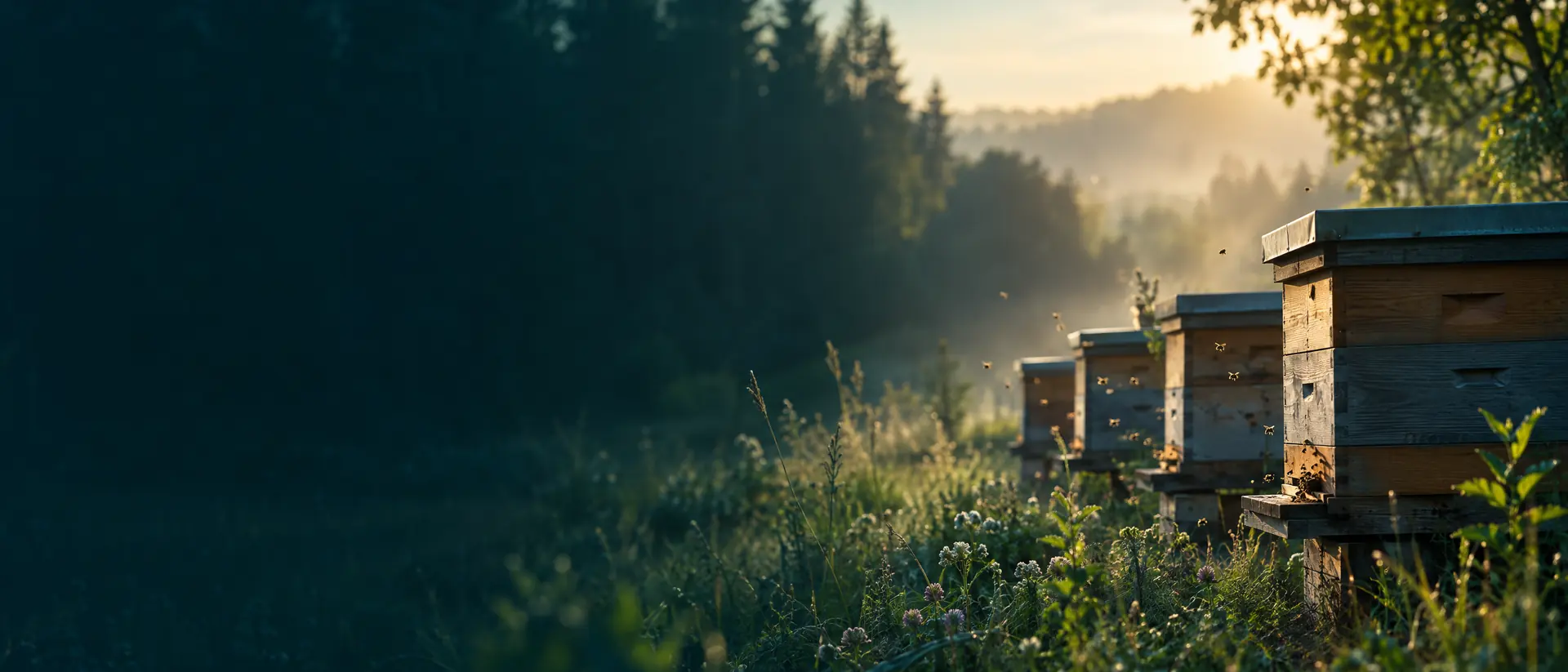
Apiaries: Biosecurity for Honey Bee Colonies
Apiary biosecurity turns on three problems: Varroa mites inside the colony, predators such as the Asian hornet at the entrance, and spore-forming brood diseases carried on used equipment. Treatments inside a hive are regulated as veterinary medicines or registered pesticides, so the scope for general products is the equipment, the yard and the storage shed.
Varroa: the colony-level pest
Varroa destructor feeds on developing and adult bees and moves between colonies by drifting and robbing. Control relies on monitoring mite loads and using registered varroacides at the right point in the season, rotating modes of action. Thymol-based products such as Apiguard are registered for this use; unregistered essential-oil mixes are not a substitute and can harm brood or taint honey. Vegalab products are not registered varroacides and are not applied inside hives.
Asian hornet and entrance predators
Vespa velutina, established in France since 2004 and now across much of western Europe, hawks foragers at the hive entrance and can collapse weak colonies in late summer. It was detected in Georgia in the United States in 2023. Response is led by national authorities: report sightings, support nest location and destruction, and use entrance reducers. Apiary operators should know their reporting route before the season starts. Traps near apiaries should follow national guidance to limit bycatch of other insects.
Equipment, storage and foulbrood spores
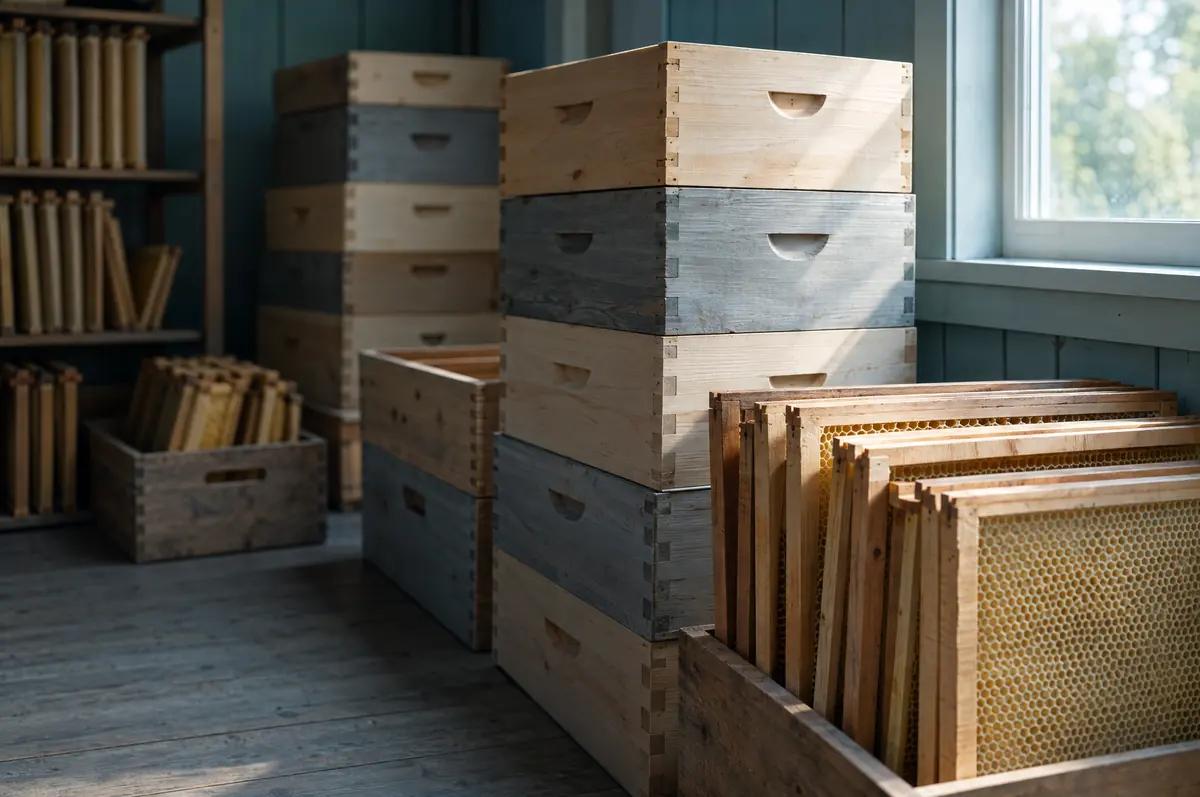
American foulbrood spores of Paenibacillus larvae remain viable for decades in comb and woodenware, and in many jurisdictions confirmed cases require burning or official treatment. Equipment moving between apiaries is the main spread route. Clean hive tools between yards, keep stored comb sealed from wax moth and robbing bees, and treat the honey house and storage areas as a controlled zone. Disinfectants support hygiene of tools and surfaces but do not replace statutory measures.
Key facts
- Vespa velutina was first recorded in southwest France in 2004 and spread rapidly across Europe (Monceau et al. 2014, J Pest Sci 87:1).
- The yellow-legged hornet (Vespa velutina) was first detected in the United States in Georgia in August 2023 (Georgia Department of Agriculture, 2023).
- Paenibacillus larvae spores are highly resistant and remain infective for many years in equipment (WOAH Terrestrial Manual, American foulbrood of honey bees chapter).
- Thymol is the active in registered varroacides such as Apiguard, and is not on the FIFRA 25(b) minimum-risk active list (40 CFR 152.25(f)(1)).
How our delivery technology applies
Inside the hive, delivery is a regulated veterinary question and outside our scope. The encapsulation problem we work on is next to it: volatile monoterpenes such as thymol lose most of their activity within days in open air. Multi-layer biopolymer shells slow evaporation and release actives over a longer window, which is relevant to yard perimeters and equipment storage, not to colonies. Any in-hive use would require a separate registration.
Apiary associations and bee inspectors: contact us about equipment hygiene programs.
Related reading
Last updated: