

What is thymol used for in crop protection?
Last updated:
Thymol, the phenolic monoterpene that is the principal active of thyme oil, is used in crop protection as a protectant with broad antifungal and antimicrobial activity. It inserts into microbial membranes, increasing permeability and causing leakage of cell contents, a physical effect that makes resistance comparatively difficult. It also has some vapor-phase activity. It is not systemic and does not cure established infection.
What is thymol?
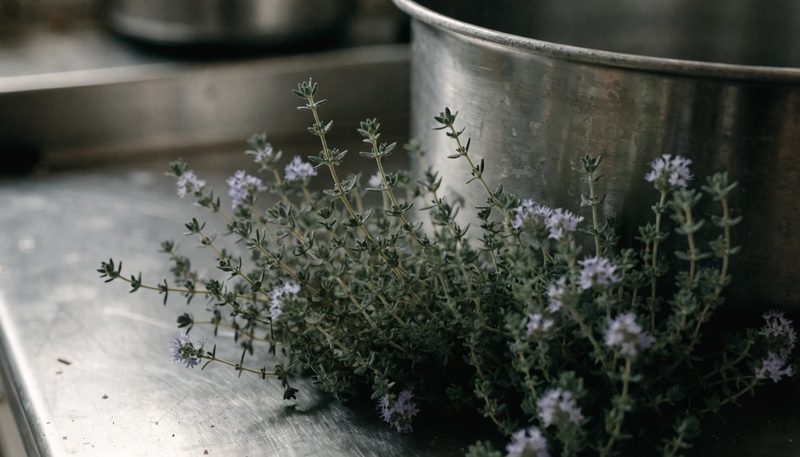
Thymol is a phenolic monoterpene and the principal active of thyme oil (Thymus vulgaris), where it occurs alongside its isomer carvacrol. It is one of the most studied botanical antimicrobials and is used across food preservation, veterinary medicine - notably in beekeeping against Varroa - and crop protection.
How does thymol work?
Thymol's phenolic hydroxyl group allows it to insert into and destabilize microbial membranes, increasing permeability and causing leakage of cell contents and loss of proton-motive force. Because this is a physical membrane effect rather than inhibition of a single enzyme, activity is broad and the pathway to resistance is comparatively difficult - a genuine advantage over single-site fungicides.
It also has some vapor-phase activity, which distinguishes it from geraniol and can be useful in enclosed environments.
What does thymol not do?
It is a protectant and early-intervention material, not a curative for established infection with substantial mycelial development inside plant tissue. It is not systemic. Persistence is short, so program timing matters. And at higher concentrations thymol is phytotoxic to sensitive crops, so rate discipline and a jar test on new tank mixes are worthwhile.
Is thymol safe?
Low mammalian toxicity and a long history of food use. Concentrated thymol is a skin and mucous-membrane irritant, so applicator protection is needed. Toxic to fish at low concentrations - keep out of watercourses. Phenolic compounds carry the same metabolic caution in cats as other terpenoids, so treated areas should be dry before animal access.
Which products are built on thymol?
Spore Control (thymol 1%), targeting anthracnose, damping off, downy and powdery mildew, gray mold, phytophthora and wilt.
Key takeaways
- Thymol occurs in thyme oil (Thymus vulgaris) alongside its isomer carvacrol.
- It is used in food preservation, in beekeeping against Varroa and in crop protection.
- It acts as a protectant and early-intervention material, and its persistence is short, so timing matters.
- At higher concentrations it is phytotoxic to sensitive crops, so rate discipline and jar tests matter.
- It is toxic to fish at low concentrations and must be kept out of watercourses.
References
Frequently asked questions
Is thymol safe for dogs?
Thymol has low mammalian toxicity and a long history of food use. Concentrated thymol irritates skin and mucous membranes, and treated areas should be dry before animals have access.
Is thymol safe for cats?
Thymol calls for caution around cats: as a phenolic compound it carries the same metabolic caution in cats as other terpenoids. Treated areas should be dry before a cat has access, and concentrate should be kept away from animals.
Can thymol cure an established plant infection?
No. It is a protectant and early-intervention material, not a cure for infection with substantial mycelial development inside plant tissue. It is not systemic and its persistence is short, so program timing matters.
Related reading
Products
This page lists the products built on thymol above.