


Does cinnamon kill fungus in soil?
Last updated:
Not reliably. Cinnamon (Cinnamomum spp.) contains antifungal compounds, and in lab dishes its powder stopped damping-off fungi only when it made up 8% of the growth medium.1 The greenhouse trial behind that work coated faba bean seeds rather than dusting soil.1 Clean seed-starting mix, disinfected trays, good airflow and careful watering are the proven ways to prevent damping-off.2
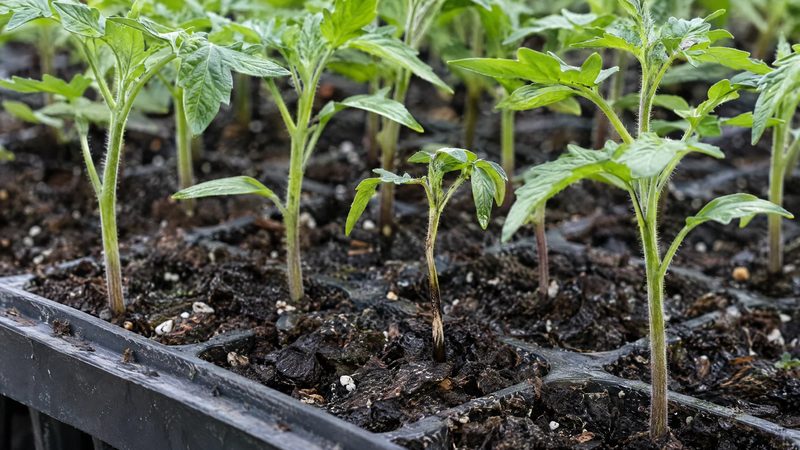
Why do people think cinnamon kills fungus?
The idea has a real chemical basis.1 Cinnamon is the dried bark of Cinnamomum trees; Ceylon cinnamon (Cinnamomum verum) is called true cinnamon, and cassia cinnamon (Cinnamomum aromaticum) is the type most commonly sold in North America.7 Its antifungal constituents include cinnamic aldehyde and eugenol.1
In laboratory dishes, cinnamon works against fungi.1 A study that mixed 20 powdered spices into fungal growth medium found that cinnamon was among the spices with a highly significant inhibitory effect on soilborne fungi that cause damping-off.1 A 2026 review of plant essential oils reports that cinnamon oil changes the structure of fungal hyphae and suppresses aerial mycelium.3 Lab inhibition is where the evidence is strongest, and it is also where the gap with garden use begins.1,3
In North America damping-off pressure tracks indoor seed starting in late winter and spring, when cool, wet media favor Pythium, Phytophthora and Sclerotinia2. In the Southern Hemisphere the same seed-starting window runs from about July to October.
What does the evidence show for cinnamon and damping-off?
The dose in the lab was high.1 Complete inhibition of the major fungi tested needed powdered spice at 8% of the culture medium, or extract at 6%.1 Extracts inhibited fungal growth more than the powders did.1
The greenhouse test was a seed treatment, not a soil dusting.1 Faba bean seeds were coated with spice powder or soaked in spice extract, then sown in soil deliberately infested with Fusarium solani or Rhizoctonia solani.1 Cinnamon was one of the two spices with the highest protective effect, and the spice treatments performed similarly to a commercial fungicide seed dressing in reducing damping-off.1 Extracts did better before seedlings emerged and powders did better after emergence.1 The trial did not test Pythium, and it used one crop.1
Translating lab activity into plant protection is the hard step for plant oils generally.3 The 2026 review lists compositional variability, volatility, phytotoxicity, limited persistence, inconsistent dose responses and insufficient field validation as the limits on practical use of essential oils against plant pathogens.3
| Question | In the published studies | In typical home use |
|---|---|---|
| Form | Powder mixed into growth medium, extracts, essential oil | Ground spice dusted on the soil surface |
| Concentration | Complete lab inhibition at 8% powder or 6% extract in the medium | A light dusting, not measured |
| How it met the pathogen | Seed coating or seed soak before sowing | Sprinkled after sowing or after symptoms |
| Pathogens | Fusarium solani and Rhizoctonia solani in the greenhouse | Whatever is in the tray, often unknown |
| Species | Cinnamomum burmannii in the damping-off study | Usually cassia cinnamon in North America |
What does EPA say about cinnamon as a pesticide?
Cinnamon and cinnamon oil are on the list of active ingredients allowed in minimum risk pesticides, the products exempt from federal registration under 40 CFR 152.25(f).4 Exempt products are not reviewed by EPA, and EPA treats label statements that imply federal review or endorsement of such products as misleading.5 A minimum risk listing therefore says nothing about whether a cinnamon product controls damping-off; if you use any product, follow the product label.5
What causes damping-off in seedlings?
Damping-off is caused primarily by fungi already present in the growing medium, and several genera are involved.2 Seeds can be attacked before they emerge, which shows up as a poor stand, and emerged seedlings rot at or near the soil line, then shrivel, collapse or stay stunted.2 Weak seedlings and germinating seed are most vulnerable when growing conditions are poor.2
| Organism | Conditions it favors |
|---|---|
| Pythium | Cool, wet soil |
| Phytophthora | Cool, wet soil |
| Sclerotinia | Cool, wet soil |
| Rhizoctonia | Warmer, drier conditions |
| Fusarium | Warmer, drier conditions |
| Sclerotium rolfsii | Warmer, drier conditions |
What works instead to prevent damping-off?
Prevention rests on clean materials and growing conditions that let seedlings emerge quickly.2 NC State Extension lists these steps:
- Clean and disinfect seed trays and flats, store them clean, and avoid reinfesting treated soil.2
- Use a sterilized soilless mix for bedding plants, or soil with good drainage, structure and aeration.2
- Use fungicide-treated seed with high germination where it is available.2
- Avoid overly thick stands, and sow at the proper depth and soil temperature for quick emergence.2
- Keep air moving and light intensity adequate.2
- Once damping-off appears, water less often, improve drainage and ventilation, and remove affected flats.2
- For organic growers, biological products containing Bacillus subtilis, Streptomyces lydicus, Trichoderma or Gliocladium virens are available and work best combined with these cultural practices; follow the product label.2
Does cinnamon help cuttings root?
The evidence is thin and comes from single-species trials.6 In a 2024 study on leaf cuttings of the succulent Prometheum sempervivoides, the highest dose of a commercial rooting hormone gave the best rooting.6 Cinnamon powder raised the survival of cuttings planted 24 hours after they were taken, and it outperformed aloe vera gel as a natural rooting aid.6 That is a modest result for one plant, and it does not show that cinnamon replaces a rooting hormone.6
Key takeaways
- Cinnamon contains antifungal compounds such as cinnamic aldehyde and eugenol, and it inhibits damping-off fungi in lab dishes.
- Complete lab inhibition needed cinnamon at 8% of the growth medium, far more than a dusting supplies.
- The greenhouse damping-off trial used cinnamon as a seed coating on faba bean and did not test Pythium.
- Cinnamon is a minimum risk pesticide ingredient, and EPA does not review exempt products.
- Sanitation, sterile mix, airflow, light and careful watering are the proven defenses against damping-off.
References
- Antifungal effect of powdered spices and their extracts on growth and activity of some fungi in relation to damping-off disease control
- Damping-off in Flower and Vegetable Seedlings
- Plant essential oils against woody plant fungal pathogens: chemical composition, antifungal mechanisms, and translational challenges
- 40 CFR 152.25: Exemptions for pesticides of a character not requiring FIFRA regulation (paragraph (f), minimum risk pesticides)
- Conditions for Minimum Risk Pesticides
- Vegetative Propagation of Wild Prometheum sempervivoides (Fischer Ex M. Bieb.) H. Ohba by Leaf Cutting: Effects of Auxin and Some Substances
- Cinnamon
Frequently asked questions
Does cinnamon oil work better than ground cinnamon?
In the lab, spice extracts inhibited fungal growth more than powders.1 In the greenhouse seed trial, extracts gave better protection before emergence and powders after emergence.1 Essential oils are also limited by volatility and phytotoxicity, so a stronger lab result does not mean better protection for seedlings.3
Can you sprinkle cinnamon on seedlings that are already damping off?
NC State Extension's outbreak advice focuses on the growing conditions and the rest of the tray, not on a dusting.2 It advises reducing humidity and moisture, watering less often, improving drainage and removing affected flats.2 Where a fungicide is warranted, it is applied as a drench at the first sign of symptoms, and young seedlings are more susceptible to fungicide injury; follow the product label.2