

What protection do I need when handling these products?
Last updated:
The short answer
Gloves, eye protection and ventilation when handling concentrate, plus whatever the label specifies. Undiluted geraniol is a skin and eye irritant, and natural origin does not change that.
Why natural origin is not a safety argument
Concentration governs irritancy far more than origin. A plant-derived monoterpene at 30% in a drum is a different material from the same active at label dilution in a tank, and it behaves like the irritant it is. Several of the plant actives in use are recognised skin sensitisers - geraniol is one of the twenty-six fragrance substances the EU requires to be declared on cosmetic labels precisely because it is a recognised contact allergen.
The reasoning that a material is safe because it comes from a plant is the same reasoning that makes people careless with concentrate.
What exposure looks like
Most applicator exposure happens during measuring and mixing, not during spraying: splashes to the hands and forearms, and to the eyes when decanting at height. Then inhalation of vapour in an enclosed space such as a glasshouse or a store, and dermal contact from contaminated gloves, clothing and equipment after the job.
Repeat low-level dermal contact is how sensitisation develops, and it is easy to miss because no single exposure feels significant.
What to do
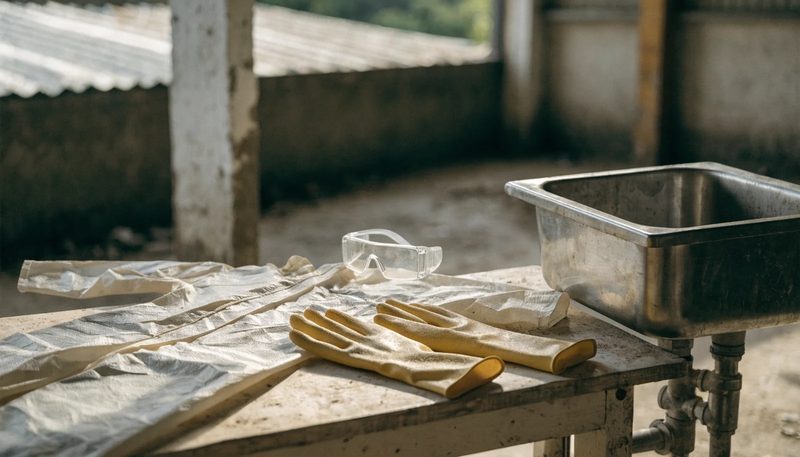
Wear chemical-resistant gloves and eye protection to measure and mix. Mix in a ventilated space and never in a confined one. Decant at a height where a splash cannot reach your face. Wash before eating, drinking or smoking, and change contaminated clothing rather than finishing the day in it.
Follow the personal-protective-equipment statement on the applicable label; where it asks for more than this page, it governs.
When to get advice
Follow the first-aid statements on the product label - they are part of the labelling required under 40 CFR § 156.10 and they are specific to that product. For an exposure or a suspected poisoning, call the emergency number on the label, or your national poison centre.
Which compounds are rated, and how
Ratings come from the compound records, so the same vocabulary appears here and on each compound page.
| Compound | Rating | Why |
|---|---|---|
| Chlorine dioxide | caution | Concentrated chlorine dioxide gas is a respiratory irritant and hazardous at elevated airborne concentrations. Occupational exposure limits exist; enclosed-space application requires ventilation and monitoring. |
| Geraniol | caution | Undiluted geraniol is a skin and eye irritant. Natural origin does not remove the need for gloves, eye protection and ventilation when handling concentrate. |
| NAD+ (nicotinamide adenine dinucleotide) | ok | Well tolerated topically; no photosensitising behaviour requiring night-only use. |
References
- Worker Protection Standard - 40 CFR 170.507 Personal protective equipment
- 40 CFR 156.64 Signal word (Subpart D, Human Hazard and Precautionary Statements)
- How to Comply With the 2015 Revised Worker Protection Standard For Agricultural Pesticides
- Personal Protective Equipment for Handling Pesticides
- Conditions for Minimum Risk Pesticides
- Choosing Organic Pesticides over Synthetic Pesticides May Not Effectively Mitigate Environmental Risk in Soybeans
Related reading
More in safety & stewardship
Products
No direct product mapping. This page examines a claim rather than a single ingredient, so no product maps to it directly.