


Layer House and Aviary Biosecurity
Laying flocks stay in place for a year or more, so pests and pathogens must be managed with birds present. Poultry red mite is the dominant pest in Europe and a growing one in cage-free systems elsewhere, and Salmonella Enteritidis testing sets the regulatory pace.
Poultry red mite and fowl mites
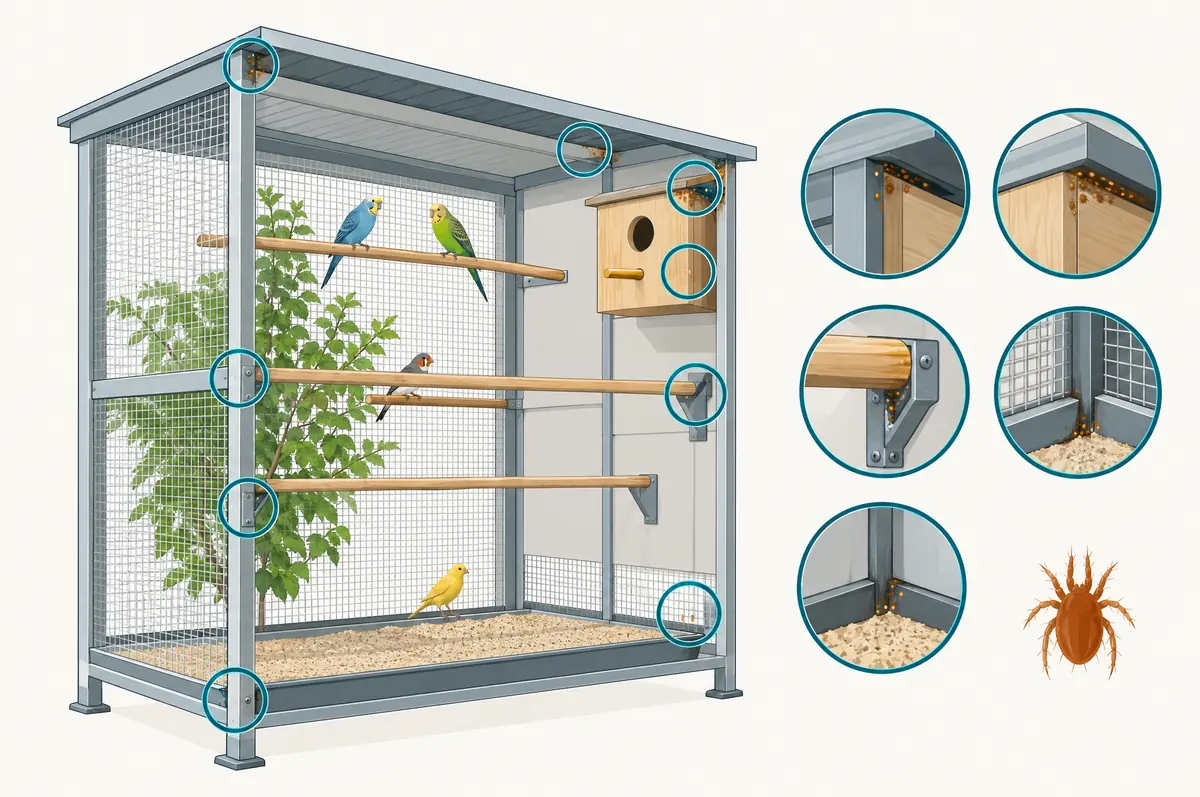
Dermanyssus gallinae hides in cracks, perches, nest boxes and aviary structures by day and feeds on hens at night. Aviary and enriched systems offer far more harborage than conventional cages, and prevalence is high across European layer farms. Northern fowl mite lives on the bird and is more common in North American flocks. Mite pressure lowers production, increases feather pecking and stresses hens. Integrated management combines monitoring traps, cleaning at depopulation, physical treatments and rotating acaricides.
Salmonella and flock testing
In the United States, layer farms above 3,000 hens must run Salmonella Enteritidis prevention plans with environmental testing and rodent and fly control. EU national programs set reduction targets with official sampling. Houses that test positive require cleaning and disinfection before the next flock. Rodents, flies and litter beetles act as carriers between flocks, so pest control is part of Salmonella control. Environmental swabs after cleandown confirm whether disinfection worked before new pullets arrive.
Working with birds present
Long cycles limit options. Only products labeled for occupied layer houses can be used during lay, often with egg withdrawal conditions. Non-chemical tools carry weight: silica-based products in dry conditions, heat treatment at depopulation, structural design that removes crevices, and monitoring to trigger action. Vetpure Miticide is intended for premise use in housing structures, not on birds. Monitoring traps under perches give a count to act on before mite numbers peak.
Key facts
- Poultry red mite infests a large majority of European layer farms and causes major economic losses (Sparagano et al. 2014, Annual Review of Entomology 59:447)
- Layer farms with 3,000 or more hens must implement Salmonella Enteritidis prevention and testing (21 CFR Part 118)
- Conventional battery cages were banned in the EU from 2012 under the laying hens directive (Council Directive 1999/74/EC)
How our delivery technology applies
Red mites spend the day deep in crevices, and a spray deposit on the surface above them loses volatile actives within days, while mite eggs hatch over about a week. Encapsulation keeps the active on the structure long enough to cover hatching nymphs from one treatment, and reduces the vapor concentration in the air space hens occupy. That is the design target of our premise mite work.
Layer producers can request a red mite program review and trial discussion.
Related reading
Last updated: