

Red mites in chickens (poultry red mite)
Last updated:
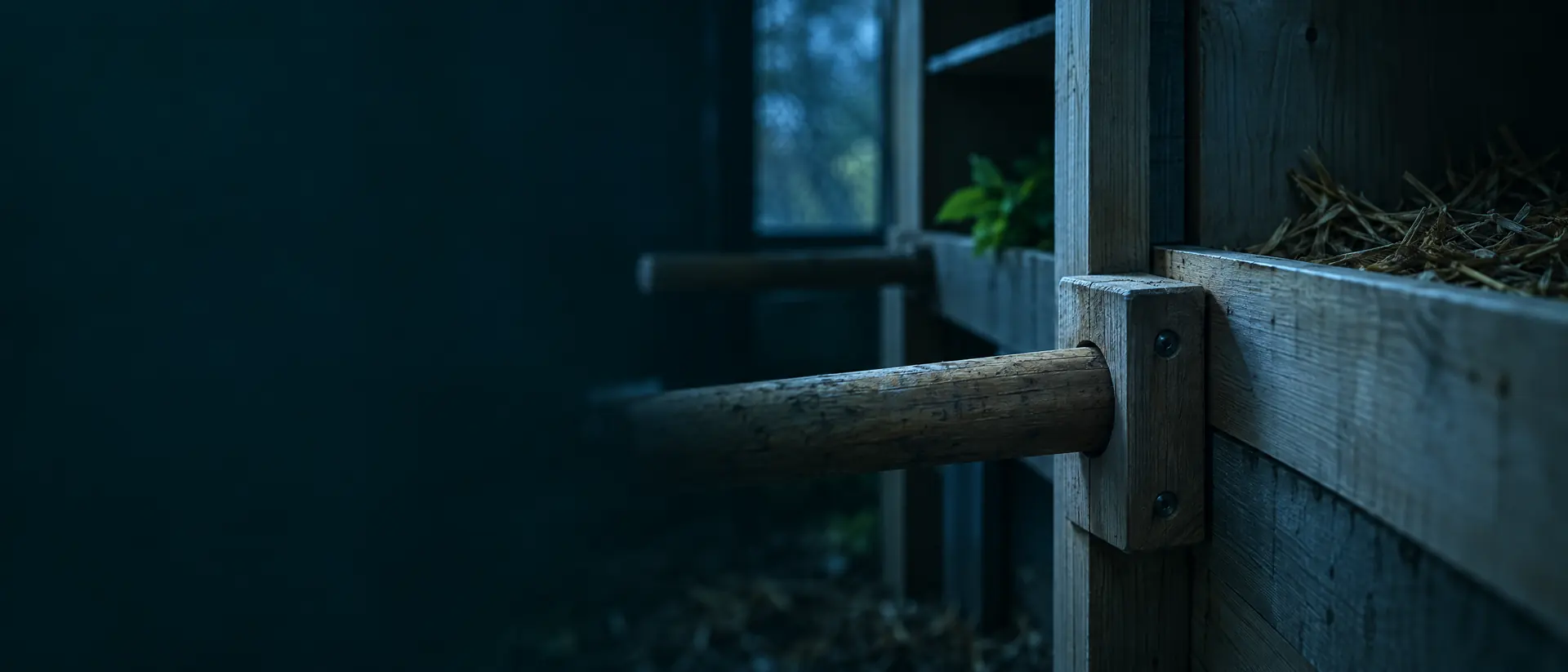
Red mites in chickens are poultry red mites (Dermanyssus gallinae), nocturnal blood feeders that live in the henhouse structure, not on the bird. By day they hide in cracks, perch ends, cage joints and under nest-box liners, then feed at night for one to two hours. Control means cleaning and sealing those refuges and repeating labeled premise treatments timed to the hatch cycle, which can take about a week.
The poultry red mite is a nocturnal blood feeder that lives in the structure of the henhouse, not on the bird. It is the most damaging ectoparasite of laying hens in Europe, and effective control means treating perches, joints and nest boxes repeatedly across its short life cycle.
Where do poultry red mites hide?
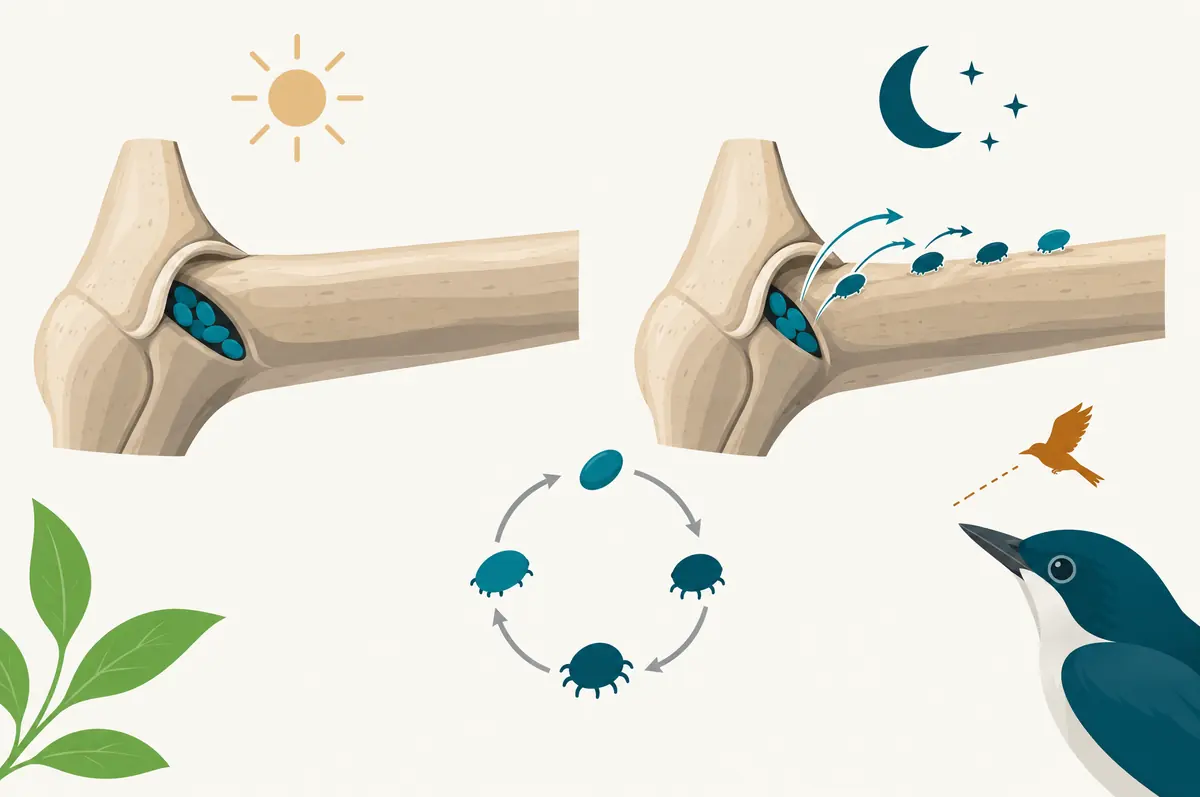
Mites hide by day in cracks, perch ends, cage joints and under nest-box liners, emerging at night to feed for one to two hours. The cycle from egg to adult can take about a week in warm conditions, so populations can grow rapidly in summer. Unfed mites survive for months in an empty house, which is why infestations persist between flocks. Gray mites turn red after feeding, and clusters with white-gray dust at joints are a clear sign.
How do you monitor for red mites?
Use corrugated cardboard or commercial mite traps at perch and cage joints, checked weekly, and count or score them. A simple scoring scale, tracked over time, shows whether treatment is working and when to re-treat. Signs in birds include pale combs, restlessness at night and increased feather pecking; staff may notice mites on hands after night checks. Night inspection with a flashlight at perch ends confirms trap findings and shows where mites cluster.
How do you get rid of red mites?
Clean and dry the house between flocks; dismantle perches and nest boxes where possible; seal crevices; treat structures before restocking. During the flock, apply a labeled premise product to refuges, repeating at intervals timed to the hatch cycle. Resistance to several synthetic acaricides is documented. In the EU, fluralaner and spinosad products are authorized for red mite control. Diatomaceous earth and silica dusts reduce mites but are weakened by humidity and dust load.
Vegalab option
Vetpure Miticide is labeled for premise use against housing mites. It is applied to structures and bedding, never to birds. It works alongside cleanout, monitoring, repeat treatment timed to the hatch cycle and veterinary products authorized for birds. Keep cats out of treated areas until surfaces are dry, and record each treatment against trap scores so re-treatment follows the data rather than the calendar.
Key takeaways
- Poultry red mites hide in the structure by day and feed on birds at night.
- Gray mites turn red after feeding, and clusters with white-gray dust at joints are a clear sign.
- Unfed mites survive for months in an empty house, so infestations persist between flocks.
- Corrugated cardboard or commercial traps at perch and cage joints, checked weekly, show whether treatment is working.
- Resistance to several synthetic acaricides is documented.
Key facts
- Dermanyssus gallinae infestation costs the European egg industry an estimated EUR 231 million per year (Sigognault Flochlay et al. 2017, Parasit Vectors 10:357)
- Red mites spend most of their life off the host and can survive months without feeding (Sparagano et al. 2014, Annu Rev Entomol 59:447)
- Fluralaner (Exzolt) is authorized in the EU for treatment of poultry red mite infestation via drinking water (European Medicines Agency, Exzolt EPAR 2017)
How our delivery technology applies
Red mite control fails in two places: sprays that do not reach into joints, and residual that ends before the next hatch. A nano-emulsion wets waxy surfaces and wicks into narrow gaps, and the biopolymer interface slows loss of volatile actives, aiming to keep refuges treated across a hatch interval rather than a day or two.
Questions
How do you check a coop for red mites at night?
Red mites emerge at night to feed for one to two hours, so inspect perch ends with a flashlight after dark. Night inspection confirms trap findings and shows where mites cluster. Staff may also notice mites on their hands after night checks.
Can red mites live without chickens?
Yes. Unfed mites survive for months in an empty house, which is why infestations persist between flocks. Clean and dry the house between flocks and treat structures before restocking.
How do you treat a chicken coop for red mites?
Clean and dry the house between flocks, dismantle perches and nest boxes where possible, seal crevices and treat structures before restocking. During the flock, apply a labeled premise product to refuges, repeating at intervals timed to the hatch cycle.
Does diatomaceous earth work on red mites?
Diatomaceous earth and silica dusts reduce mites. Humidity and dust load weaken them, so they work best as one part of an integrated program.
Set up trap monitoring and the integrated mite management protocol.