


Integrated Mite Management in Layer Houses
Last updated:
Poultry red mite lives in the structure, not on the bird, and feeds at night. Control means finding and treating refuges, monitoring weekly, and timing the heaviest intervention for the empty house between flocks. No single treatment holds a population down for a full lay cycle.
Monitor before you treat
Place mite traps (corrugated cardboard or commercial traps) at fixed points on perches, cage fronts and feed lines and read them weekly. Score results on a consistent scale so trends are visible. Signs in birds and eggs, such as blood spots, pale combs, and restless flocks at night, appear after populations are already high. Mites complete a generation in about a week in warm houses, so a two-week gap in monitoring can miss a tenfold increase.
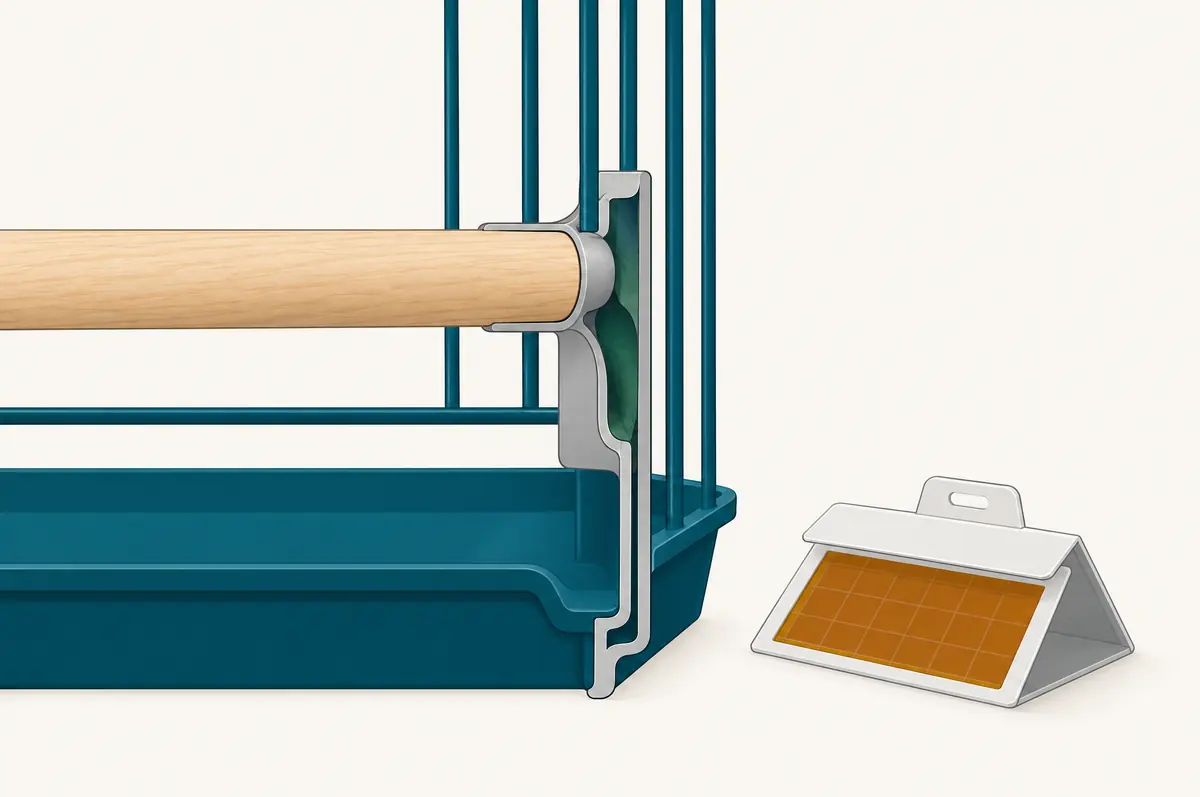
Depopulation: the main window
Treat while the house is still warm after birds leave, before mites retreat deep into the structure. Remove manure, dry clean, and wash; water and detergent reach mites in cracks better than dry treatments. Apply a premise acaricide labeled for empty houses to all refuges: perch ends, cage joints, nest boxes and wall junctions. Seal cracks where possible. Repeat treatment before restocking if traps show survivors. Wet cleaning also lowers the dust that shields mites from contact treatments.
During lay, and rotation
During production, treatments are limited to products labeled for use with birds present, including authorized veterinary medicines. Rotate modes of action, since resistance to several acaricide classes is documented. Physical controls, such as silica-based products in dry houses, help but lose effect in humid conditions. Record each treatment and trap score to judge whether the program works. Birds housed in heavily infested systems can show anemia, reduced lay and restlessness, so treat trap trends as a management trigger rather than waiting for clinical signs.
Key facts
- Dermanyssus gallinae spends most of its time off the host in cracks and feeds for short periods at night (Sparagano et al. 2014, Annu Rev Entomol 59:447).
- Poultry red mite can complete its life cycle in about one week under favorable conditions (Sparagano et al. 2014, Annu Rev Entomol 59:447).
- Fluralaner (Exzolt) was authorized in the EU in 2017 for treatment of poultry red mite infestations in chickens, administered via drinking water (EMA, Exzolt EPAR).
- Resistance to carbamates, organophosphates and pyrethroids has been reported in European D. gallinae populations (Sparagano et al. 2014, Annu Rev Entomol 59:447).
How our delivery technology applies
Essential-oil acaricides contact-kill mites but evaporate from structures within days, so survivors emerging from deep refuges meet no residue. Multi-layer encapsulation slows geraniol and peppermint oil release from the deposit and protects them from oxidation, aiming to extend premise residual across the period when mites re-emerge. Vetpure Miticide is designed for premise use in empty or occupied housing within its label, never on birds.
Layer producers: request a mite monitoring kit and program review.