


Oxymatrine
Last updated:
Oxymatrine is a quinolizidine alkaloid extracted from the root of Sophora flavescens, and it is the active in Vegalab Larva Control and MultiMite Control. It acts mainly by ingestion and contact on soft-bodied larvae and mites, and its biosecurity relevance is as a candidate active for fly larvae and mites around animal housing.
Chemistry and source
Oxymatrine is the N-oxide of matrine, one of several alkaloids in Sophora flavescens root, a plant with a long history in traditional Chinese medicine. Botanical insecticide products in Asia often combine matrine and oxymatrine. It is water soluble, nonvolatile and relatively stable in the dark, but degrades under sunlight and in alkaline conditions. That profile makes it quite different from the essential oils in our actives library: the problem is not evaporation but photodegradation and wash-off from exposed surfaces.
What the evidence shows
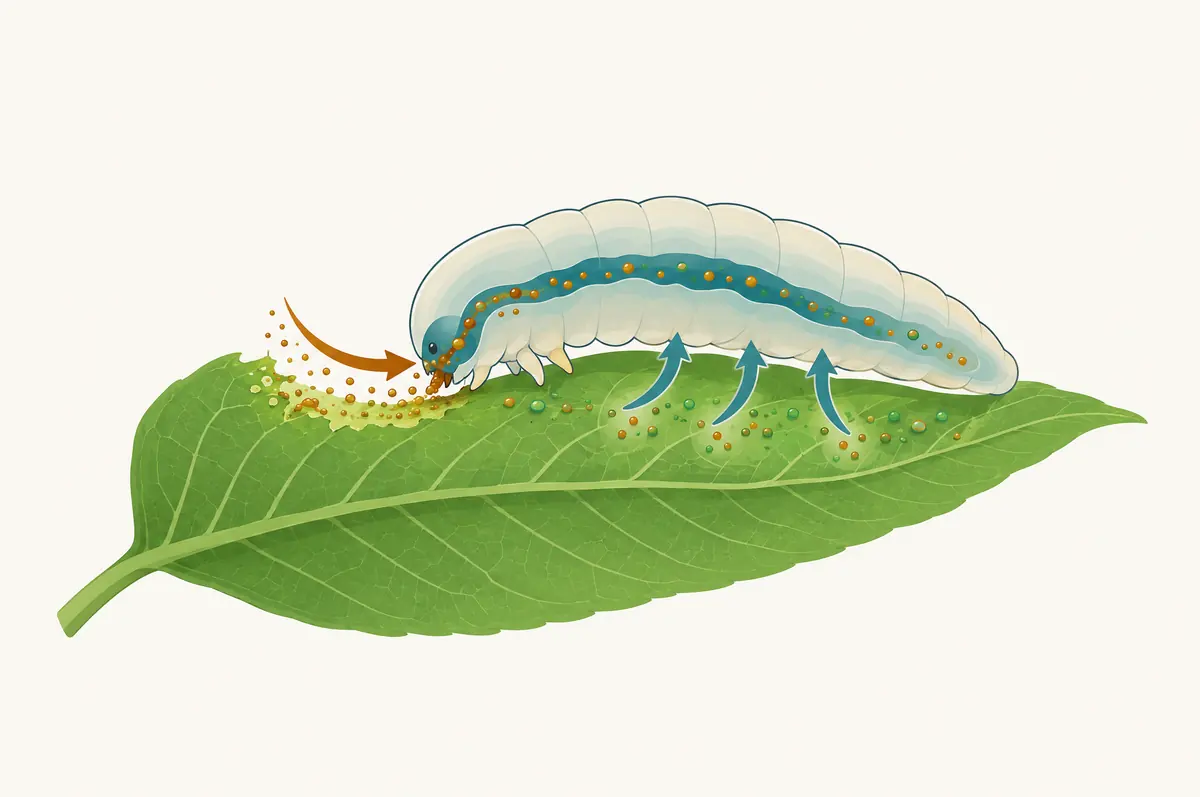
Published work reports antifeedant, growth-disrupting and lethal effects of matrine and oxymatrine on lepidopteran larvae, aphids, mites and stored-product beetles, with effects on the nervous system proposed as the main mechanism. Most data are laboratory bioassays on crop and stored-product pests. Data on the pests that matter in animal housing, such as house fly larvae in manure and poultry red mite, are thin, so any biosecurity use is a development program rather than a current claim.
Role in the Vegalab portfolio
In Crop Science, oxymatrine carries Larva Control and MultiMite Control. For biosecurity we treat it as an active under evaluation for fly larvae in litter and manure and for mites in housing crevices. Any premise use requires registration or a label amendment in the relevant jurisdiction before it can be sold for that site. Oxymatrine is not a FIFRA 25(b) minimum-risk active, so US premise products containing it need full EPA registration.
Key facts
- Oxymatrine is the N-oxide of matrine, both quinolizidine alkaloids from Sophora flavescens (PubChem, oxymatrine compound summary).
- Matrine and oxymatrine have shown insecticidal activity against Drosophila suzukii in laboratory assays (Brilinger et al. 2024, Neotrop Entomol 54:14).
- Oxymatrine-based formulations have been evaluated against stored-product beetle pests in wheat grain (Andric et al. 2024, J Stored Prod Res 109:102476).
- Oxymatrine does not appear on the list of active ingredients permitted in minimum-risk pesticides (40 CFR 152.25(f)(1)).
How our delivery technology applies
Oxymatrine is lost to sunlight and rain rather than to evaporation. A multi-layer shell with UV-absorbing biopolymer layers slows photodegradation, and a mucoadhesive outer layer improves retention on litter particles and rough surfaces. Because it acts largely by ingestion, the release profile is tuned to stay intact on the surface and open in the gut environment of feeding larvae. Premise trials are measuring this directly.
Formulation partners: ask for the oxymatrine photostability test plan.