


Can chicken mites live on humans or dogs?
Last updated:
Chicken mites bite people but do not settle on them. The poultry red mite (Dermanyssus gallinae) and the northern fowl mite (Ornithonyssus sylviarum) will feed on humans near infested birds, causing itchy red bumps, yet they cannot survive on or infest people1. Dogs and cats are bitten only rarely2. Removing the bird source ends most human cases2,3.
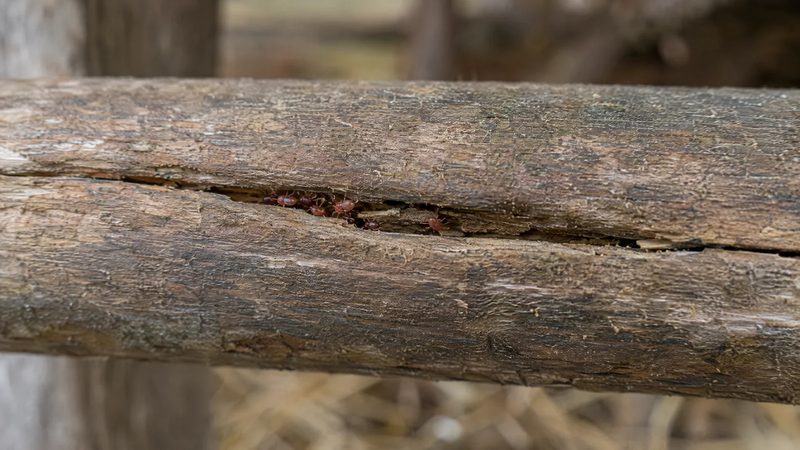
Do chicken mites bite humans?
Yes. The poultry red mite, also called the chicken mite or roost mite, is a blood feeder of chickens, turkeys, pigeons and wild birds, and it also bites humans1. The northern fowl mite has been reported from many bird species and from rats, mice and humans1. Bites usually happen at night and leave small, irritating, itchy or painful pimple-like bumps4.
On people, the mites move onto clothing and then onto the skin, and their bites cause red, swollen, itchy bumps3. Many people describe a sensation of something walking on the skin during the night3. Because so many cases involve farmers and veterinarians, dermatologists have described this as an occupational infestation3. In layer houses, workers feeling irritation or bites is often how an infestation is first noticed6.
Backyard keepers are not the only people bitten. Mites from the nests of starlings, pigeons, sparrows and other wild birds in eaves, attics and chimneys move indoors when their birds die or leave, and they then look for any available host, including people4. Mites can also spread indoors through windows and air conditioning systems3.
| Question | Poultry red mite (Dermanyssus gallinae) | Northern fowl mite (Ornithonyssus sylviarum) |
|---|---|---|
| Bites humans? | Yes1 | Yes, reported from humans1 |
| Breeds on humans? | No, it cannot survive on or infest humans1 | No, fertile populations are reported only on birds1 |
| Where it lives | Hides by day in cracks, roosts and nest boxes, feeds at night1 | Spends most of its life on the bird4 |
| Survival off birds | Up to 8 months without a host4 | Up to 4 weeks, depending on temperature and humidity1 |
| Preferred conditions | Warmer weather4 | Cooler temperatures, around 65 to 68 degrees F4 |
In North America, bites peak from late spring into summer: poultry red mite populations build fastest in warm months1, and bird mites move indoors when nesting birds die or leave their nests4. In the Southern Hemisphere the same pattern runs from about November to February.
Can chicken mites actually live on people?
Not in the usual sense. Veterinary references state that poultry red mites bite humans but cannot survive on humans or infest them1, and bird mites do not reproduce on human blood, so they eventually disperse or die without suitable bird hosts1,4. Laboratory work shows the mites can be induced to feed on people, but only at low levels2.
A review in Parasites and Vectors found that reports of human cases, called gamasoidosis or avian mite dermatitis, have become more frequent, especially in homes near nesting birds2. The same review notes rare reports of persistent infestation on people, and it proposes, as a hypothesis still to be tested, that a weakened immune response at the skin may make some people more prone to it2. In most reported cases, removing the birds from nests or roosts near the affected person, with or without treating the area, was enough to stop the bites2.
Can chicken mites live on dogs and cats?
Poultry red mites will feed on dogs and cats, as well as rodents, rabbits and horses, but reported cases in mammals are relatively rare2. In a horse with mite dermatitis, the animal was stabled next to poultry, which points to repeated opportunistic feeding rather than a permanent infestation2. When offered the blood of several animals through different skins, the mites fed well only through bird skin2.
An itchy dog that spends time near the coop is more likely to have a dog mite than a chicken mite2. Mange mites are far more common on companion animals and look similar, which makes diagnosis by signs alone unreliable2. Sarcoptic mange in dogs is highly contagious and zoonotic, so people who handle an infested dog can be affected too7. Cheyletiella mites infest dogs and cats, and human infestation with them is frequent7. A veterinarian diagnoses mange from the history, including itching in other animals and people, and from skin scrapings7.
What do chicken mite bites look like, and what else could they be?
Adult red mites measure about 400 to 700 micrometers and are grayish white, growing to more than 1 mm and turning red to black after a blood meal3. Bird mites in homes range from translucent white to red when recently fed and grayish brown as the blood is digested4. In one published case the bites appeared as itchy purplish spots and papules on the trunk and arms3.
The main look-alikes are scabies and body lice3. Diagnosis from symptoms alone is a suspected cause of misdiagnosis for scabies, lice, general dermatitis and delusional parasitosis, so finding and identifying the mite matters2. In one published case, dermoscopy ruled out scabies and showed the mite moving on the patient's back, and the patient kept hens in her garden3. Documented examples of bird mites passing disease to people are rare in the medical literature2.
- Bites mostly at night, with a crawling sensation, point toward bird mites3,4.
- Several people in one household with similar bites, and a coop, pigeon nest or bird nest nearby, is a common pattern3,2.
- Bites that continue after nests and birds are gone call for a medical diagnosis, since symptoms alone are an unreliable guide2.
How do you get rid of chicken mites in the house?
Remove the source first. Take down abandoned nests quickly, wearing gloves, before mites move into the building4. Pigeon, house sparrow and starling nests may be removed at any time, but songbirds are protected by federal law, and their nests can only be removed after the young have left4. Remove nests with the inverted bag technique, then clean the surface the nest touched5. Control rodents and keep wild birds out of the structure5.
Then clean the house. Vacuum regularly to pick up wandering mites, and seal and discard the vacuum bag, since some mites survive vacuuming; freezing the sealed bag also kills them4. Wipe mites off surfaces with a soapy sponge or a cloth dampened with rubbing alcohol4. Hot wash and hot dry bedding and clothing that has been on the floor5. Seal cracks and crevices where mites hide and enter5.
Non-chemical steps such as removing birds and nests and regular vacuuming may control small infestations without pesticides4. Where a crack-and-crevice treatment is needed, use a dust product labeled for that use and follow the product label5. Without birds, the mites will disperse or die within a few weeks4.
How do you stop mites from the coop reaching your home?
People carry mites. In poultry operations, mites are usually spread on egg flats, crates and coops, or by people moving from house to house1, and dedicated clothing and separate boots for each house are basic hygiene measures6. For a backyard flock, that means coop-only footwear and a change of clothes after night checks or cleanout6.
Keep the flock itself under control. Obtaining mite-free birds and good sanitation prevent populations from building, and treatment must reach every hiding place in the house, such as behind nest boxes and in cracks1. Quarantine new birds for 2 weeks and inspect them before they join the flock: northern fowl mites are on the birds day or night, while red mites are usually found only at night4. Easy-to-clean roosts and nest boxes with few hiding places help4.
Key takeaways
- Poultry red mites and northern fowl mites bite people, but they cannot survive on or infest humans.
- Dogs and cats are bitten only rarely; an itchy dog more often has its own mange mites, some of which do spread to people.
- Bites cluster at night and are easily mistaken for scabies or body lice, so identifying the mite matters.
- Removing nests and birds, vacuuming, hot laundering and sealing cracks clear most indoor problems within weeks.
- Coop-only clothing and boots keep mites from riding into the house on people.
References
- Mites of Poultry
- Should the poultry red mite Dermanyssus gallinae be of wider concern for veterinary and medical science?
- A Poultry Disease Mimicking Pediculosis Corporis Diagnosed By Dermoscopy: A Quiz
- Bird mites (Pestsense fact sheet)
- Bird Mites (Utah Pests urban pest guide)
- Possibilities for IPM Strategies in European Laying Hen Farms for Improved Control of the Poultry Red Mite (Dermanyssus gallinae): Details and State of Affairs
- Mange in Dogs and Cats