


Cattle Ticks (Rhipicephalus microplus and R. annulatus)
Last updated:
Rhipicephalus microplus and R. annulatus are one-host ticks that complete larva, nymph and adult on a single animal, and they are among the most economically important livestock parasites in the tropics and subtropics. Resistance to several acaricide classes is widespread, which puts pressure on pasture management and new actives.
Biology
Larvae climb pasture vegetation and attach to cattle, then feed, molt and mate on the same host over about three weeks. Engorged females drop to the ground and lay thousands of eggs, and the next generation of larvae quests from the grass. Because only the free-living phase is off the animal, pasture spelling (resting pasture long enough for larvae to die without a host) is a core non-chemical control. Spelling periods depend on climate.
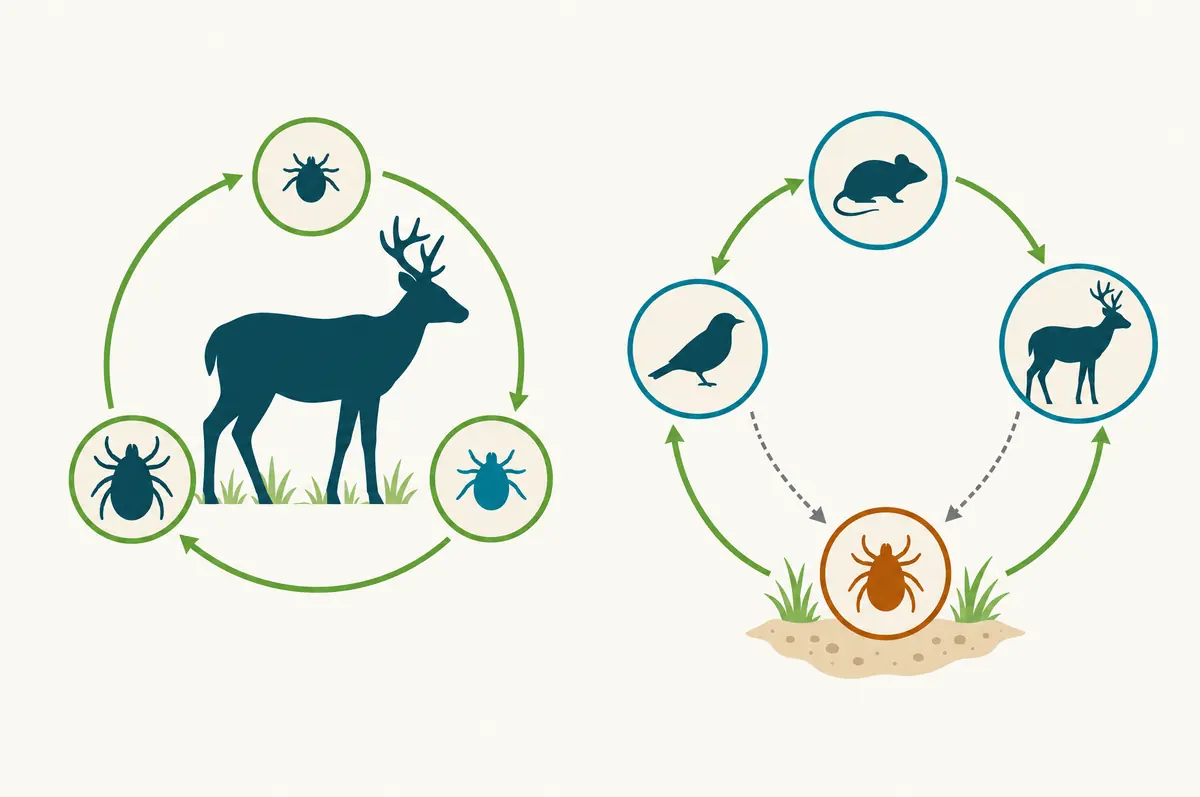
Regulatory context in the United States
Both species were eradicated from the United States by 1943 through the Cattle Fever Tick Eradication Program. USDA APHIS maintains a permanent quarantine zone along the Texas and Mexico border, with inspection and mandatory treatment of cattle moving out of it. Detections outside the zone trigger quarantine. Any treatment of cattle in that program uses products approved for it. Wildlife hosts such as white-tailed deer and nilgai complicate eradication. Producers report suspects.
Resistance and the role of new actives
Resistance to organophosphates, synthetic pyrethroids, amitraz and macrocyclic lactones has been documented in R. microplus populations. Essential-oil actives are studied as alternatives: geraniol shows larval LC95 of about 11.1 mg/mL against R. microplus and higher again for engorged female R. annulatus (estimated from geranium-oil studies). These are high concentrations. Vegalab does not offer an on-animal cattle tick product; our program focuses on premises and pasture margins. Laboratory figures do not transfer directly to field efficacy.
Key facts
- Cattle fever ticks were eradicated from the US in 1943 and a permanent quarantine zone is maintained along the Texas and Mexico border (USDA APHIS, Cattle Fever Tick Eradication Program)
- Acaricide resistance in R. microplus spans several chemical classes (Abbas et al. 2014, Vet Parasitol 203:6)
- Geraniol larval LC95 against R. microplus is about 11.1 mg/mL (Singh et al. 2018, Ticks Tick Borne Dis 9:201)
How our delivery technology applies
On pasture, larvae quest from grass for weeks while a botanical treatment evaporates in days. Encapsulation could extend geraniol residual on vegetation around handling pens and yards, where larvae concentrate. Any on-animal use would require full veterinary or pesticide registration and is outside the current program.
Discuss pasture and premise tick programs with our technical team.