


Saponins and bio-surfactants
Last updated:
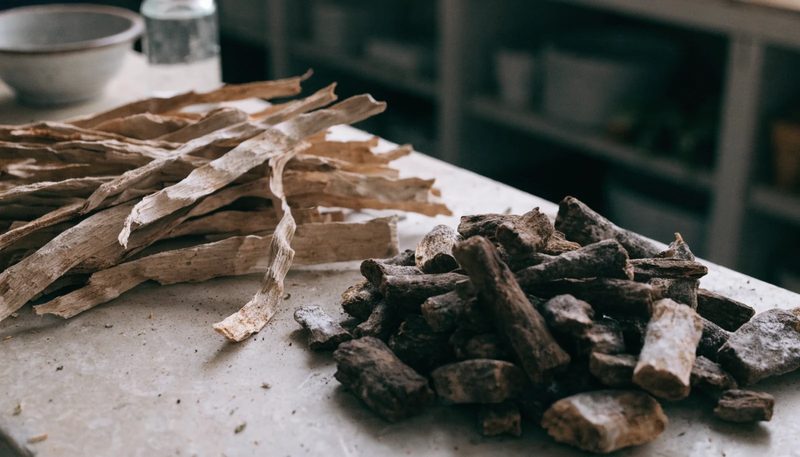
The shared chemistry
Saponins are glycosides in which a hydrophobic aglycone - usually a triterpene or steroid - carries hydrophilic sugar chains. That amphiphilicity produces the foaming that gives them their name and two useful properties: they complex with membrane sterols, disrupting membranes, and they reduce surface tension, improving spray coverage and soil wetting.
Bio-surfactants such as rhamnolipids and glycolipids are microbially produced amphiphiles with similar surface activity and, generally, milder biological effects. They appear on the cosmetic side of the business too, where glycolipids serve as gentle surfactants.
The ones in the range
Tea saponin from Camellia oleifera in Slug Control · see its own page.
Proprietary saponins with bio-surfactants in Jumping Worm Control, alongside geraniol. Here the mechanism is well matched to the target: jumping worms rely on a protective mucus layer, and saponins strip it, driving the worms to the surface where they can be removed. The page for that product should describe this rather than leaving the actives as "proprietary", which is currently the case.
Quillaja saponins from soapbark and yucca extract are the other saponins commonly used in this space, though not currently named in the Vegalab range.
Why saponins matter beyond direct activity
Two secondary roles are easy to overlook. As adjuvants they improve the performance of whatever they are formulated with, by increasing wetting and retention on waxy leaf surfaces and improving soil infiltration - so a saponin in a mixed product may be contributing more through delivery than through direct toxicity. And their surfactancy can improve the distribution of contact actives like geraniol, which matters given how strongly geraniol depends on physical contact.
Is saponins and bio-surfactants safe?
The aquatic hazard is the dominant consideration for all saponins: they are potently toxic to fish through haemolytic action on gill membranes. Mucous-membrane irritation is the main applicator concern. Non-target soft-bodied soil organisms in the treated zone can be affected.
References
- Plant-Derived Saponins: A Review of Their Surfactant Properties and Applications
- Saponins can perturb biologic membranes and reduce the surface tension of aqueous solutions: a correlation?
- Biopesticides Registration Action Document: Saponins of Quillaja saponaria
- Molluscicidal Saponins from Sapindus mukorossi, Inhibitory Agents of Golden Apple Snails, Pomacea canaliculata
- Saponin as an eco-friendly insecticide: unveiling mechanisms, challenges, and future directions
Related reading
Products containing saponins and bio-surfactants
Listed because this ingredient appears in each product's declared composition. This is a commercial link from a reference page; it is not a recommendation, and approved uses and availability vary by market.