


What does seaweed and kelp fertilizer do?
Last updated:
Seaweed extracts, mostly from brown algae such as Ascophyllum nodosum, Sargassum and Laminaria, mainly improve stress tolerance under drought, salinity, heat and cold. They also support root development fairly consistently, and laminarin and fucoidan can prime plant defenses. Yield effects in unstressed, well-fertilized crops are much less consistent, so their value shows when the crop is under stress.
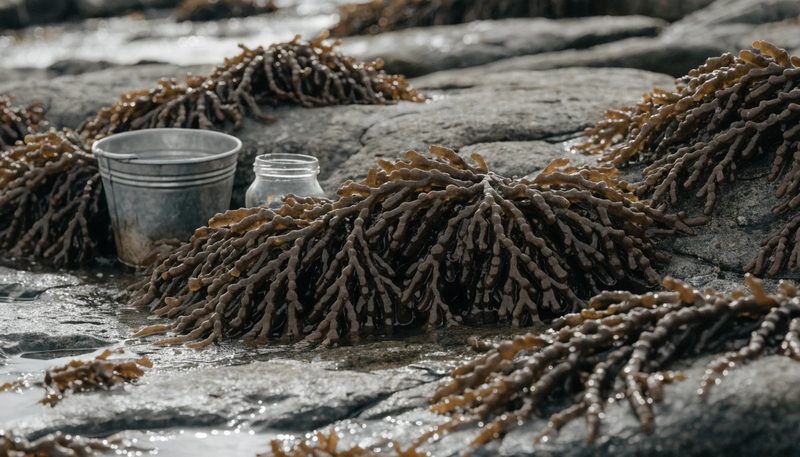
What is seaweed extracts?
Seaweed extracts used in agriculture come mostly from brown algae. Ascophyllum nodosum is the most used and most studied; Sargassum and Laminaria species are also common. Extraction method - alkaline, acid, enzymatic or cold-processed - substantially changes the composition of the finished extract, which is the main reason products differ so much.
Composition typically includes alginates and other polysaccharides such as laminarin and fucoidan, mannitol, betaines, phenolics, mineral micronutrients, and low concentrations of plant hormones including cytokinins and auxins.
What do seaweed extracts do?
Stress tolerance is the best-supported effect: improved performance under drought, salinity, heat and cold, attributed to osmolyte content, antioxidant activity and hormonal signaling. Root development effects are also reasonably consistent. There is evidence for elicitor activity, with laminarin and fucoidan acting as pathogen-associated molecular patterns that prime plant defenses - a mechanism with a clear molecular basis.
Effects on yield in unstressed, well-fertilized conditions are considerably less consistent, which is worth saying: seaweed extracts generally show their value when the crop is under stress.
Why do seaweed extracts vary so much?
Seaweed extract is a variable natural material described by a name rather than a specification. Harvest season, species, location and extraction process all change the composition, and most commercial products are not standardized to any marker compound. Two products with identical INCI names can perform differently, and neither label will tell you why.
This is the single most useful thing a grower can understand about biostimulants generally, and it applies to seaweed extracts more than most.
Where does seaweed extracts appear in the range?
Kelp Boost uses L-tryptophan with a seaweed extract blend of Ascophyllum, Sargassum and Laminaria, with cytokinins, auxins and alginic acid noted. Vita Boost uses Ascophyllum nodosum extract with protein hydrolysate, gluconic acid, iron and manganese. Pollen Boost includes Sargassum extract with propolis. Root Boost includes seaweed extract with L-tryptophan and humic acid.
Ascophyllum nodosum is also used on the beauty side, in the Marine Balancing Toner - a genuine cross-pillar ingredient, and under the canonical rule Crop Science holds the definitive page.
Key takeaways
- Ascophyllum nodosum is the most used and most studied seaweed in agriculture.
- Extraction method (alkaline, acid, enzymatic or cold-processed) substantially changes composition.
- Stress tolerance is the best-supported effect.
- Laminarin and fucoidan can act as elicitors that prime plant defenses.
- Most commercial products are not standardized to any marker compound.
References
- Ascophyllum nodosum extract biostimulants and their role in enhancing tolerance to drought stress in tomato plants
- Laminarin elicits defense responses in grapevine and induces protection against Botrytis cinerea and Plasmopara viticola
- Comparative Transcriptome Analysis of Two Ascophyllum nodosum Extract Biostimulants: Same Seaweed but Different
Frequently asked questions
What is in a seaweed extract?
Typical components are alginates and other polysaccharides such as laminarin and fucoidan, mannitol, betaines, phenolics and mineral micronutrients. Extracts also carry low concentrations of plant hormones, including cytokinins and auxins.
Does seaweed fertilizer increase yield?
Yield effects in unstressed, well-fertilized conditions are considerably less consistent. Seaweed extracts generally show their value when the crop is under stress, such as drought, salinity, heat or cold.
Why do seaweed products perform differently?
Harvest season, species, location and extraction process all change the composition, and most commercial products are not standardized to any marker compound. Two products with identical INCI names can perform differently, and neither label will show why.
Kelp vs fish emulsion: which fertilizer does what?
They do different jobs. Fish emulsion is a soluble liquid made from heat- and acid-processed fish waste, with a typical analysis of 5-2-2, so it supplies nitrogen along with some phosphorus and potassium. Kelp is valued for its micronutrients rather than nitrogen, phosphorus and potassium, and liquid kelp has a negligible nutrient analysis. That is why the two are often mixed: the fish product carries the macronutrients and the kelp the trace minerals.
Source: Organic Fertilizers (GardenNotes #234), Colorado State University Extension, 2023 (University extension publication)
Related reading
More in actives
Products
No direct product mapping. Nothing in the Vegalab range declares seaweed extracts in its composition, so this page has no product link - the absence is deliberate, not an omission.