


KPV and Anti-Inflammatory Fragments
Last updated:
KPV (lysine-proline-valine) is the C-terminal tripeptide of alpha-melanocyte-stimulating hormone. It is an unapproved research compound; its anti-inflammatory evidence comes from cell and mouse studies, some of which used nanoparticle delivery to the colon. Vegalab does not make, sell or source KPV.
What KPV is
Alpha-MSH is a 13-amino-acid peptide with anti-inflammatory activity mediated partly through melanocortin receptors. Its C-terminal fragment KPV (about 342 Da) retains anti-inflammatory activity in some models, apparently without melanocortin receptor-driven pigmentation. In intestinal epithelial cells KPV is taken up by the PepT1 di- and tripeptide transporter, which is upregulated in inflamed colon, and it reduced NF-kB signaling and inflammatory markers in cell and mouse colitis models. It is often grouped with longer alpha-MSH fragments that share the same C-terminus.
Regulatory status
KPV has no approved human use in any jurisdiction and cannot be sold as a dietary supplement. FDA placed it in the 503A Category 2 list and in April 2026 announced its removal pending review, which affects compounding eligibility only. As a non-approved substance, it falls under WADA S0. Related alpha-MSH analogs with approved uses (for example afamelanotide) are distinct molecules. Buyers should note that products labeled KPV are unregulated and of unverified identity.
The delivery problem and published approaches
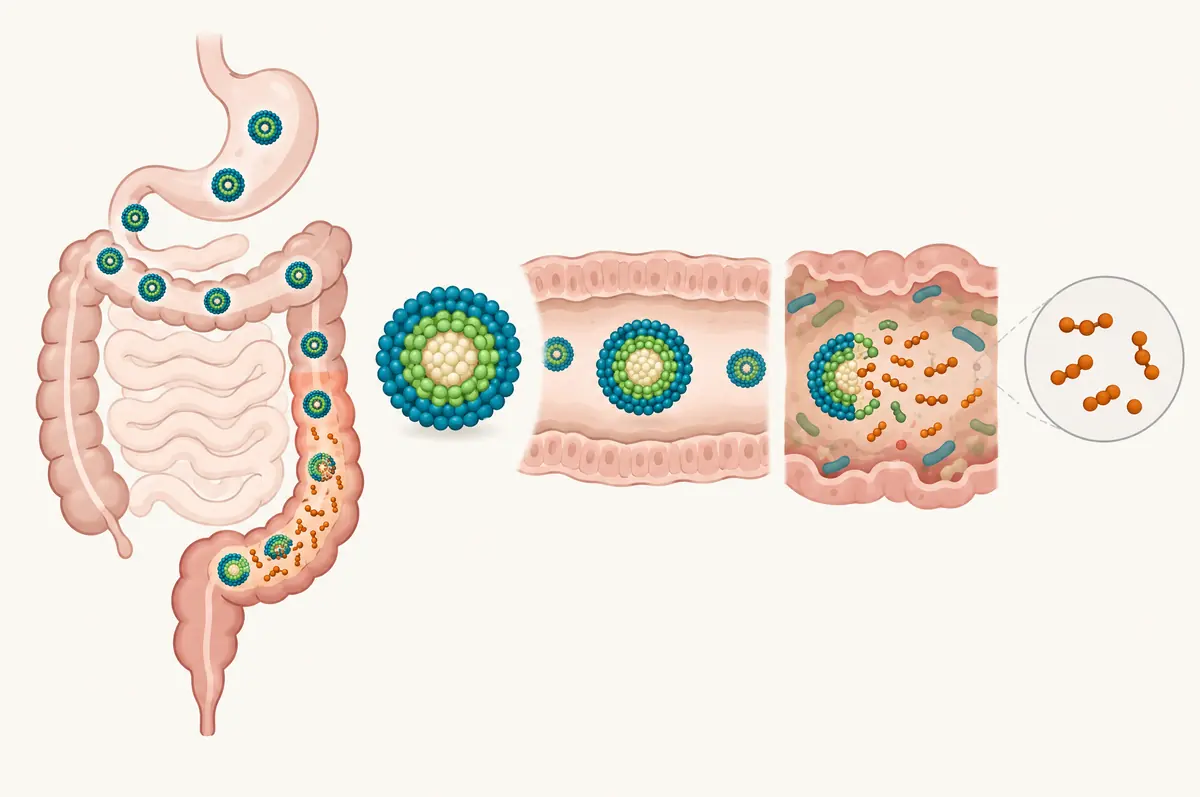
Small, hydrophilic and protease-sensitive, KPV is degraded in the upper gut and has negligible passive permeability. Researchers loaded KPV into hyaluronan-functionalized polymer nanoparticles embedded in a hydrogel for oral colon-targeted delivery, and reported reduced colitis severity in mice at far lower doses than free KPV. That is one of the clearest published examples of encapsulation changing a peptide's activity in vivo, in animals. Hydrogel embedding kept the particles in the colon longer.
Why this page exists
KPV is a teaching case for colon-targeted peptide delivery, and it is frequently sold online as a research chemical. This page separates the delivery science from any product claim. The KPV case also shows a limit: animal colitis models do not predict human outcomes reliably, and no human trial of KPV has been published. Delivery systems proven in mice still need full development and regulatory review. Vegalab uses KPV as a design reference for colon-targeted peptide delivery in partner programs, not as a product.
Key facts
- KPV is transported by PepT1 in intestinal epithelial cells and reduced intestinal inflammation in mouse models (Dalmasso et al. 2008, Gastroenterology 134:166)
- Orally delivered hyaluronan-functionalized nanoparticles loaded with KPV reduced colitis in mice (Xiao et al. 2017, Mol Ther 25:1628)
- Non-approved substances are prohibited at all times under S0 (WADA Prohibited List 2026)
How our delivery technology applies
KPV shows why layer order matters. An acid- and protease-resistant outer layer carries the peptide past the stomach and small intestine; a pH- or enzyme-triggered inner layer releases it in the colon, where PepT1 expression rises with inflammation. That colon-targeted architecture is a design Vegalab can build for partners with a legitimate development pathway, including veterinary research.
Scope a colon-targeted peptide delivery system with Vegalab's feasibility team.