

NAC (N-Acetylcysteine)
Last updated:
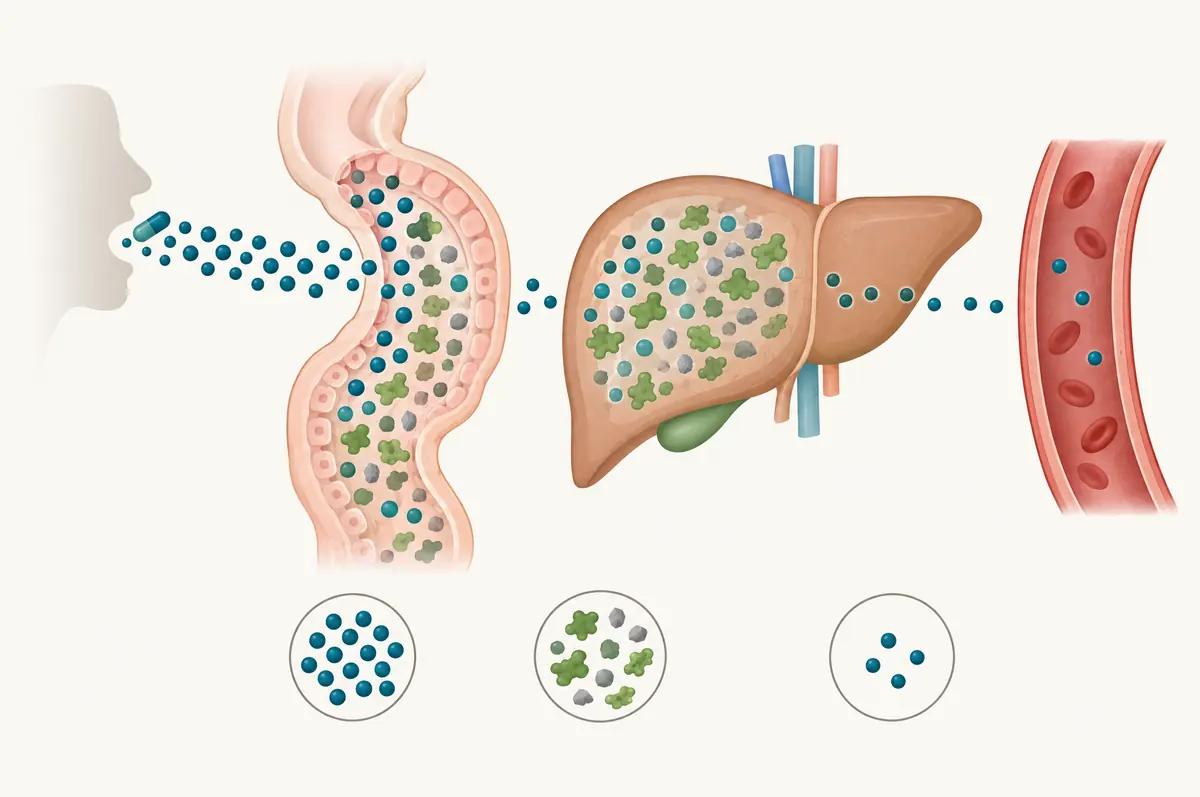
NAC is a cysteine donor for glutathione synthesis with two approved drug uses and a large supplement market. It is absorbed, but first-pass metabolism leaves roughly 6 to 10% as intact NAC in plasma, and it oxidizes and smells of sulfur. Vegalab's NAC Nano program targets stability, odor and release.
Molecule and pharmacology
NAC (C5H9NO3S, 163.2 Da) is the N-acetyl derivative of L-cysteine. It is water soluble and carries a free thiol. After absorption it is deacetylated to cysteine, which supplies the rate-limiting step of glutathione synthesis. It also breaks disulfide bonds in mucus, the basis of its mucolytic use. Plasma half-life of reduced NAC is a few hours, and much of an oral dose is metabolized in the gut wall and liver on first pass.
Regulatory status
United States: IV acetylcysteine (Acetadote) is approved for acetaminophen overdose, and inhaled acetylcysteine is approved as a mucolytic. FDA had questioned NAC's supplement status because of its prior drug approval, then issued guidance in 2022 stating it would exercise enforcement discretion for NAC dietary supplements. EU: NAC is a medicine in many member states, and its use in food supplements is restricted or not accepted in several of them. Canada: confirm status in the Natural Health Products Ingredients Database before launch. Not on the WADA Prohibited List.
Evidence tier
Approved: antidote and mucolytic uses. Human trials: NAC has been studied in psychiatric, respiratory and metabolic settings with mixed results. For a supplement, only permitted structure and function claims apply. Human trials in psychiatric, respiratory and metabolic settings have produced mixed results, and none supports a supplement claim for those conditions. The NAC Nano program focuses on stability, odor containment and release profile, which are measurable formulation endpoints. No dosing is given.
Key facts
- Oral bioavailability was about 4% for reduced NAC and 9% for total NAC in humans (Borgström et al. 1986, Eur J Clin Pharmacol 31:217)
- IV acetylcysteine is FDA approved to prevent or lessen hepatic injury after acetaminophen ingestion (FDA label, Acetadote 2004)
- FDA will exercise enforcement discretion for NAC products labeled as dietary supplements (FDA guidance, Policy Regarding N-acetyl-L-cysteine, 2022)
How our delivery technology applies
NAC's thiol oxidizes to the disulfide dimer in air and water, and the molecule releases sulfur odors that limit liquid and sachet formats. A multi-layer biopolymer shell reduces oxygen and moisture contact, contains odor and taste until the particle reaches the gut, and can shift release to the small intestine. Whether this changes the plasma fraction of intact NAC is a pharmacokinetic question in the NAC Nano program.
Discuss NAC Nano licensing with Vegalab's partnership team.