


Glutathione Nano (In Development)
Glutathione is notoriously degraded when taken orally, and a single oral dose does not reliably raise blood levels. Glutathione Nano is our in-development formulation that shields this tripeptide from oxidation and gut enzymes. It is not on sale, and availability depends on the regulatory pathway.
Why oral glutathione underperforms
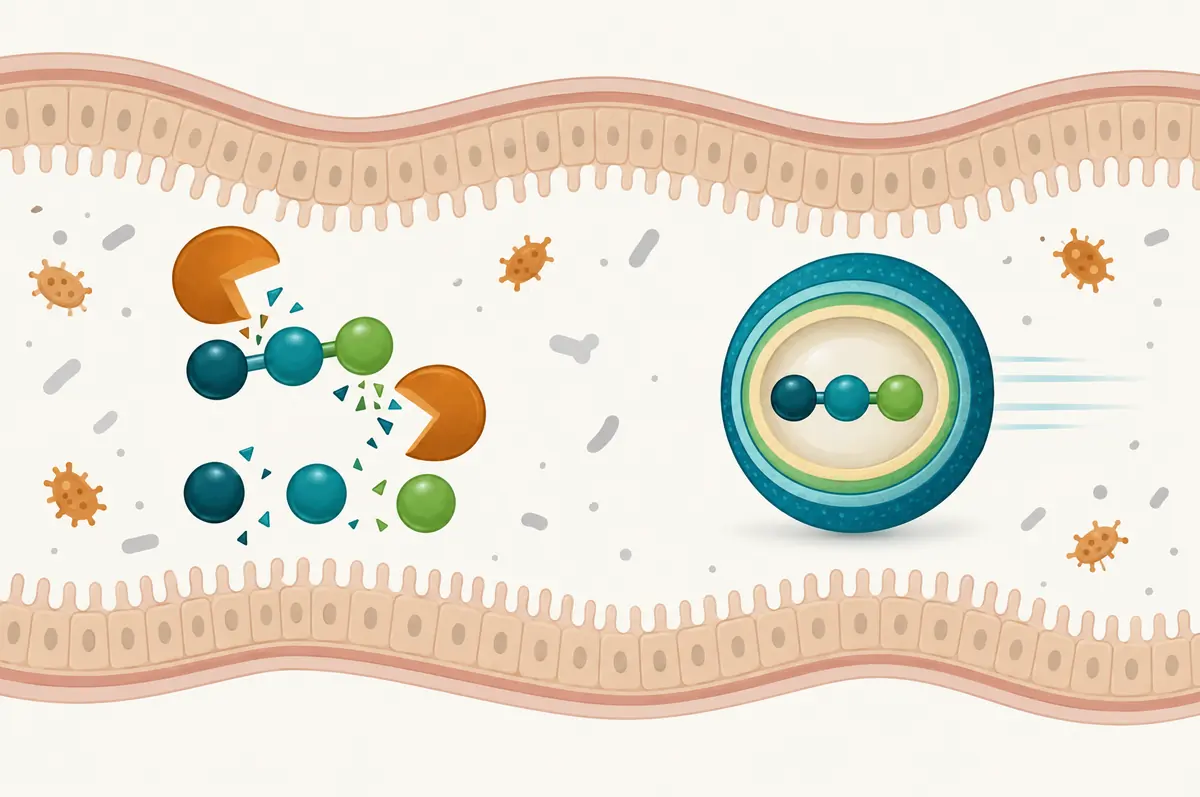
Glutathione (gamma-glutamyl-cysteinyl-glycine, 307 Da) is hydrophilic, carries a reactive thiol and is a substrate for gamma-glutamyl transferase on the intestinal brush border, which cleaves it into constituent amino acids. It also oxidizes to glutathione disulfide in storage. Single-dose studies found no rise in plasma glutathione, while a six-month study at 250 to 1000 mg per day reported increased body stores, so the question is exposure over time, not absence of effect.
Formats in the market
Current approaches include plain reduced glutathione capsules, liposomal liquids, S-acetyl glutathione, sublingual lozenges and precursors such as NAC and glycine. Each addresses a different barrier with different evidence. Liposomal and sublingual formats have small human studies; many products labeled liposomal have no characterization of vesicle size or encapsulation efficiency, which we discuss on our myths pages. Our program benchmarks against the most common of these formats, plain reduced glutathione and liposomal liquid, rather than against an unrealistic untreated baseline.
Regulatory status
Glutathione is sold as a dietary supplement ingredient in the US and appears in natural health product and cosmetic formulations in other markets. Injectable glutathione is not an approved drug for skin lightening, and several regulators have issued warnings about such uses. Glutathione is not on the WADA Prohibited List. Statements have not been evaluated by the FDA and are not intended to diagnose, treat, cure or prevent any disease.
Key facts
- A single 3 g oral dose of glutathione did not increase plasma glutathione in healthy volunteers (Witschi et al. 1992, Eur J Clin Pharmacol)
- Four weeks of 500 mg twice daily oral glutathione did not change oxidative stress biomarkers (Allen and Bradley 2011, J Altern Complement Med)
- Six months of daily oral glutathione increased blood and buccal cell glutathione stores (Richie et al. 2015, Eur J Nutr)
- The Philippine FDA has warned against injectable glutathione for skin lightening (FDA Philippines Advisory No. 2019-182)
How our delivery technology applies
Glutathione needs protection at two points. In storage, an oxygen-limiting inner layer slows thiol oxidation to the disulfide. In the gut, a shell that resists acid and shields the tripeptide from brush-border gamma-glutamyl transferase is designed to deliver more intact molecule to the absorptive surface. Our feasibility work compares intact glutathione recovery after simulated digestion against plain and liposomal controls before any human study.
Request the Glutathione Nano feasibility summary.
Related reading
Last updated: