

Kennels, Catteries and Shelters
Shelters combine high animal turnover, unknown histories and shared air and floors, so hygiene has to assume every new arrival is shedding something. The two decisions that matter most are disinfectant choice against non-enveloped viruses and product choice where cats are housed. This page covers both, plus the environmental stages of fleas and ticks.
Non-enveloped viruses set the bar
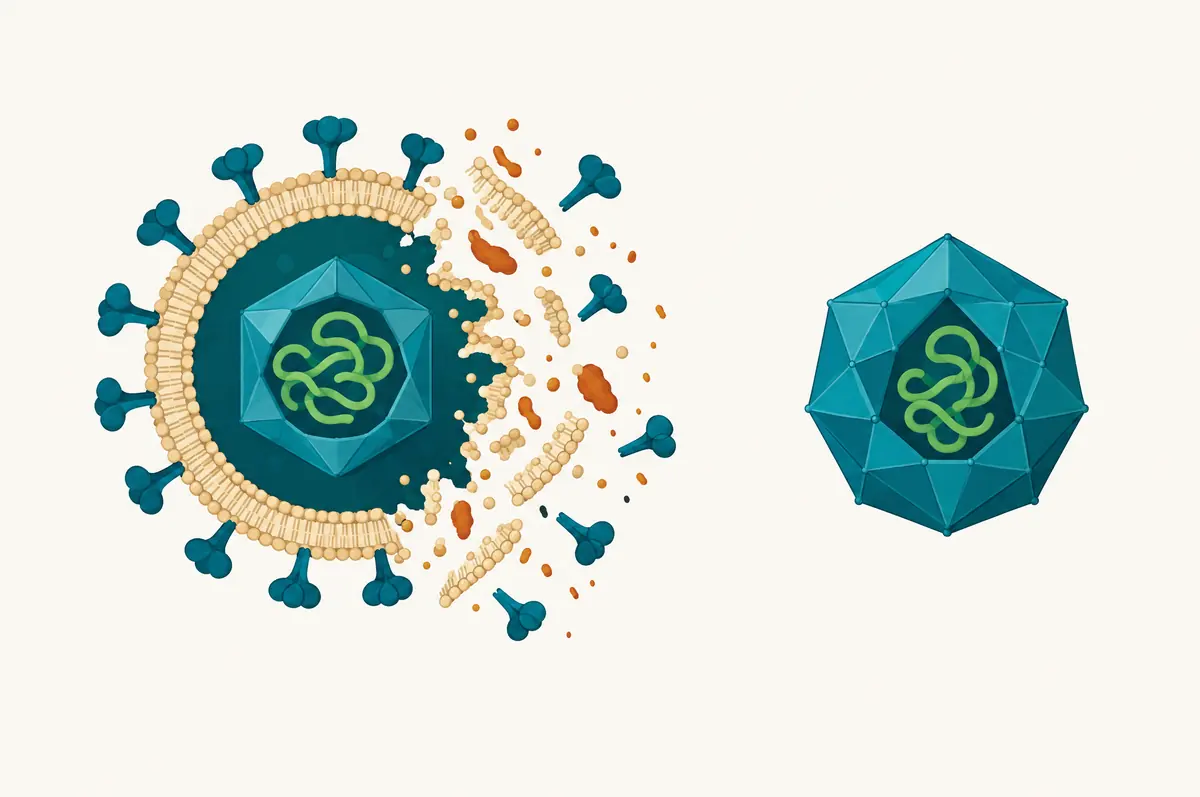
Canine parvovirus and feline panleukopenia virus are non-enveloped and persist on surfaces for months. Many quaternary ammonium products used for routine cleaning do not reliably inactivate them. Shelters need a disinfectant whose label lists parvovirus, applied to cleaned surfaces for the full contact time, with a spot-cleaning routine that avoids moving animals between runs during the day. Porous surfaces, grout and outdoor gravel runs cannot be fully disinfected and should be managed as contaminated.
Cats change the product list
Cats lack adequate glucuronidation capacity and are sensitive to phenols and many essential-oil components, including geraniol and peppermint oil. No essential-oil product in this range belongs in a cattery or in a room where cats are housed or will return. Oxidizing disinfectants still need to be rinsed or dried and the space ventilated before cats return. Mixed facilities should separate cat wards physically and keep their own cleaning products and equipment.
Fleas and brown dog ticks live off the animal
Most of a flea population exists as eggs, larvae and pupae in bedding, cracks and carpet rather than on animals. The brown dog tick is unusual in completing its full life cycle indoors, hiding in walls, crates and furniture. Both require treatment of the animal by a veterinarian plus environmental work: vacuuming, laundering bedding hot, sealing cracks, and premise treatment of runs and crates where the label allows. Repeat environmental work through at least one full flea development cycle.
Key facts
- Shelter guidelines recommend disinfectants with demonstrated efficacy against non-enveloped viruses such as parvovirus in areas housing dogs and cats (Association of Shelter Veterinarians, Guidelines for Standards of Care in Animal Shelters, 2nd ed. 2022).
- Adult fleas on pets are a small fraction of the total population; eggs, larvae and pupae make up the majority in the environment (Companion Animal Parasite Council, Fleas guideline).
- Rhipicephalus sanguineus can complete its entire life cycle indoors, including in kennels and homes (CDC, Rocky Mountain Spotted Fever: Clinical Overview).
- Cats are deficient in several UDP-glucuronosyltransferase enzymes, which limits their clearance of phenolic compounds (Court 2013, Vet Clin North Am Small Anim Pract 43:1039).
How our delivery technology applies
Kennel disinfection fails when working solutions weaken between batches or are spent on residual soil. Vetpure Disinfectant supplies chlorine dioxide as a stabilized nano-encapsulated powder that dissolves to at least 98% ClO2 purity and holds in solution for up to one month, so staff mix a known concentration instead of relying on on-site generation. ClO2 does not chlorinate organic matter and forms no trihalomethanes, relevant where rooms are cleaned several times a day.
Shelter operators: request a disinfection program review and product samples.
Related reading
Last updated: