


Fleas in yards and kennels
Last updated:
Most of a flea infestation lives off the animal: eggs, larvae and cocooned pupae sit in bedding, carpet and shaded soil. In yards and kennels, insect growth regulators such as methoprene and pyriproxyfen interrupt egg and larval development, vacuuming removes immature stages and triggers emergence, bedding is washed at high temperature, and shaded outdoor resting sites are treated. Animals are treated separately through a veterinarian.
Most of a flea infestation is not on the animal. Eggs, larvae and pupae live in bedding, carpet and soil, and the cocooned pupa resists nearly every treatment. Effective programs treat the animal through a veterinarian and the environment separately; Vegalab's work is premise only.
What is the cat flea life cycle?
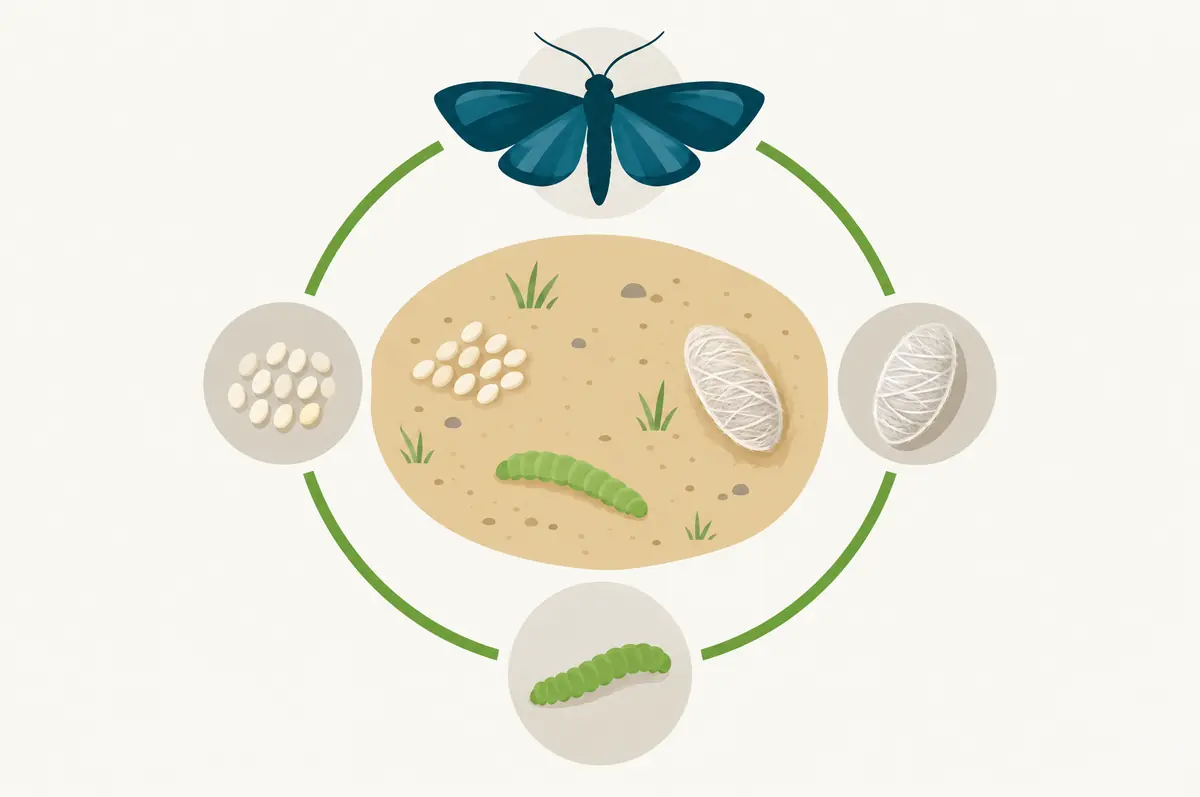
Ctenocephalides felis infests cats, dogs and many other mammals. Adult females lay eggs on the host that fall off into resting areas. Larvae avoid light, move down into carpet pile, cracks and shaded soil, and feed on adult flea feces. They spin silk cocoons and pupate. Pre-emerged adults can stay in the cocoon for weeks to months and emerge in response to vibration, warmth and carbon dioxide, which is why an empty house becomes infested when people return. At warm temperatures the cycle completes in about three weeks.
Why are fleas hard to treat in yards and kennels?
Adulticides applied to floors kill emerged adults but rarely reach larvae deep in carpet base, and the cocoon protects pupae. Insect growth regulators such as methoprene and pyriproxyfen interrupt development of eggs and larvae and are the standard premise tool. Vacuuming removes eggs and larvae and stimulates emergence so newly emerged fleas meet a treated surface. Washing bedding at high temperature and treating outdoor shaded resting sites complete the program.
Are essential oils toxic to cats?
Animal treatment is a veterinary decision. Vegalab's essential-oil products are not for use on animals. Geraniol and peppermint oil are toxic to cats, which lack efficient glucuronidation, and exposure can occur through skin and airways as well as ingestion. Any premise use of an essential-oil formulation in a home with cats must follow the label, with animals kept out of treated areas until dry and ventilated. Our flea work is limited to premise and kennel environments.
Key takeaways
- Flea eggs fall off the host into resting areas, and larvae move down into carpet pile, cracks and shaded soil.
- Pre-emerged adults can stay in the cocoon for weeks to months and emerge in response to vibration, warmth and carbon dioxide.
- At warm temperatures the flea life cycle completes in about three weeks.
- Insect growth regulators such as methoprene and pyriproxyfen are the standard premise tool.
- Animal treatment is a veterinary decision, separate from premise control.
Key facts
- Immature flea stages develop off the host in the environment, and pre-emerged adults can remain in cocoons until triggered (Rust and Dryden 1997, Annual Review of Entomology 42:451)
- Methoprene and pyriproxyfen are insect growth regulators used against immature fleas in the environment (Rust and Dryden 1997, Annual Review of Entomology 42:451)
- Cats are deficient in glucuronidation, which limits their clearance of phenolic compounds (Court 2013, Veterinary Clinics of North America: Small Animal Practice 43:1039)
- Companion animal parasite control recommendations separate on-animal products from environmental control (Companion Animal Parasite Council, flea guidelines)
How our delivery technology applies
Flea larvae live at the base of carpet and in shaded soil, where a spray deposit either sits on top of the pile or volatilizes before larvae contact it. Water-dispersible nano-capsules can penetrate further into fibers and soil and hold the active in place, with release extended past the window in which pupae emerge. The same shell reduces vapor in the room. Flea control is a target premise application of our crawling insect program, added through its label.
Questions
Where do fleas live in a yard?
Flea larvae avoid light and move into shaded soil, cracks and resting areas, where they feed on adult flea feces. Treating outdoor shaded resting sites is part of a complete premise program.
Why do fleas come back after treatment?
Adulticides applied to floors kill emerged adults but rarely reach larvae deep in carpet base, and the cocoon protects pupae. Pre-emerged adults can wait in the cocoon for weeks to months before emerging.
Why does an empty house fill with fleas?
Pre-emerged adults stay in their cocoons until vibration, warmth and carbon dioxide trigger emergence. When people return to an empty house, those signals release the waiting fleas.
Are geraniol and peppermint oil toxic to cats?
Yes. Cats lack efficient glucuronidation, and exposure can occur through skin and airways as well as ingestion. Any premise use of an essential-oil formulation in a home with cats must follow the label, with animals kept out of treated areas until they are dry and ventilated.