


Canine Parvovirus and Kennel Hygiene
Last updated:
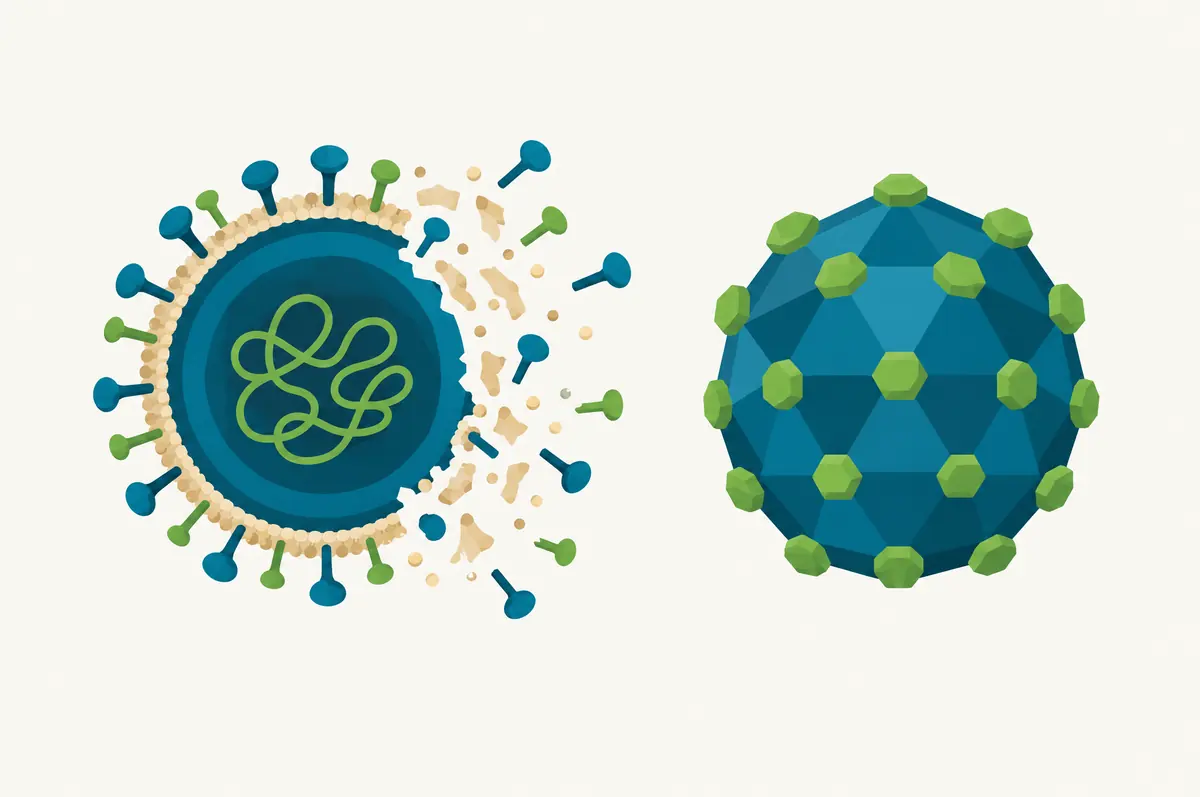
Canine parvovirus is a non-enveloped virus that survives for months on surfaces and resists many common disinfectants, including most quaternary ammonium products. Kennel control depends on cleaning, choosing a disinfectant with a parvovirus claim and giving it the full contact time.
Why parvovirus is hard to kill
Without a lipid envelope, parvovirus is not damaged by detergents or by quaternary ammonium compounds at ordinary use rates. It survives in feces, on floors, crates, bowls, clothing and in soil for months, and it tolerates freezing. Shelters with intake of unvaccinated young dogs face repeated introductions. The environment, not only the infected dog, sustains transmission, so every surface and fomite in the kennel matters. Dogs can shed virus before signs appear, so kennels must treat every run as potentially contaminated.
Disinfectant classes that work
Products with documented activity against parvovirus include sodium hypochlorite at appropriate dilution, potassium peroxymonosulfate, accelerated hydrogen peroxide, and some chlorine dioxide formulations. All are reduced by organic matter. Feces and debris must be removed and surfaces washed with detergent before disinfection. Porous surfaces such as unsealed concrete, wood and grass cannot be reliably disinfected, which is why shelter design favors sealed floors and walls. Match the product to the surface and the organic load expected.
Contact time and claims
A disinfectant works only if the surface stays wet for the contact time on the label, often 10 minutes against parvovirus. Spraying and wiping immediately does not meet it. Rotate staff workflow from healthy to isolation areas, use dedicated equipment for isolation, and launder bedding at high temperature. Vetpure Disinfectant may be used against canine parvovirus only where its registration in that jurisdiction lists the organism; the label governs. Record contact times on cleaning logs.
Key facts
- Quaternary ammonium disinfectants were ineffective against canine parvovirus, while sodium hypochlorite and potassium peroxymonosulfate were effective (Association of Shelter Veterinarians, Guidelines for Standards of Care in Animal Shelters, 2nd ed. 2022)
- Shelter sanitation guidance requires removal of organic matter before disinfection and adherence to label contact time (Association of Shelter Veterinarians, Guidelines for Standards of Care in Animal Shelters, 2nd ed. 2022)
- Parvoviruses are non-enveloped and among the most disinfectant-resistant viruses (UC Davis Koret Shelter Medicine Program, Disinfectant guidance)
How our delivery technology applies
Chlorine dioxide attacks capsid proteins directly, which is why it can act where membrane-disrupting quats fail. The practical weakness is keeping a known concentration: activated solutions lose strength, and staff mix to guesswork. Vetpure's nano-encapsulated stabilized powder dissolves to at least 98% pure ClO2 and holds concentration for up to one month, so each shift draws from a solution of known strength.
Shelters and boarding kennels can request Vetpure registration status and a hygiene program outline.