

Last updated:
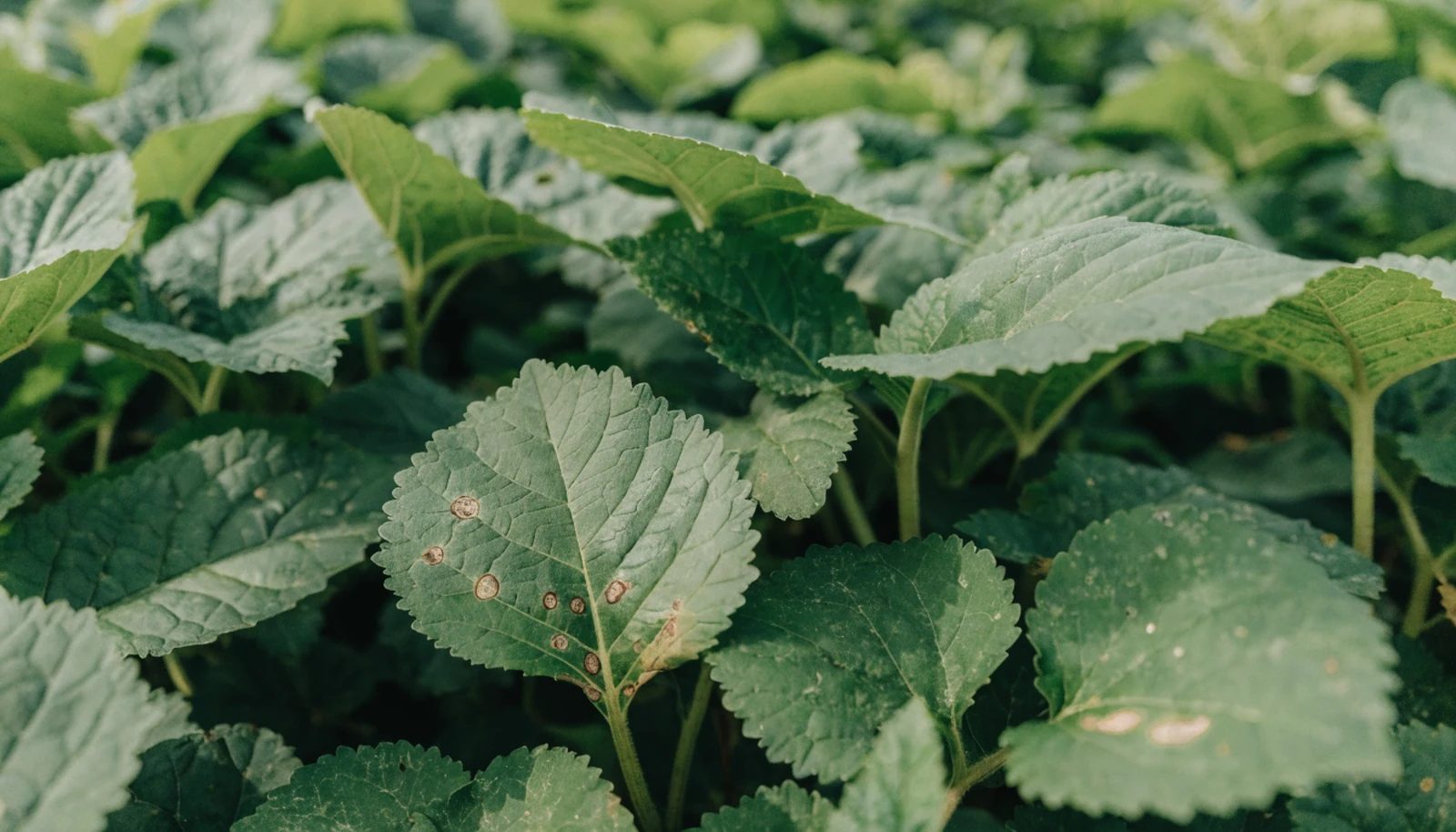
Anthracnose is a fungal disease caused mainly by Colletotrichum species that produces dark, sunken, often ringed lesions on fruit, leaves and stems, with salmon-pink spore masses in humid weather. It spreads by rain and irrigation splash at roughly 20 to 30 °C. Treat it by removing infected debris and fruit, keeping foliage dry, using clean seed and applying protective sprays through warm, wet periods.
Crops affected
What is it?
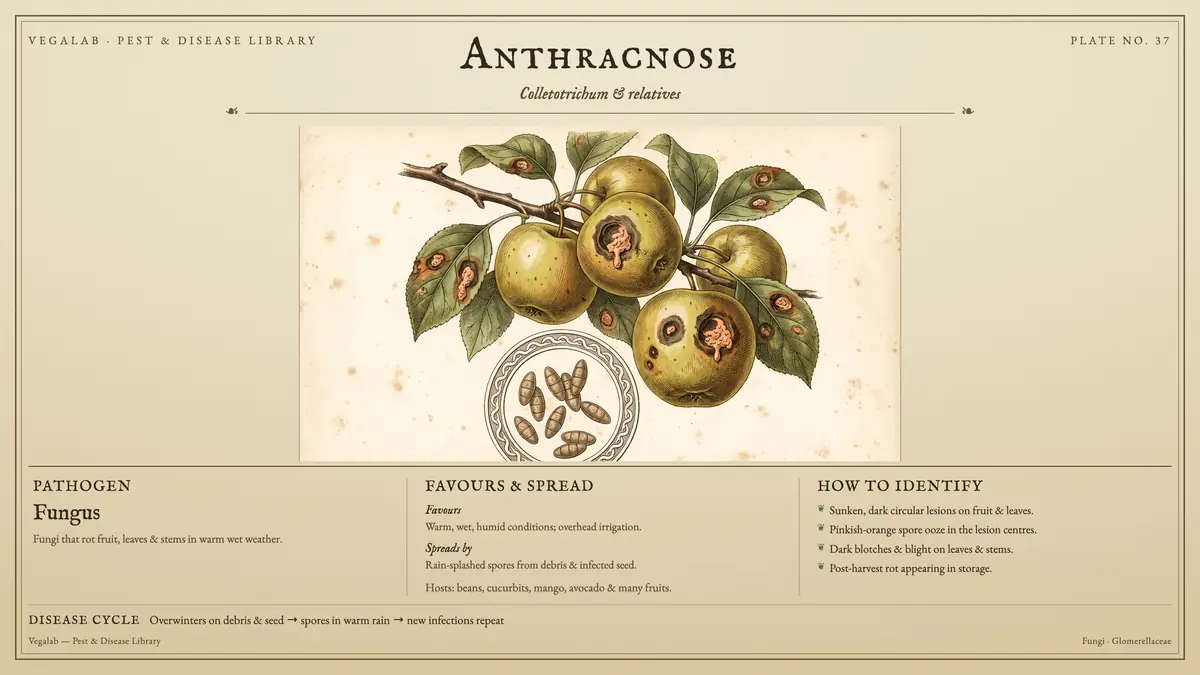
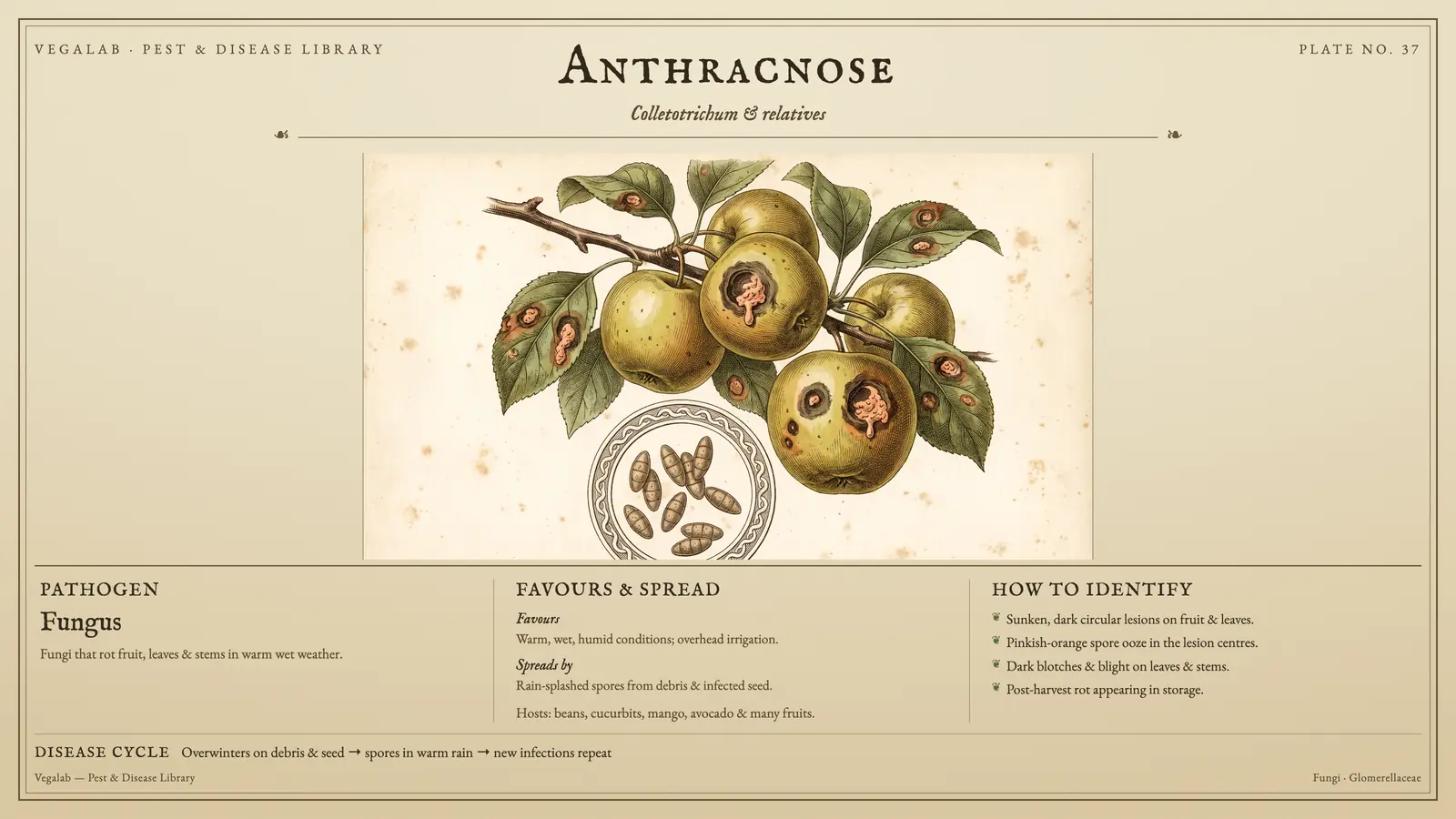
Anthracnose is caused mainly by Colletotrichum fungi. The pathogen overwinters in plant debris and infected tissue and spreads in warm, wet conditions via splashing water. It infects leaves, stems, and especially fruit, where it produces the characteristic dark, sunken spots.
How do you identify anthracnose?
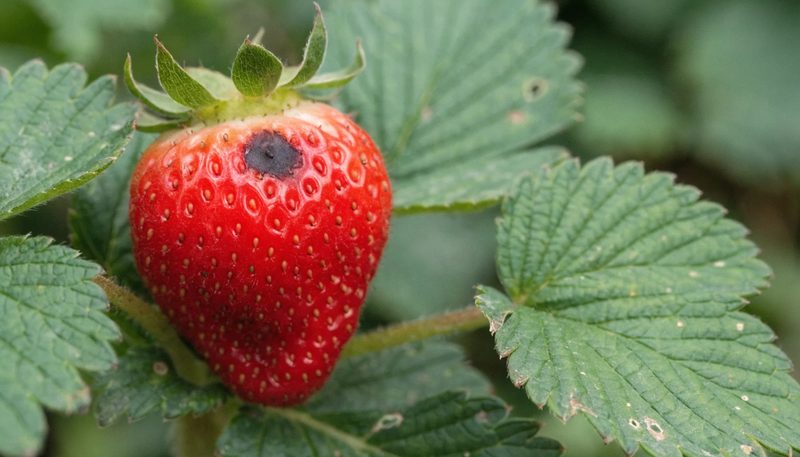
- Sunken circular lesions with concentric rings
- Salmon-colored spore masses in humidity
- Rot on green and ripe fruit
- Carryover on debris and volunteers
How does anthracnose spread?
*Colletotrichum* species overwinter in infected plant debris, mummified fruit, cankers on woody hosts and on seed. In spring, spores produced in these residues are splashed onto new growth by rain and irrigation - this is a rain-dispersed disease, not a wind-dispersed one, which is why it moves down a row and along a spray path rather than arriving evenly across a block.
Anthracnose has a habit that makes it particularly frustrating: a latent, quiescent phase. Spores germinate and penetrate young fruit early in the season, then stop and wait. The infection stays invisible until the fruit begins to ripen and its defenses fall away, at which point lesions appear - often in transit or on the shelf, days after a clean-looking harvest.
Warm and wet is the requirement: roughly 20–30 °C with extended leaf or fruit wetness. Each rain event during that window is a new infection period.
What conditions favor anthracnose?
Warm and wet is the whole requirement. Infection periods open at roughly 20–30 °C with extended leaf or fruit wetness, and every rain event inside that window is a fresh one. Extended dry spells effectively stop the disease, which is why the same block can be clean one season and heavily hit the next on identical management.
Dense canopies, overhead irrigation and poor air movement all lengthen the wetness period and do more to raise risk than inoculum level alone. Fruit approaching ripeness is the most vulnerable tissue, and mechanical or insect damage gives spores a direct route in.
What damage does anthracnose cause?
Anthracnose downgrades and rots fruit (a major cause of post-harvest loss), defoliates plants, and weakens stems. Because spores spread by splashing water and survive in debris, it returns season after season if not managed. Early protection is the key to clean fruit.
How do you scout for anthracnose?
Scout after rain, not on a calendar. Check the fruit and shoots closest to last season's debris and any mummified fruit left on the tree or trellis - that is where the first lesions appear.
Look for small sunken spots that enlarge and, in humid weather, produce salmon-pink to orange spore masses in concentric rings. That pink sporulation is the most reliable field confirmation.
Because infection is latent, a clean-looking crop at harvest is not evidence of a clean crop. Hold a sample of fruit at ambient temperature for several days before shipping a consignment from a block with any history of anthracnose - that short shelf test predicts the transit problem better than any field inspection.
What are the basic steps to control anthracnose?
- Remove and destroy infected debris and fruit; do not compost them.
- Improve airflow and avoid overhead watering to keep foliage dry.
- Rotate crops and use clean seed and resistant varieties where available.
- Apply a protective natural fungicide at first sign and during warm, wet spells.
How do you get rid of anthracnose?
- Remove the inoculum source. Mummified fruit, prunings, cankered wood and infected debris carry the fungus between seasons. Sanitation is the highest-return single action on woody hosts.
- Protect through wet periods. Applications are preventive and need renewing after significant rain - the infection periods are the rain events.
- Use clean, treated seed in the crops where anthracnose is seed-borne, and avoid saving seed from an affected block.
- Stop moving spores with water. Switch from overhead to drip where practical, and avoid working a wet crop - rain, irrigation and machinery are the dispersal mechanism.
- Rotate and space. Two to three years away from the host, wider spacing and canopy management to shorten wetness duration.
- Cool the fruit promptly after harvest. Latent infections express in warm storage; rapid cooling delays them and is often the difference between a saleable consignment and a rejected one.
Because infection is latent, the crop you are trying to protect was infected weeks before symptoms appeared. Anthracnose management is therefore about interrupting the cycle at the residue and the rain event, not about treating visible lesions.
What does anthracnose look like on different crops?
- Strawberry: anthracnose fruit rot and crown rot - sunken tan lesions with salmon-pink spore masses in wet weather
- Grape: ripe rot and bird's-eye rot - small dark lesions with pale centers on berries
- Mango, avocado, banana: black sunken lesions expressing after harvest, the classic latent-infection pattern
- Bean and pulse: dark sunken pod and stem lesions; strongly seed-borne
- Cucurbits and tomato: sunken circular fruit lesions, often at the point of contact with wet soil
- Olive, citrus, coffee: dieback and fruit drop, with coffee berry disease the most damaging form
Crop-specific programs are linked in the "By crop" section above where they exist.
What is anthracnose confused with?
The name covers several Colletotrichum species and gets applied loosely to almost any sunken fruit lesion. Two distinctions are worth making before choosing a program. Bacterial spot lesions are angular, water-soaked and often surrounded by a yellow halo, without the concentric fruiting bodies anthracnose develops. Alternaria lesions are dark and concentrically ringed but dry rather than sunken and slimy, and Alternaria favors older tissue while anthracnose attacks young fruit and then waits.
If lesions appear only after harvest on fruit that looked clean, anthracnose should be the first hypothesis - few other diseases behave that way.
Recommended Vegalab solution: Spore Control
Vegalab Spore Control · Spore Control preventatively from early fruiting through warm, wet periods; combine with clean seed, debris removal and rotation.
Observed results: Spore Control is documented against anthracnose on eggplant, peppers (chili and sweet), potatoes and tomatoes.
| Role | Product | Use |
|---|---|---|
| Primary control | Spore Control | Broad-spectrum protective fungicide |
| Companion / broader pressure | Armour Boost | Silica for tissue resilience |
By crop
See crop-specific solutions
How do you prevent anthracnose next season?
Sanitize debris, rotate crops, keep foliage dry, and start protective sprays before warm wet weather. Strong, well-nourished plants resist infection better - support cell-wall strength with Armour Boost and balanced nutrition.
Key takeaways
- Anthracnose is rain-dispersed, not wind-dispersed, so it moves down a row and along a spray path.
- Infection can stay latent in young fruit and only show as lesions at ripening, often after harvest.
- Mummified fruit, prunings, cankered wood and infected debris carry the fungus between seasons.
- Protective applications must be renewed after significant rain, because each rain event is a new infection period.
- Cooling fruit promptly after harvest delays latent infections.
Claims and product availability vary by jurisdiction. Always read and follow the product label.