

Why are my plant leaves turning yellow?
Last updated:
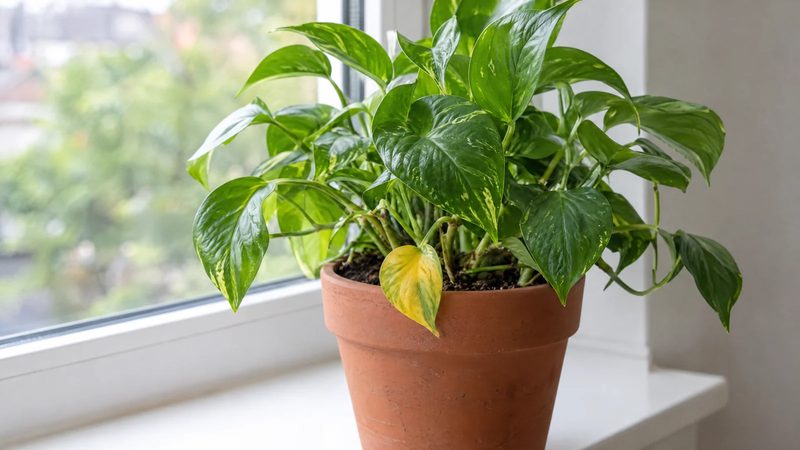
Watering mistakes, most often too much water, are the most common reason plant leaves turn yellow; soggy soil starves the roots of oxygen.1,3,4 Other frequent causes are too little light, cold drafts, a shortage of nitrogen or another nutrient, root rot, sap-sucking pests and the stress of a move or repotting.1,5,6 Whether old or new leaves yellow first narrows the cause.1,7
What does the pattern of yellow leaves tell you?
Yellowing is a symptom, not a diagnosis, and houseplant problems usually trace back to care and the indoor environment: watering, fertilizing, light, temperature and humidity.1 Root diseases also play a part, especially the water molds Pythium and Phytophthora spp., which partly kill the root system and leave the plant yellow and stunted.1 Start by noting which leaves turned yellow first, then check the soil and roots.
UC IPM groups the likely causes by where the yellowing starts.1 Yellowing that begins on the oldest, lowest leaves points to a shortage of fertilizer (usually nitrogen), poor root health, too little light or sap-sucking pests.1 Yellowing that begins on the newest leaves points to overwatering, a soil pH imbalance or a micronutrient deficiency.1
| Where the yellow appears | Most likely causes | What to check first |
|---|---|---|
| Older, lower leaves | Nitrogen shortage, pot-bound or waterlogged roots, low light, whiteflies, soft scales or spider mites | Soil moisture, roots, leaf undersides |
| Lower and inner leaves, with wilting | Excess water and poor drainage | Soggy mix, water in the saucer |
| Newer, upper leaves | Overwatering, soil pH imbalance, iron or other micronutrient shortage | Drainage and whether green veins remain |
| Whole plant pale or yellow-green | Too much light, over or underwatering, too little fertilizer, heat with dry soil, root disease | Recent changes in care or location |
| Yellow leaves with tiny speckles and webbing | Spider mites | Leaf undersides with a hand lens |
In North America, yellowing from overwatering is most common indoors from late fall through winter, when plants grow slowly and use less water4, and late winter to early spring is the preferred time to repot6. In the Southern Hemisphere the same indoor risk window runs from about May to August, with repotting best around August to September.
How do you tell if overwatering is the cause?
Excess water reduces the oxygen in the potting mix, which damages the fine roots until the plant can no longer take up water.3 The first sign is usually wilting or yellowing of the lower and inner leaves; if wet conditions continue, the plant can show scorch, leaf drop and death, the same symptoms as drought or root rot.3 Root rot is often linked to poor drainage, and drainage gets worse as potting mix ages, settles and compacts in the bottom of the pot.1
The roots give the clearest answer. Slide the plant out of its pot: with some exceptions, healthy roots are white, rusty orange to light brown roots suggest underwatering, and dark brown to black roots suggest overwatering.5 Pythium root rot leaves roots brown to black and soft, and the outer layer of a root pulls away easily from its core.4
- Lift the pot after watering and again over the following days; a pot that stays heavy is still wet.3
- For large containers, push a dowel to the bottom; moist soil sticks to it or darkens it.3
- Water thoroughly so water runs out of the drainage holes, then pour off what collects in the saucer.3
- If roots look overwatered, hold off watering until the soil dries, then rebuild a gentler schedule; repot into fresh mix if there is no improvement after two weeks.5
Is it a nutrient deficiency?
Nutrient shortages leave recognizable patterns. Texas A&M AgriLife Extension describes nitrogen deficiency as a general light green chlorosis that turns the older leaves yellow first and moves toward the younger leaves, with early drop of the older leaves.7 Magnesium deficiency shows as yellow mottling between the veins of older leaves, starting near the center of the leaf, while iron deficiency starts as yellowing between the veins of immature leaves.7
Symptoms vary with species and growth stage, so the same extension guide advises learning deficiency symptoms crop by crop.7 UC IPM lists overwatering and soil pH imbalance, along with micronutrient deficiency, as causes of yellowing on newer leaves, so check drainage before adding nutrients.1 A root-bound plant may need fertilizer and a larger container.5 Whatever fertilizer you use, follow the product label.
| Nutrient | Leaves affected first | What it looks like |
|---|---|---|
| Nitrogen | Older leaves | Whole plant light green, older leaves turn yellow and drop early |
| Magnesium | Older leaves | Yellow mottling between the veins, leaf margins yellow last |
| Potassium | Older leaves | Yellow between the veins with scorched, brown edges |
| Iron | Immature leaves | Yellow between green veins; in severe cases new leaves lose all green color |
Why are my plant leaves turning yellow and brown?
Brown leaf tips or margins on yellowing leaves are most often caused by overfertilization, salt buildup, or soil that is kept too dry or too wet, and can also come from strong sun or heat through a window, low humidity or a drafty spot.1 Potassium deficiency also combines yellowing between the veins of older leaves with scorched margins.7
Too much fertilizer, or fertilizer applied too often, raises the soluble salts in the mix.8 Typical signs are browning or dieback of leaf tips and margins, sometimes with yellowing, stunting, lower leaf drop and a white crust on the soil surface or on the outside of the pot.8 To correct it, flush the pot with clear water, letting it drain through, and repeat several times with a volume at least equal to the pot size; small pots with salty mix are better repotted into fresh mix.8
Why do plant leaves turn yellow in winter?
Most indoor plants grow more slowly in winter, and overwatering is the number one reason they decline in those months, often ending in root rot.4 Watering once a week by habit is a common mistake; the University of Maryland Extension advises letting most of the soil dry to the feel of a freshly wrung dish towel, not bone dry, before watering again.4 Plastic pots dry from the top down, while clay pots also lose moisture through their sides.4
Light and temperature matter too. Yellowing and dropping leaves can be caused by inadequate light, exposure to low temperatures or overwatering.1 Leaf drop also follows a sudden change in light, temperature or humidity, so keep plants away from cold drafts by doors and windows.1 To raise light levels, move plants closer to a light source such as a south-facing window, or add a horticultural grow light.2
Why are leaves yellow after repotting?
Some yellowing or leaf drop after repotting is normal while disturbed roots recover.6 Montana State University Extension advises keeping a freshly repotted plant in indirect light for a few days to reduce transplant shock and not fertilizing for at least two weeks so the roots can regenerate.6 Late winter to early spring is the best time to repot, but a plant that is pot-bound or showing yellow, dropping lower leaves can be repotted at any time.6
Choose a pot only about one third wider and deeper than the old one, with adequate drainage holes.6 Moving a plant, even a short distance, can also cause an adjustment period; if yellowing or leaf drop continues for more than a few weeks, change its location and watering schedule.5
Key takeaways
- Watering mistakes, usually too much water, are the most common cause; excess water yellows lower and inner leaves first and is the top winter problem.
- Check the roots: white is healthy, dark brown to black and soft points to overwatering and root rot.
- Old leaves yellowing first suggests nitrogen, magnesium, low light or pests; new leaves first suggests overwatering, pH or iron.
- Yellow leaves with brown tips and a white crust on the soil point to fertilizer salts; flush the pot with clear water.
- Mild yellowing after repotting is normal; give indirect light and skip fertilizer for two weeks.
References
- Pest Notes: Houseplant Problems (UC ANR Publication 74172)
- Low Light Impacts on Indoor Plants
- Overwatered Indoor Plants
- Winter Indoor Plant Problems
- Troubleshooting Houseplants
- Ask Steward: How do I repot a houseplant?
- Diagnosing Nutritional Deficiencies (Texas Greenhouse Management Handbook)
- Fertilizer Toxicity or High Soluble Salts in Indoor Plants
Frequently asked questions
Can too little light turn leaves yellow?
Yes. Insufficient light is one of the causes of yellowing on older leaves and of yellowing and leaf drop indoors.1 Low light also produces spindly, stretched growth and few or no flowers; move the plant closer to a bright window or add artificial light, but give it no more than 16 hours of light a day.2
Can pests make plant leaves turn yellow?
How often should I water a houseplant?
Should I fertilize a plant that has yellow leaves?
Only after ruling out water and root problems. After correcting overwatering, Illinois Extension suggests waiting about two weeks before applying a water-soluble fertilizer.5 Too much fertilizer causes its own browning and yellowing, and newly repotted plants should go at least two weeks without fertilizer.6,8 Follow the product label for rates.