

Last updated:
Root rot is the decay of roots by water molds such as Pythium and Phytophthora or fungi such as Rhizoctonia and Fusarium, usually after soggy, poorly drained soil has weakened the plant.1,3 To save a plant, unpot it, cut out brown, soft roots, repot in pasteurized mix in a clean pot with drainage holes, and water less often.2,3,6
What are the signs of root rot?
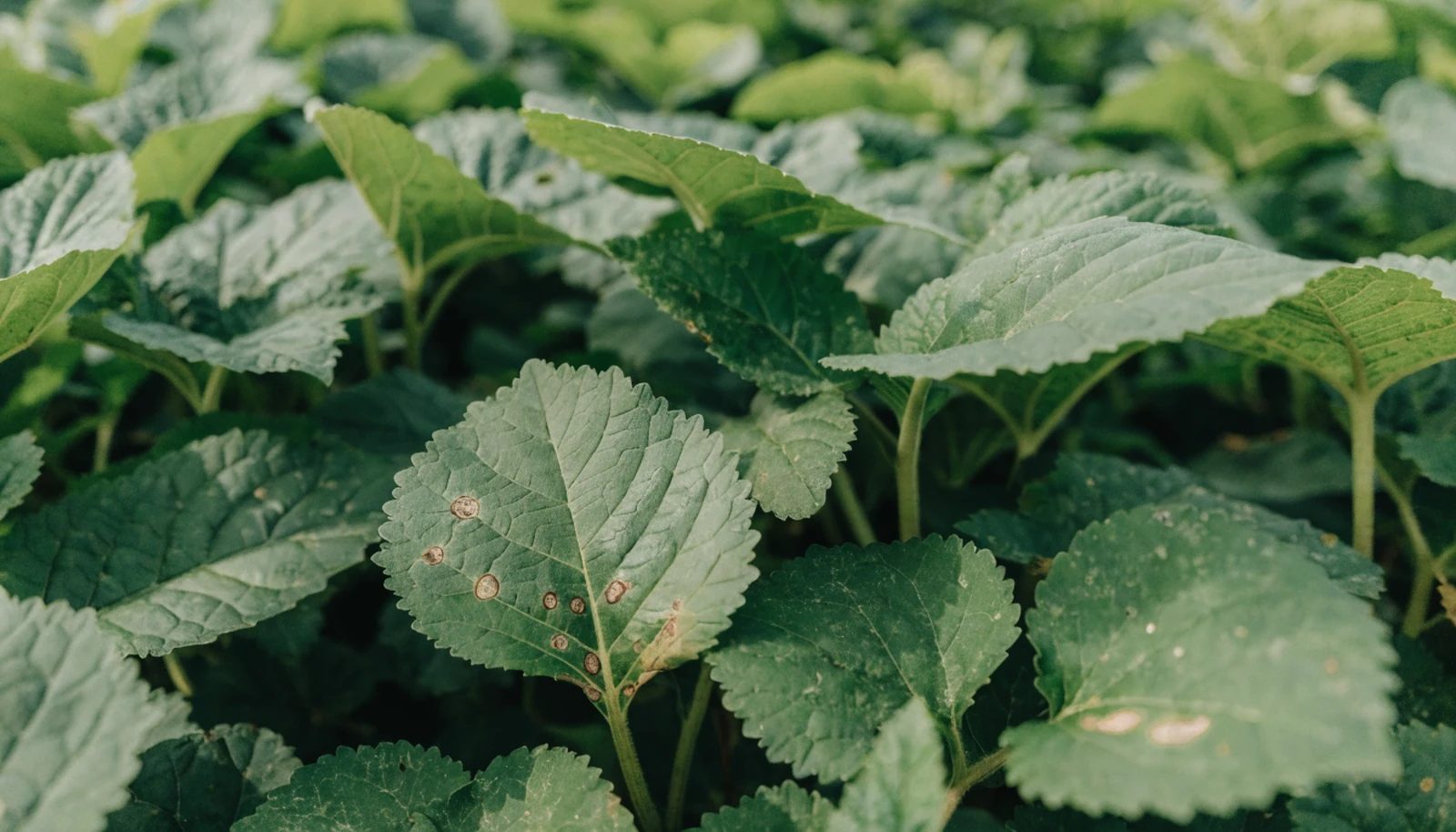
Root rot (caused mainly by Pythium, Phytophthora, Rhizoctonia and Fusarium species) is often noticed above ground first.3 Affected plants usually wilt, often from the bottom leaves upward, and leaves may yellow and drop.3 UC IPM notes that root rot can also cause weak growth and pale or yellow leaves, and that wilting, usually a sign of underwatering, can also come from root decay, so check the roots whenever a plant wilts.1
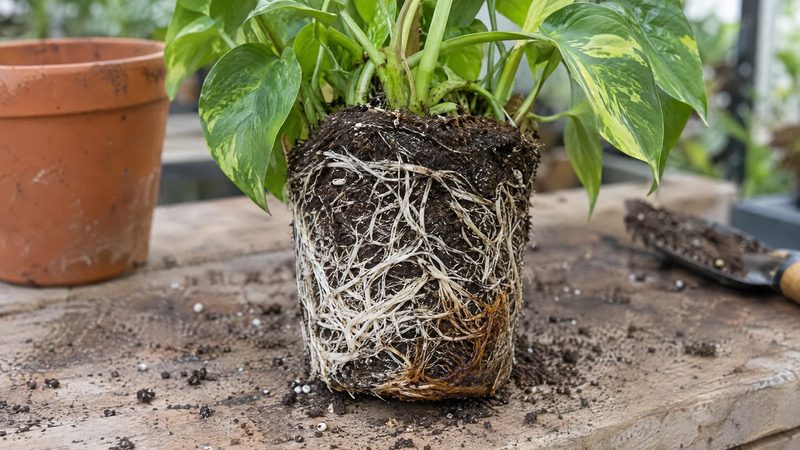
Healthy roots are white, either entirely or under their outer covering, while brownish to blackish or dark yellowish roots, especially at the tips, often indicate root rot.1 Rotted roots look darkened and collapsed, and the outer tissue may slough off and leave a thread-like core.3 Stems can also be girdled at or near the soil line by a ring of brown or black tissue.2 Identifying which organism is responsible requires microscopic examination or laboratory isolation.3
Outdoors, Phytophthora root and crown rot makes plants look drought stressed, but unlike thirsty plants, they do not recover when watered.4 Trees often show darkened bark around the crown and upper roots, sometimes with gumming, and reddish brown zones in the inner bark.4
| Feature | Healthy root | Root with root rot |
|---|---|---|
| Color | White, at least under the outer covering | Brown, black or dark yellow, often starting at the tips |
| Texture | Firm | Soft, collapsed; outer layer slips off leaving a thread-like core |
| Stem base | Firm and evenly colored | May be girdled by a brown or black ring at the soil line |
| Top growth | Normal color and turgor | Wilting from the bottom up, yellowing, leaf drop |
In North America, Phytophthora root and crown rot symptoms appear most often in spring and early summer, when water demand peaks, or in late summer, when water stress peaks,, while cool-season species attack in cool, wet soils and need good winter drainage4. In the Southern Hemisphere, the spring and summer risk period falls from about October to February.
What causes root rot?
Pythium and Phytophthora are often called water molds because they have a swimming spore stage adapted to spread in water; they are not true fungi.1 Rhizoctonia and Fusarium are fungi that also attack seeds, seedlings, cuttings and established roots.3 These organisms usually strike after stress has weakened a plant, and one of the most common stresses is an excessively wet growing medium.3 Overwatering kills roots through lack of oxygen.2
Drainage gets worse as potting mix ages, settles, loses aeration and compacts in the bottom of the container, and high salt levels can also be involved.1 A pot that is far too large holds water the plant cannot use and can lead to root rot.6 Outdoors, Phytophthora diseases can develop after as little as 4 to 8 hours of soil saturation, and long periods of soaking rain or irrigation reduce soil oxygen.4 Phytophthora resting spores survive for years in moist soil without a host.4
| Organism | Type | Notes |
|---|---|---|
| Pythium | Water mold (oomycete) | Swimming spores; also a main cause of damping-off in seedlings |
| Phytophthora | Water mold (oomycete) | Swimming spores; resting spores persist for years in moist soil; root and crown rot of trees, shrubs and vegetables |
| Rhizoctonia | Fungus | Attacks seeds, seedlings, cuttings and established roots |
| Fusarium | Fungus | Attacks seeds, seedlings, cuttings and established roots |
How do you treat root rot in houseplants?
Clemson Extension advises that if only a few roots are infected, you cut them out and repot the plant in sterile soil.2 A plant with a substantial infection is harder to save; UC IPM notes that one with a substantial Phytophthora infection rarely recovers.4
- Slide the plant out of its pot and compare the roots with the signs above; brown, soft roots are rotted.1,3
- Cut out the infected roots.2
- Repot in pasteurized, well-aerated mix that drains freely; most houseplants grow best in a soil-free potting mix rather than heavy potting soil.3,6
- Scrub any pot you reuse and rinse it in one part bleach to nine parts water.2
- Use a container with drainage holes and avoid one that is much larger than the root system.6
- Do not add a layer of gravel or broken pot to the bottom; it slows drainage rather than improving it.6,7
- Water so excess drains out, and empty the saucer of water still standing after 20 minutes.6
- Water less often afterward, and avoid overfertilizing.3
Can you fix root rot without repotting?
Iowa State University Extension advises that when a root rot problem develops, you try reducing how often you water, and notes that repotting may help.3 Because compacted, aging mix drains poorly, a plant left in the same soil keeps the conditions that favor water molds.1 For large containers that cannot be repotted, Clemson Extension suggests replacing the top 2 to 3 inches of mix with fresh mix every other year or so, a practice called topdressing.7
Where salts may be involved, periodic leaching of container soil helps, and good water quality matters.1 For trees and shrubs in the ground, UC IPM suggests that trees with small crown lesions can sometimes be saved by removing soil from the base down to the top of the main roots so the crown tissue dries, and by keeping irrigation water away from the trunk.4 Trees with lesions larger than about one-quarter of the trunk circumference typically do not recover, even with ideal care.4
Does hydrogen peroxide cure root rot?
Consumers often use hydrogen peroxide to treat algae and root decay from presumed root disease on interior plants.5 To measure its effect, a 2021 HortTechnology study dipped the roots of hybrid Phalaenopsis orchids for 3 minutes in 0%, 3%, 6% or 12% hydrogen peroxide.5 The 6% and 12% dips damaged root health permanently and later caused leaf wilt, while 3% caused minor setbacks and did not kill algae in the root zone.5
The authors concluded that growers should be wary of using hydrogen peroxide for orchid root health and should focus on care and watering practices instead.5 Extension guidance on root rot centers on drainage, aeration and watering frequency rather than chemical dips.1,3 If you use a hydrogen peroxide product on plants, follow the product label.
How do you prevent root rot?
Prevention is the best approach to root problems.3 Buy disease-free plants, and slip plants from their pots before purchase to check for brown roots on the outside of the root ball.2,4
- Use pasteurized, well-aerated mix that drains easily, so water runs out the bottom after watering.3
- Match watering to the plant, pot size, mix and conditions rather than a fixed schedule.3
- Choose a pot with drainage holes, only 1 to 2 inches wider than the old one when repotting.6,7
- Leach containers periodically if salts build up.1
- In the garden, avoid prolonged soil saturation, let the top few inches dry between waterings, and use raised beds or mounds on poorly drained sites.4
- Keep soil and mulch off tree crowns and graft unions, and avoid piling mulch against stems.4
Key takeaways
- Root rot is caused mainly by the water molds Pythium and Phytophthora and the fungi Rhizoctonia and Fusarium, usually after wet soil has stressed the plant.
- Healthy roots are white; brown, black, soft or collapsed roots signal rot.
- If only a few roots are affected, cut them out and repot in sterile mix in a clean pot with drainage.
- Without repotting, reduce watering first; old, compacted mix keeps draining poorly.
- Hydrogen peroxide root dips of 6% and 12% permanently damaged orchid roots in a 2021 study, and 3% caused minor setbacks.
References
- Pest Notes: Houseplant Problems (UC ANR Publication 74172)
- Houseplant Diseases and Disorders
- Prevent Root Rot Problems on Houseplants
- Pest Notes: Phytophthora Root and Crown Rot (UC ANR Publication 74133)
- Characterizing the Phytotoxic Effects of Hydrogen Peroxide Root Dips on Hybrid Phalaenopsis Orchid Plants
- Tips for Repotting Houseplants
- Indoor Plants: Transplanting and Repotting