

Alpha-Lipoic Acid
Last updated:
Alpha-lipoic acid (ALA) is absorbed quickly but cleared within about half an hour, loses a large share of each oral dose to first-pass metabolism, and polymerizes under heat. The delivery problem is exposure time and stability, not solubility alone.
Molecule and forms
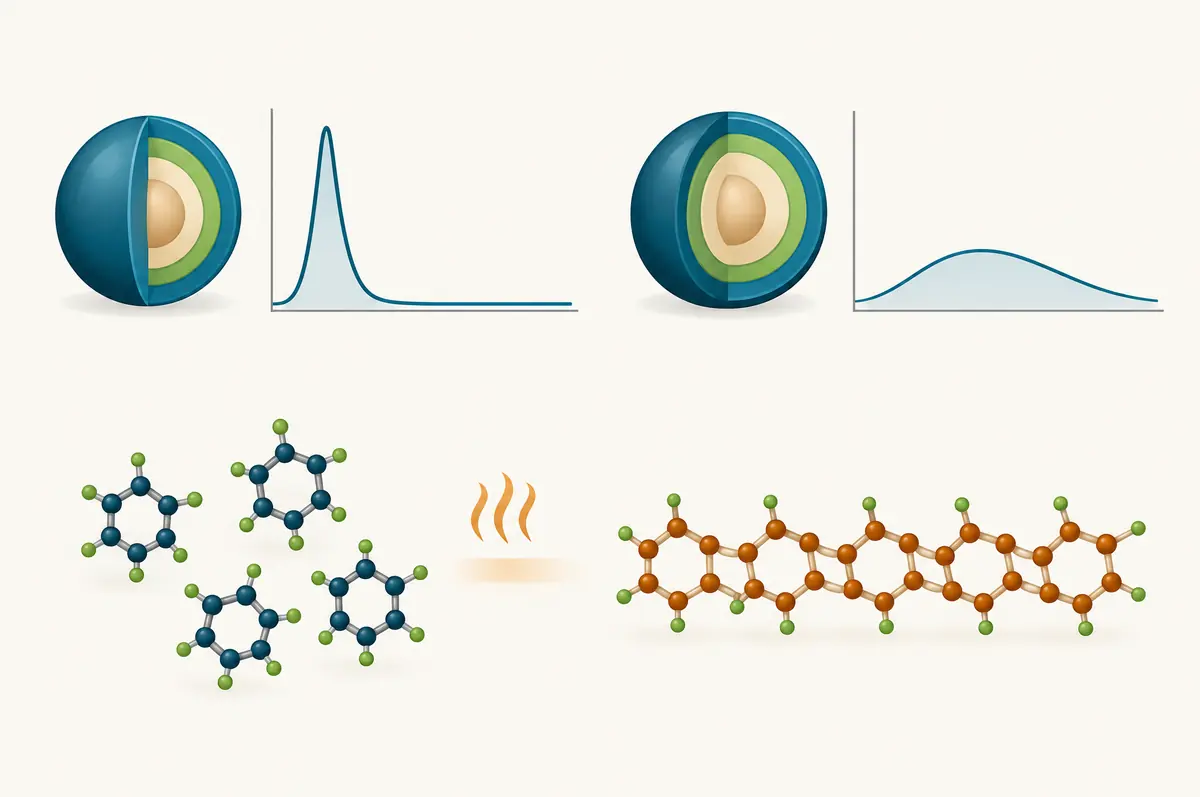
ALA (thioctic acid, C8H14O2S2, 206.3 Da) is an eight-carbon fatty acid with a dithiolane ring. It is an essential cofactor for mitochondrial dehydrogenase complexes, synthesized in small amounts in the body. Supplements are usually the racemic mixture; the R-enantiomer is the natural form and is more bioavailable, but free R-ALA is less stable and is often supplied as sodium R-lipoate. ALA has a low melting point (about 60 to 62 °C), and on heating or light exposure the strained disulfide ring opens and the molecule polymerizes, which is a practical constraint in tableting and hot processes.
Regulatory status
ALA is a dietary supplement ingredient in the United States and a natural health product ingredient in Canada. In Germany and some other European countries, thioctic acid is an approved prescription and pharmacy medicine (for example Thioctacid) for symptoms of diabetic polyneuropathy, given orally or by infusion. Outside those approvals, marketing must avoid disease claims. A documented safety signal is insulin autoimmune syndrome (Hirata disease), reported after ALA intake, particularly in people carrying HLA-DRB1*04:06. ALA is not on the WADA Prohibited List.
Pharmacokinetics and evidence
Oral ALA is absorbed rapidly, with peak plasma concentrations within about 30 to 60 minutes and a plasma half-life of roughly 30 minutes. Absolute oral bioavailability is estimated at about 30%, limited by hepatic first-pass extraction, and taking it with food lowers peak levels. Human evidence is strongest for the approved neuropathy indication, based on randomized trials with intravenous and oral dosing in Germany; evidence for general antioxidant or metabolic benefits in healthy populations is weaker and inconsistent. For delivery, the target is a flatter, longer exposure curve and protection from thermal and oxidative degradation.
Key facts
- Plasma half-life of oral ALA is about 30 minutes, with peak levels 30 to 60 minutes after dosing (Shay et al. 2009, Biochim Biophys Acta)
- Food intake reduces ALA peak plasma concentration and exposure (Gleiter et al. 1996, Eur J Clin Pharmacol)
- Thioctic acid is an approved medicine in Germany for symptoms of diabetic polyneuropathy (Thioctacid, German product information, BfArM)
- ALA intake has been associated with insulin autoimmune syndrome in HLA-DRB1*04:06 carriers (Uchigata et al. 2009, Diabetes Res Clin Pract 83:e19)
How our delivery technology applies
ALA's limits are a thirty-minute half-life, first-pass loss and a heat-sensitive disulfide ring. A multi-layer shell can isolate the dithiolane from oxygen, light and processing heat, and staged release layers can spread absorption over several hours to flatten the peak and extend exposure. Whether that raises total exposure (AUC) is a pharmacokinetic question we would test against a plain racemic or R-ALA reference.
Request a feasibility scope for a controlled-release, heat-stable ALA format.