


Swine Units: Biosecurity for Pig Housing
Most virus introductions into swine units arrive on trucks, boots, feed and people, not through the air. The practical work is breaking those routes at the line of separation and getting disinfectant contact on surfaces that are rarely clean. This page maps the pathogen and pest pressures in pig housing and the protocols and actives that address each one.
Pathogen pressure: enteric and systemic viruses
Porcine epidemic diarrhea virus (PEDv) entered North America in 2013 and spread largely on contaminated transport and feed. PRRS virus persists in herds and moves with animals, semen and equipment. African swine fever virus has no licensed vaccine in the United States and survives for long periods in feces, blood and pork products. For all three, the controls are the same: a defined line of separation, cleaned and dried trucks, shower-in or bench entry, and disinfection on surfaces with organic load removed first. Disinfectant choice matters less than wash quality, contact time and drying.
Slatted floors, pits and water lines
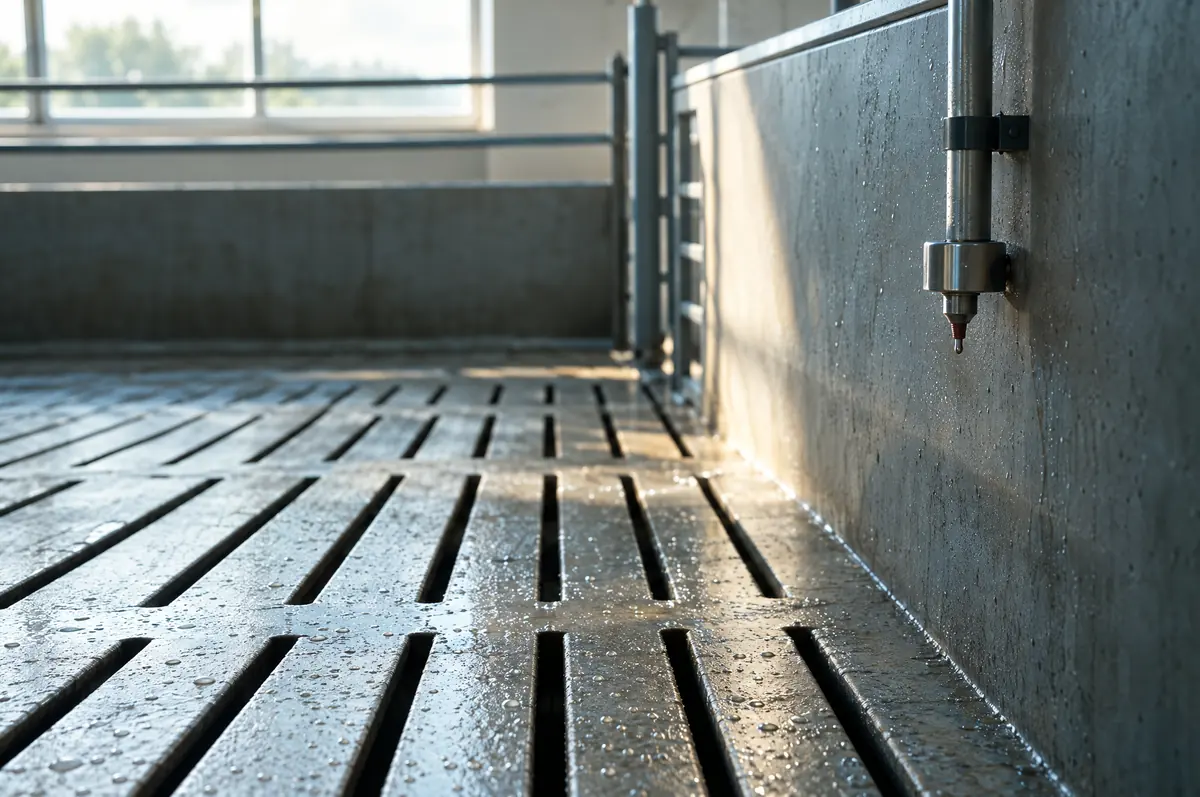
Slats, pen dividers and feeders hold dried manure that shields microbes from any oxidant. Pressure washing with a detergent before disinfection is the step that makes the rest work. Drinking water lines in farrowing and nursery rooms build biofilm, especially when medications and electrolytes run through them, and that biofilm reseeds clean rooms. Water-line sanitation between batches, with a maintained oxidant residual during production, is the second pillar. Deep pits add a fly and ammonia load that affects every surface treatment above them.
Flies, rodents and stored feed
House flies and stable flies breed in wet manure and spilled feed and move between rooms and farms. Rodents carry pathogens between barns and contaminate feed. Neither is solved by a spray alone. Manure moisture management, sealed feed storage, bait stations and larval control in breeding sites reduce the base population; surface treatments aid in the suppression of adults. Treat feed rooms and bins as part of the unit, since stored-product mites and molds degrade feed quality long before they are visible.
Key facts
- PEDV was first identified in US swine in late April 2013 (Stevenson et al. 2013, J Vet Diagn Invest 25:649).
- There is no ASF vaccine licensed for use in the United States; prevention relies on keeping the virus off farms (USDA APHIS, African Swine Fever).
- The Secure Pork Supply plan requires a written site biosecurity plan, a line of separation and a perimeter buffer area for movement permits during an outbreak (Secure Pork Supply Plan, Iowa State University CFSPH).
- Organic matter consumes oxidizing disinfectants and shields microbes, so cleaning must precede disinfection (WOAH Terrestrial Code, ch. 4.14 General recommendations on disinfection and disinsectisation).
How our delivery technology applies
Chlorine dioxide is a selective oxidant that stays active across a wider pH range than free chlorine and tolerates ammonia better than hypochlorite, which suits manure-adjacent surfaces and water lines. The limit has always been handling: ClO2 is a gas that must be generated on site. Vetpure Disinfectant stabilizes it as a nano-encapsulated powder that dissolves to at least 98% ClO2 purity and stays stable in solution for up to one month, so units can dose water lines and surfaces without generator equipment.
Send us your site layout and wash protocol for a swine unit disinfection review.
Related reading
- all environments we protect
- dairy and cattle barn biosecurity
- livestock drinking water systems
- feed and grain storage
- vehicle and equipment disinfection protocol
- footbaths and entry point protocol
- house flies and stable flies
- Vetpure Disinfectant chlorine dioxide powder
- disinfectant actives compared
- Larva BioControl nematodes for fly larvae
Last updated: