


Fire ants: identification and control
Last updated:
Fire ants, or red imported fire ants (Solenopsis invicta), are a regulated invasive ant across the southern United States. They build soft, dome-shaped mounds with no central opening, holding 100,000 to 500,000 workers that sting repeatedly when a mound is disturbed. The reference control is the two-step method: broadcast a registered bait while ants are foraging, then treat nuisance mounds individually.
Red imported fire ants are a regulated invasive pest across the southern United States and a target of eradication in Australia. The reference control method is broadcast bait followed by individual mound treatment. Vegalab has no fire ant product; this page covers biology, regulation and the delivery questions that remain open.
How do you identify fire ants?
Solenopsis invicta arrived at the port of Mobile, Alabama in the 1930s and now infests more than 300 million acres across the southern United States and Puerto Rico. Colonies build soft, dome-shaped mounds without a central opening and can hold 100,000 to 500,000 workers. Workers sting repeatedly and attack in numbers when a mound is disturbed. In agriculture they damage seedlings, electrical equipment and hay operations, attack newborn and confined livestock, and complicate field work. Polygyne colonies with many queens reach high mound densities.
What quarantine rules apply to fire ants?
The USDA APHIS Imported Fire Ant quarantine restricts movement of soil, baled hay and straw, nursery stock with soil, and used soil-moving equipment out of infested counties unless certified. Nurseries and sod farms operate under approved treatment protocols to ship. In Australia, the National Fire Ant Eradication Program runs movement controls and treatment zones around Southeast Queensland. Any premise program must work inside these rules, which set the treatments that qualify for certification.
How does the two-step method control fire ants?
Extension programs recommend broadcasting a registered bait when ants are foraging, then treating nuisance mounds individually. Baits reach the queen but act over weeks. Mound drenches act faster but must penetrate a deep, multi-chambered nest; a drench that stays near the surface kills workers and leaves the queen, and the colony relocates. Contact actives with short residual also leave treated zones open to reinvasion within days, which is the practical limit of current botanical options.
Key takeaways
- Red imported fire ants arrived through Mobile, Alabama in the 1930s and now infest more than 300 million acres across the southern United States and Puerto Rico.
- Mounds are soft and dome-shaped with no central opening, and polygyne colonies with many queens reach high mound densities.
- The USDA APHIS quarantine restricts moving soil, baled hay and straw, nursery stock with soil and used soil-moving equipment out of infested counties unless certified.
- Baits reach the queen but act over weeks; mound drenches act faster but must penetrate the whole nest.
Key facts
- Federal regulations restrict interstate movement of soil, hay, nursery stock and equipment from imported fire ant quarantine areas (7 CFR 301.81)
- Red imported fire ant was introduced through Mobile, Alabama in the 1930s (USDA APHIS Imported Fire Ant program)
- The two-step method pairs broadcast baiting with individual mound treatment (Texas A&M AgriLife Extension, Fire Ant Project)
- Australia runs a national eradication program for red imported fire ant in Southeast Queensland (National Fire Ant Eradication Program, Queensland Government)
How our delivery technology applies
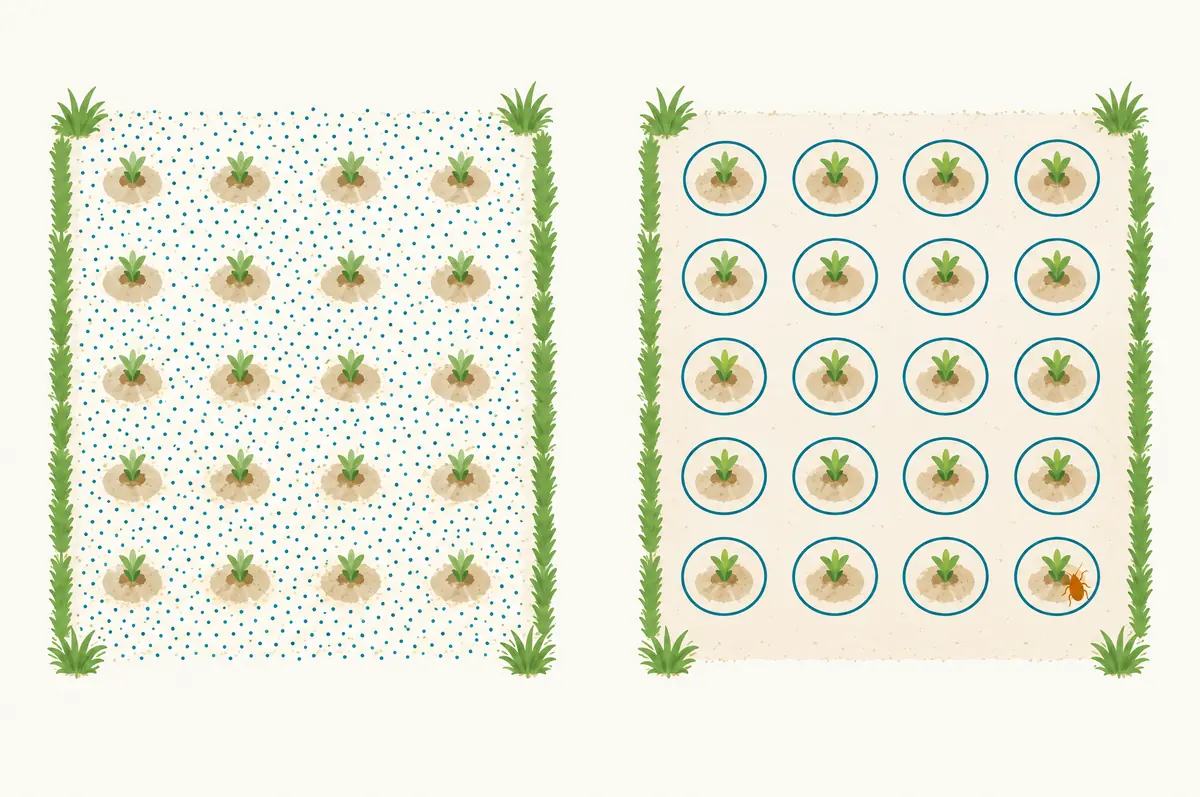
Two delivery problems limit botanical mound drenches: the active volatilizes before it moves through the mound, and oily actives bind to the top layer of soil. Nano-scale capsules disperse in water and can travel further through soil pore space before release, and a shell slows vapor loss so more active reaches deeper chambers. Whether that reaches the queen is an empirical question. Fire ants sit outside our current crawling insect program and would need their own trials.
Questions
Which fire ant treatment reaches the queen?
Broadcast baits reach the queen but act over weeks. Mound drenches act faster but must penetrate a deep, multi-chambered nest. That is why extension programs pair the two in the two-step method.
Why do fire ants move after a mound treatment?
A drench that stays near the surface kills workers and leaves the queen, and the colony relocates. Contact actives with short residual also leave treated zones open to reinvasion within days.
Can you move hay or soil out of a fire ant area?
The USDA APHIS Imported Fire Ant quarantine restricts movement of soil, baled hay and straw, nursery stock with soil, and used soil-moving equipment out of infested counties unless certified. Nurseries and sod farms ship under approved treatment protocols.
What damage do fire ants cause on farms?
Fire ants damage seedlings, electrical equipment and hay operations, and they attack newborn and confined livestock. They also complicate field work because workers sting repeatedly when a mound is disturbed.