

How to clean and sanitize poultry water lines
Last updated:
Clean poultry water lines in three steps. Test the water and open the lines to check for slime and scale. With animals absent, descale with an acid product if needed and flush, then fill the lines with an oxidant cleaning solution at label concentration, hold for the label time and flush until residual matches incoming water. During production, keep a low measured residual and check it daily.
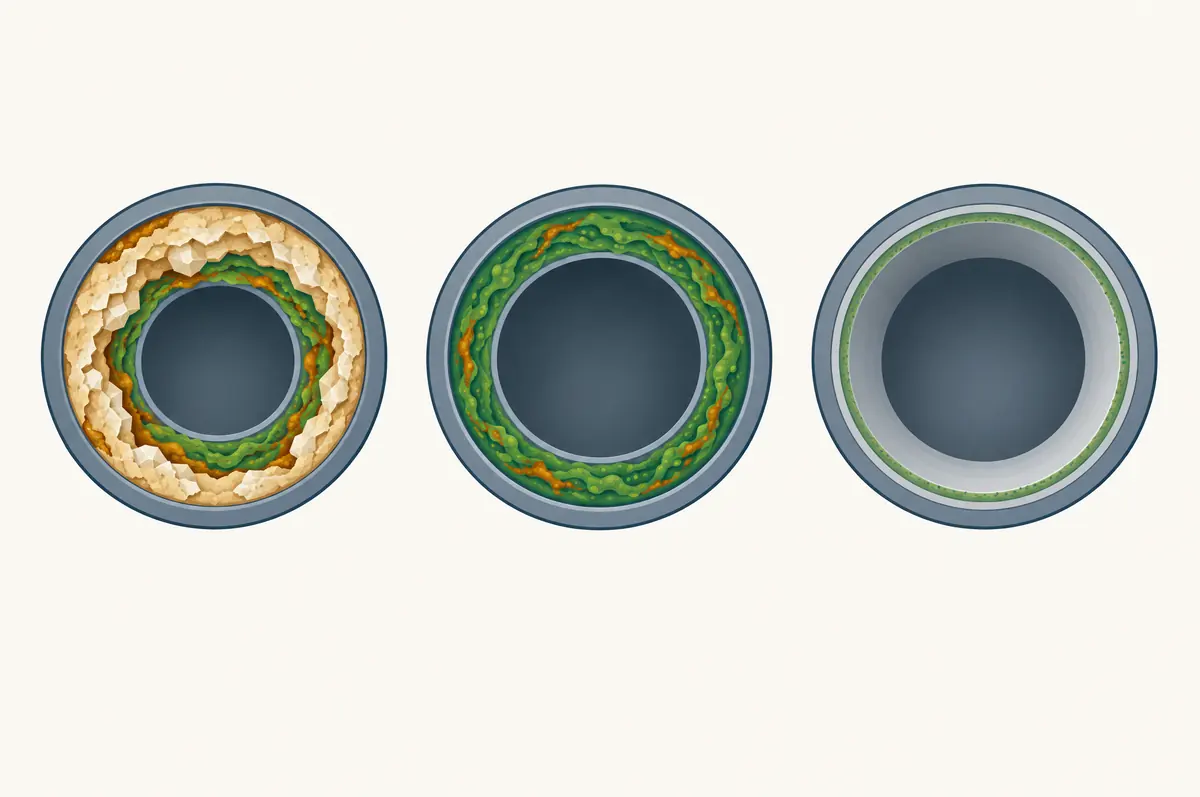
Biofilm is removed with animals absent, using a high-concentration clean held in the lines and then flushed out. During production, a low and measured residual keeps it from returning. Scale must come out first, because mineral deposits shelter biofilm and consume oxidant.
How do you assess water lines before cleaning?
Test source water for pH, hardness, iron and manganese, and check the end of each line for bacterial counts and oxidant residual. Open a line at a drop point or remove a regulator to look for slime and scale. High hardness or iron means an acid descaling step is needed before oxidant cleaning. Record baseline results so you can compare after the clean. Check proportioner calibration at the same time, because an inaccurate injector undermines every later step.
How do you descale and shock clean water lines?
With animals absent, drain the system. If scale is present, run an acid descaler at label rate, hold, and flush. Never mix acids and oxidants in the same step, as this can release chlorine or chlorine dioxide gas at hazardous concentrations. Fill the lines with the oxidant cleaning solution at the label concentration for line cleaning, open each drinker until solution appears, and hold for the label time. Flush at high velocity until residual matches incoming water.
How do you keep water lines clean during production?
During production, dose a continuous low residual through a proportioner and check it at the far end of the line daily. Flush after every vitamin, electrolyte or medication program. Monitor water intake for the first days after any change. Swab or culture the line monthly, and repeat the shock clean at the next depopulation. Record products, concentrations and results. Replace nipples or regulators that stay blocked after cleaning, as they can harbor biofilm that reseeds the system.
Key takeaways
- Remove scale first: mineral deposits shelter biofilm and consume oxidant.
- Never mix acids and oxidants in the same step, as this can release chlorine or chlorine dioxide gas.
- Shock clean with animals absent, then flush at high velocity until residual matches incoming water.
- Flush after every vitamin, electrolyte or medication program and check residual at the far end of the line daily.
- Swab or culture lines monthly and repeat the shock clean at the next depopulation.
Key facts
- Chlorine dioxide has been shown to inactivate bacteria in drinking water biofilms (Gagnon et al. 2005, Water Res 39:1809).
- Mixing acids with chlorite or hypochlorite solutions can liberate chlorine dioxide or chlorine gas (US EPA 1999, EPA 815-R-99-014).
- Maximum residual disinfectant level for chlorine dioxide in public drinking water is 0.8 mg/L (40 CFR 141.65).
- Broilers at about 21 C (70 F) typically drink 1.6 to 1.8 times as much water as feed by weight, so water intake is a key production indicator (Aviagen 2025, AviagenBrief: Water Utilization in Broilers).
How our delivery technology applies
Line cleaning with chlorine dioxide normally means a generator mixing sodium chlorite with acid on site. Vetpure Disinfectant replaces that step with a stabilized, nano-encapsulated powder that dissolves to at least 98% ClO2 purity. A stock solution stays stable for up to one month, so the same material supports both the shock clean and daily residual, and ClO2 forms no THMs, HAAs or HANs in lines carrying organic residues.
Questions
What should you test before cleaning water lines?
Test source water for pH, hardness, iron and manganese, and check the end of each line for bacterial counts and oxidant residual. High hardness or iron means an acid descaling step is needed before oxidant cleaning. Check proportioner calibration at the same time.
What cleaner is used for poultry water lines?
An acid descaler at label rate removes scale, and an oxidant cleaning solution at the label concentration for line cleaning removes biofilm. Chlorine dioxide has been shown to inactivate bacteria in drinking water biofilms. Run the two in separate steps and never mix them.
How often should poultry water lines be sanitized?
Shock clean at each depopulation, with animals absent. During production, dose a continuous low residual through a proportioner, check it daily at the far end of the line, and swab or culture the line monthly.
Why monitor water intake after cleaning lines?
Broilers at about 21 C (70 F) typically drink 1.6 to 1.8 times as much water as feed by weight, so water intake is a key production indicator. Monitor intake for the first days after any change to the water program.
Send your water analysis and we will outline a line sanitation program.