

Fisetin vs quercetin
Last updated:
Fisetin and quercetin are flavonols studied as senolytics, compounds that selectively clear senescent cells. Fisetin was the most potent senolytic among ten flavonoids screened and extended lifespan in aged mice, while quercetin is mostly studied together with the cancer drug dasatinib. Both are poorly soluble and heavily conjugated, and human evidence is limited to small, early-phase studies.
Fisetin and quercetin are flavonols studied as senolytics, compounds that selectively clear senescent cells. The strongest evidence is in mice; human data are small, early-phase and often combine quercetin with the cancer drug dasatinib. Both are poorly soluble and heavily conjugated, so oral exposure is low.
How do fisetin and quercetin work, and what is the evidence?
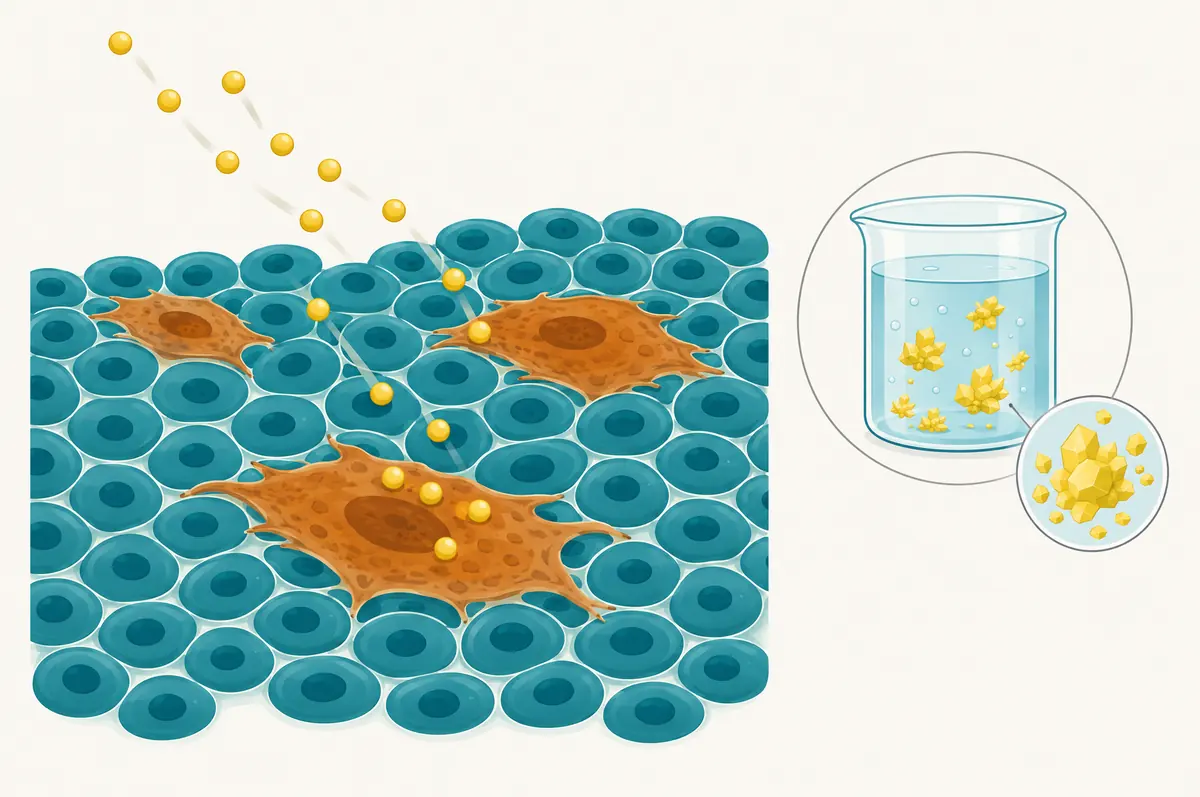
Senescent cells stop dividing but secrete inflammatory factors and accumulate with age. In 2015 researchers showed dasatinib plus quercetin (D+Q) cleared senescent cells in mice. Fisetin later emerged as the most potent senolytic among ten flavonoids screened and extended median and maximum lifespan in aged mice. In humans, a small open-label study of D+Q in diabetic kidney disease reduced senescent cell markers in fat tissue. Controlled trials of fisetin alone are ongoing. The current evidence tier is animal data plus pilot human studies.
What is their regulatory status?
Quercetin and fisetin are dietary supplement ingredients in the US. Quercetin has been notified to FDA as GRAS for use in foods. Dasatinib is a prescription oncology drug, and D+Q regimens are research protocols, not supplement products. Neither flavonol is on the WADA Prohibited List. No product may claim to remove senescent cells or treat age-related disease. Buyers should verify identity and purity, since fisetin raw materials vary in grade and source.
Why is oral exposure low?
Quercetin aglycone (302 Da) and fisetin (286 Da) have very low water solubility and are rapidly glucuronidated and sulfated in the gut wall and liver, so plasma parent compound is a small share of the dose. Senolytic protocols in mice use intermittent high doses, which in humans means gram-level oral loads. Both also oxidize in solution, especially at neutral to alkaline pH. Fisetin also has limited human pharmacokinetic data, so even baseline exposure after an oral dose is not well defined.
Which formulation routes are in use?
Quercetin phytosome (phospholipid complex), isoquercitrin enzymatically modified forms, and cyclodextrin complexes are marketed. Fisetin products include micronized powder and lipid-dispersed forms. Comparative human PK is limited. Because intermittent protocols compress absorption into a short window, formulation choice has more influence here than with daily low-dose supplements. Stability under light and oxygen also needs testing, since flavonols darken and lose assay in storage. Any comparative claim should be based on a crossover pharmacokinetic study that measures parent compound and conjugates separately.
Key takeaways
- Senescent cells stop dividing but secrete inflammatory factors and accumulate with age.
- In 2015, dasatinib plus quercetin cleared senescent cells in mice.
- Fisetin was the most potent senolytic of ten flavonoids screened and extended median and maximum lifespan in aged mice.
- Both are dietary supplement ingredients in the US; dasatinib plus quercetin regimens are research protocols, not supplement products.
- Both have very low water solubility and are rapidly glucuronidated and sulfated in the gut wall and liver.
Key facts
- Dasatinib plus quercetin selectively eliminated senescent cells and improved function in aged mice (Zhu et al. 2015, Aging Cell 14:644)
- Fisetin was the most potent senolytic among ten flavonoids tested and extended lifespan in aged mice (Yousefzadeh et al. 2018, EBioMedicine 36:18)
- Three days of dasatinib plus quercetin reduced senescent cell burden in adipose tissue of people with diabetic kidney disease in an open-label pilot (Hickson et al. 2019, EBioMedicine 47:446)
- Quercetin is extensively conjugated during absorption, and plasma contains mainly glucuronide and sulfate metabolites (Manach et al. 2005, Am J Clin Nutr 81:230S)
How our delivery technology applies
Intermittent, high-dose protocols need a large fraction of a poorly soluble dose to be absorbed within a short window. A lipid-core, multi-layer particle holds the flavonol in a dissolved state, protects it from oxidation in neutral pH, and releases it over the upper small intestine where absorption is highest. The goal is higher and more reproducible peak exposure from a smaller oral load.
Questions
What is the difference between fisetin and quercetin?
Both are flavonols studied as senolytics. Fisetin was the most potent senolytic among ten flavonoids screened in mice and has limited human pharmacokinetic data, while quercetin has been notified to FDA as GRAS for use in foods and is mostly studied in combination with dasatinib.
What is a senolytic?
A senolytic is a compound that selectively clears senescent cells. Senescent cells stop dividing but secrete inflammatory factors and accumulate with age.
What is dasatinib plus quercetin?
Dasatinib is a prescription oncology drug, and dasatinib plus quercetin (D+Q) regimens are research protocols, not supplement products. In a small open-label study in diabetic kidney disease, D+Q reduced senescent cell markers in fat tissue.
What is the human evidence for fisetin?
Controlled trials of fisetin alone are ongoing, and human pharmacokinetic data are limited. The current evidence tier for both flavonols is animal data plus pilot human studies.
Plan a comparative PK study for an encapsulated flavonol with our team.