

What is sulforaphane?
Last updated:
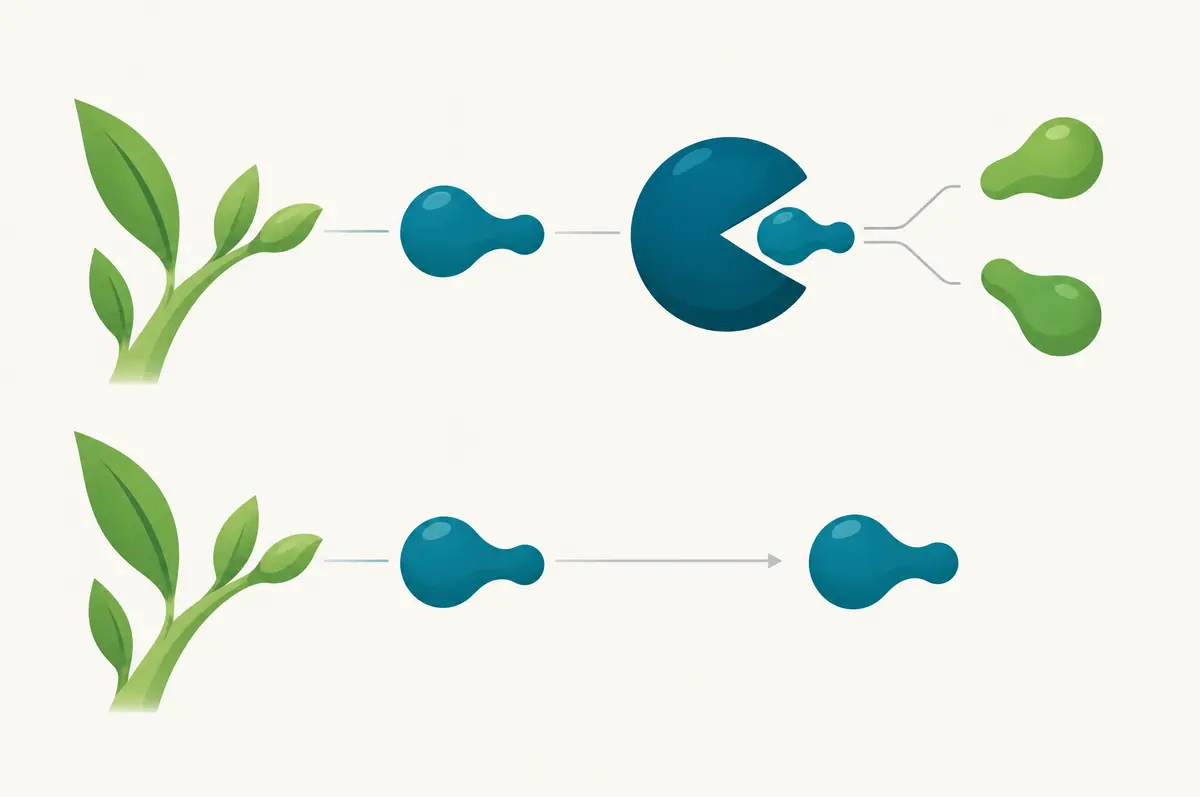
Sulforaphane is an isothiocyanate formed when the enzyme myrosinase converts glucoraphanin, a glucosinolate concentrated in broccoli seeds and sprouts. Pure sulforaphane is unstable, so most products deliver glucoraphanin and rely on that conversion. Whether it happens decides bioavailability: urinary recovery was about 70% from a sulforaphane-rich preparation versus about 5% from glucoraphanin without active enzyme.
Sulforaphane is unstable as a pure compound, so most products deliver its precursor glucoraphanin and rely on the enzyme myrosinase to convert it. Whether that conversion happens decides bioavailability: human studies show roughly 70% urinary recovery from sulforaphane-rich preparations versus about 5% from glucoraphanin without active enzyme.
How is sulforaphane formed?
Sulforaphane (C6H11NOS2, 177.3 Da) is an isothiocyanate formed when myrosinase hydrolyzes glucoraphanin, a glucosinolate concentrated in broccoli seeds and sprouts. Plant tissue damage brings enzyme and substrate together; cooking inactivates myrosinase, and conversion then depends on gut bacteria, which is slow and highly variable between people. Pure sulforaphane is an oily liquid that degrades with heat, alkaline pH and time. Conversion can also be diverted to sulforaphane nitrile, an inactive product favored by the epithiospecifier protein at low pH or in the presence of iron. Commercial forms therefore include glucoraphanin extracts, glucoraphanin plus active myrosinase, and stabilized sulforaphane complexes.
How are sulforaphane products regulated?
Broccoli sprout and seed extracts standardized to glucoraphanin or sulforaphane are sold as dietary supplement ingredients in the United States and as natural health product ingredients in Canada, subject to the usual limits on disease claims. A stabilized sulforaphane and alpha-cyclodextrin complex (SFX-01) has been evaluated as an investigational drug in clinical trials, which illustrates that the same molecule sits in different regulatory categories depending on form and intended use. Sulforaphane is not on the WADA Prohibited List.
What does the evidence show?
Sulforaphane is among the most potent natural inducers of the Nrf2 pathway, which regulates phase II detoxification and antioxidant enzymes. This mechanism is well characterized in cell and animal work. In humans, controlled trials have measured biomarker changes, including increased urinary excretion of airborne pollutant metabolites in a randomized trial in Qidong, China. Clinical outcome evidence for disease endpoints is limited and mixed. The most robust human finding is pharmacokinetic: the form delivered, and whether myrosinase is active, dominates how much sulforaphane reaches circulation.
Key takeaways
- Sulforaphane forms when myrosinase hydrolyzes glucoraphanin from broccoli seeds and sprouts.
- Cooking inactivates myrosinase, and conversion then depends on gut bacteria, which is slow and varies between people.
- Pure sulforaphane is an oily liquid that degrades with heat, alkaline pH and time.
- Sulforaphane is among the most potent natural inducers of the Nrf2 pathway.
- Clinical outcome evidence for disease endpoints is limited and mixed.
Key facts
- Urinary recovery was about 70% from a sulforaphane-rich beverage versus about 5% from a glucoraphanin-rich beverage (Egner et al. 2011, Cancer Prev Res)
- Active endogenous myrosinase controls sulforaphane bioavailability from glucoraphanin-rich broccoli preparations (Fahey et al. 2015, PLoS One)
- A broccoli sprout beverage increased urinary excretion of benzene and acrolein metabolites in a randomized trial (Egner et al. 2014, Cancer Prev Res)
- Sulforaphane is a potent inducer of Nrf2-regulated phase II enzymes (Zhang et al. 1992, Proc Natl Acad Sci USA)
How our delivery technology applies
Two routes are open. The first protects preformed sulforaphane: a multi-layer shell isolates the isothiocyanate from heat, moisture and alkaline pH and releases it in the small intestine. The second co-encapsulates glucoraphanin and myrosinase in separate compartments so conversion occurs only on release, at a pH that favors sulforaphane over the nitrile. Either route is measured by urinary dithiocarbamate recovery against a reference product.
Questions
What forms do sulforaphane supplements come in?
Commercial forms include glucoraphanin extracts, glucoraphanin plus active myrosinase, and stabilized sulforaphane complexes. The form delivered, and whether myrosinase is active, dominates how much sulforaphane reaches circulation.
Does cooking broccoli affect sulforaphane?
Yes. Cooking inactivates myrosinase, and conversion then depends on gut bacteria, which is slow and highly variable between people.
What is sulforaphane nitrile?
Sulforaphane nitrile is an inactive product that conversion can be diverted to instead of sulforaphane. It is favored by the epithiospecifier protein at low pH or in the presence of iron.
How are sulforaphane supplements regulated?
Broccoli sprout and seed extracts standardized to glucoraphanin or sulforaphane are sold as dietary supplement ingredients in the US and as natural health product ingredients in Canada, subject to limits on disease claims. A stabilized sulforaphane and alpha-cyclodextrin complex has been evaluated as an investigational drug, so the same molecule sits in different categories depending on form and intended use.
Send your broccoli extract specification to scope a stabilized sulforaphane format.