

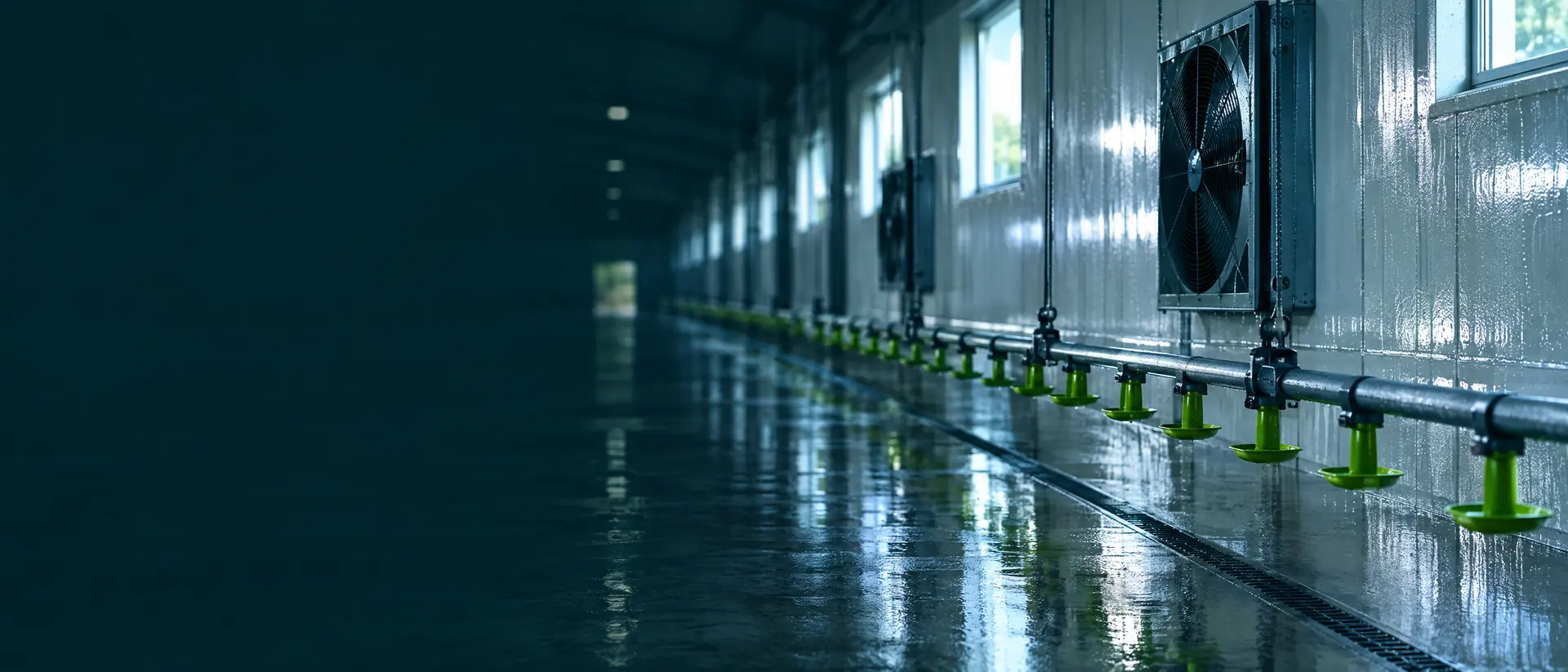
Bird flu and backyard chickens
Last updated:
Bird flu (avian influenza) virus is enveloped, so it is among the easier viruses to inactivate on a clean surface, yet it persists in manure, litter, feathers and dust, especially in cold, wet conditions. Disinfection works only in order: remove litter and manure, dry clean, wash with detergent, rinse, apply a disinfectant registered for the virus at label concentration and contact time, then let surfaces dry.
Avian influenza virus is enveloped, so it is among the easier viruses to inactivate on a clean surface. Premise disinfection fails when organic matter shields the virus, contact time is short or surfaces stay dirty. Disinfectant claims against avian influenza are valid only where the product registration lists them.
Why does cleaning come before disinfection?
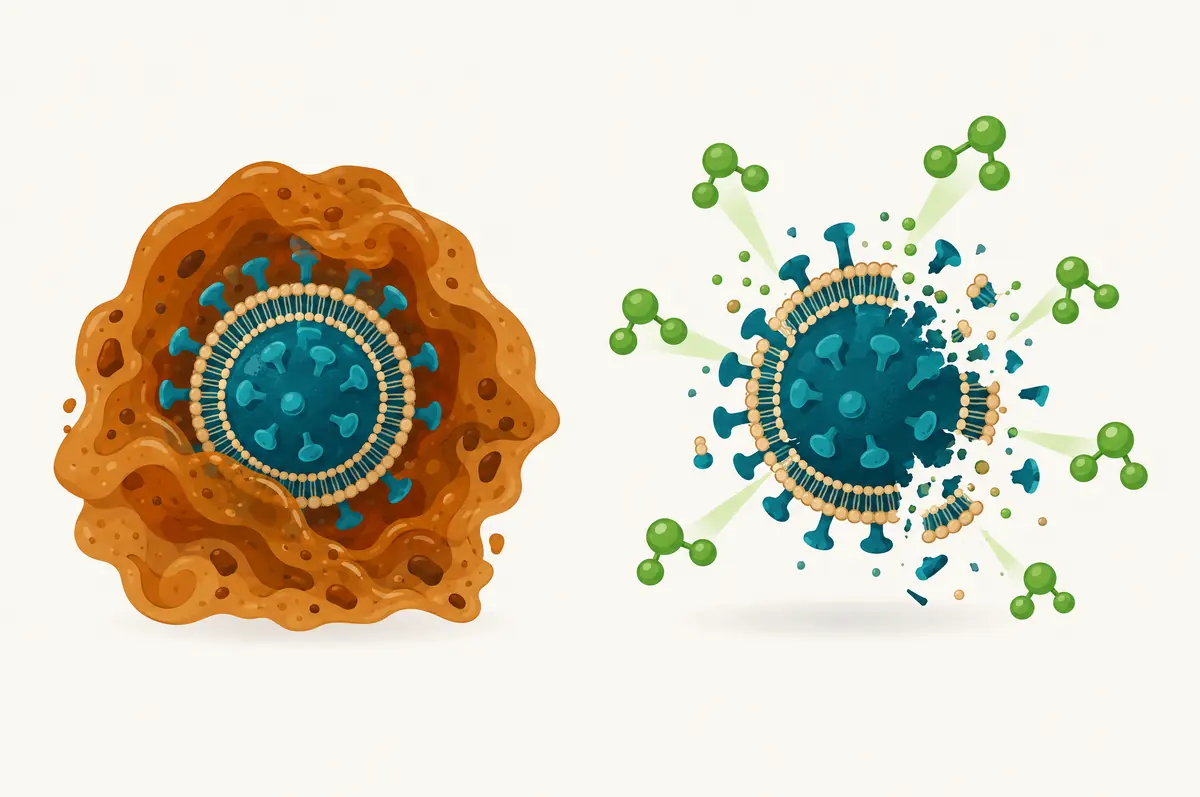
Highly pathogenic H5 viruses are shed in feces and respiratory secretions and persist in manure, litter, feathers and dust, particularly in cold, wet conditions. Organic matter consumes oxidizing disinfectants and physically shields virus particles. Official cleanup after an outbreak therefore follows a fixed order: remove litter and manure, dry clean, wash with detergent, rinse, apply a disinfectant registered for the virus at label concentration and contact time, and let surfaces dry. Skipping the wash step is the most common reason disinfection fails.
How does chlorine dioxide act on influenza?
Chlorine dioxide is a selective oxidant. It reacts rapidly with tryptophan and tyrosine residues in proteins, and research on influenza showed that oxidation of these residues in hemagglutinin abolishes the protein's function. Unlike hypochlorous acid, its activity changes little between pH 4 and 10, and it does not chlorinate organic matter to form trihalomethanes or haloacetic acids. It is still consumed by organic load, which is why pre-cleaning matters. Contact time on the label still applies.
Which disinfectants can claim avian influenza?
In the United States, disinfectants with avian influenza claims appear on EPA List M. Other jurisdictions keep their own lists and approvals. Vetpure Disinfectant is a stabilized, nano-encapsulated chlorine dioxide powder; whether it may be used or claimed against avian influenza in a given country depends on its registration there. Always follow the label and the official response authority during an outbreak. Registration also sets the dilution, contact time and surfaces permitted, and these differ between products with the same active.
Key takeaways
- Avian influenza virus is enveloped and among the easier viruses to inactivate on a clean surface.
- Highly pathogenic H5 viruses persist in manure, litter, feathers and dust, particularly in cold, wet conditions.
- Organic matter consumes oxidizing disinfectants and shields virus particles, so skipping the wash step is the most common reason disinfection fails.
- In the United States, disinfectants with avian influenza claims appear on EPA List M.
- During an outbreak, follow the label and the official response authority.
Key facts
- USDA APHIS HPAI response guidance specifies removal of organic material and washing before disinfection (USDA APHIS, HPAI Cleaning and Disinfection Response Guidance)
- EPA List M names registered disinfectants with label claims against avian influenza (EPA, List M)
- Chlorine dioxide oxidizes tryptophan and tyrosine residues and inactivates influenza hemagglutinin (Ogata 2007, Biochemistry 46:4898; Ogata 2012, Journal of General Virology 93:2558)
- Chlorine dioxide disinfection efficacy is largely independent of pH in the range 6 to 9, unlike free chlorine (EPA 1999, Alternative Disinfectants and Oxidants Guidance Manual, EPA 815-R-99-014)
How our delivery technology applies
The weak point of chlorine dioxide in the field is not efficacy but logistics: it is a gas that must be generated from two precursors and degrades in storage. Vetpure's nano-encapsulated powder holds a stabilized precursor that dissolves to at least 98% pure ClO2 and remains stable in solution for up to one month, removing on-site mixing and making a consistent concentration available when a cleandown starts.
Questions
How do you clean a poultry house after bird flu?
Official cleanup follows a fixed order: remove litter and manure, dry clean, wash with detergent, rinse, apply a disinfectant registered for the virus at label concentration and contact time, and let surfaces dry. Follow the label and the official response authority throughout an outbreak.
Why does disinfection fail against bird flu?
Disinfection fails when organic matter shields the virus, contact time is too short or surfaces stay dirty. Organic matter also consumes oxidizing disinfectants. Skipping the wash step is the most common reason for failure.
Which disinfectants work against avian influenza?
In the United States, disinfectants with avian influenza claims appear on EPA List M, and other jurisdictions keep their own lists. Registration also sets the dilution, contact time and surfaces permitted, and these differ between products with the same active.
Does chlorine dioxide inactivate avian influenza?
Chlorine dioxide is a selective oxidant that reacts rapidly with tryptophan and tyrosine residues in proteins, and research on influenza showed that oxidizing these residues in hemagglutinin abolishes the protein's function. Its activity changes little with pH, but organic load still consumes it, so surfaces must be cleaned first and label contact time applies.
Poultry integrators can request Vetpure registration status for their country.